
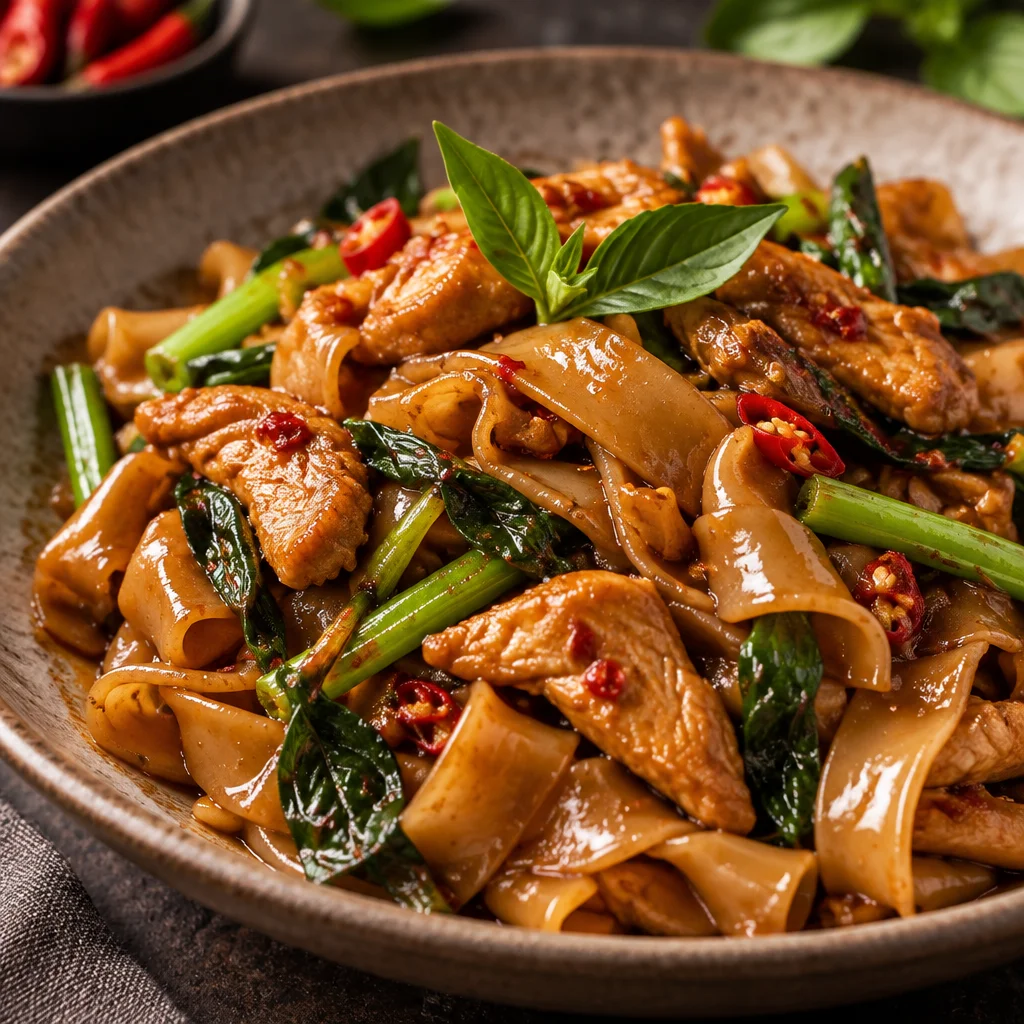
drunken noodles are my go to dinner for those nights when I am tired, hungry, and still want something that tastes like I actually tried. You know the vibe: the fridge has random bits of chicken, you are craving noodles, and takeout feels like it will take forever. This is the kind of meal that hits spicy, savory, a little sweet, and super herby all at once. The best part is it comes together fast once you prep a few things. If you have ever ended up with sticky noodles or bland sauce, don’t worry, I’ve been there too. Let’s make a version that works every single time.
What Are Drunken Noodles (Pad Kee Mao)?
Drunken Noodles (Pad Kee Mao) is a Thai stir fried noodle dish that is famous for bold flavor and serious aromatics. It is usually made with wide rice noodles, chili, garlic, and lots of basil, then tossed in a salty sauce that clings to every bite. Despite the name, there is typically no alcohol in it. People say it is called “drunken” because it is the kind of thing you want late at night, or because it “wakes you up” with spice.
It is not the same as pad thai. Pad thai leans sweet and tangy. Pad kee mao leans spicy, garlicky, and savory, with basil doing a lot of heavy lifting. If you want a deeper dive into the traditional approach, I like this walkthrough: authentic Thai drunken noodles Pad Kee Mao recipe.
When I make it at home, I keep the spirit of the dish but focus on what actually works in a normal kitchen. High heat, quick cooking, and a sauce that is mixed before the pan gets hot.
Why This Chicken and Thai Basil Version Works
Chicken is forgiving, easy to find, and it soaks up sauce beautifully. I slice it thin so it cooks fast and stays juicy. Then I bring in **Thai basil** for that slightly peppery, almost licorice like pop that makes the whole pan smell like a Thai restaurant.
This version also keeps the steps simple. Stir fry dishes can feel chaotic if you are measuring sauce while things are burning. Here, we mix the sauce first, prep the noodles properly, and cook in a quick order that makes sense.
Also, this is a great “bridge” recipe if you love noodles in general. If you are the type who keeps trying new noodle dinners, you might also like one pan chicken buttered noodles for a cozy, low spice option.
Ingredients for Drunken Noodles
I am keeping the list realistic. If you have a good Asian market nearby, amazing. If not, you can still pull this off with smart swaps.
- Wide rice noodles (fresh is great, dried is totally fine)
- Chicken (thigh or breast, thinly sliced)
- Garlic (lots)
- Chilies (Thai chilies if you like real heat)
- Bell pepper and onion (optional but I love the crunch)
- Thai basil (a big handful)
- Neutral oil (like avocado or canola)
- Sauce ingredients: oyster sauce, soy sauce, dark soy sauce if you have it, fish sauce, and a little sugar
Quick note: if you are curious how “drunken noodles” show up in other cuisines, this fun twist is worth a peek: Italian drunken noodles. Totally different flavor direction, but it is a reminder that noodles are basically universal comfort food.
How to Choose and Prepare Wide Rice Noodles
Fresh wide rice noodles are soft and a little fragile, and they cook in seconds. Dried wide rice noodles are more common, and they need a soak or boil depending on the brand.
My rule: do not fully cook them like pasta. You want them just a little underdone because they finish in the pan with sauce.
If using dried noodles:
Soak them in hot water until pliable, then drain well. If you boil them, pull them early and rinse quickly so they stop cooking. Toss with a tiny splash of oil so they do not glue themselves together while you cook the chicken.
How to Make the Savory Thai Stir-Fry Sauce
The sauce is where the magic lives. I mix it in a bowl first so I can pour it in fast.
My simple combo:
Oyster sauce for body, soy sauce for salt, fish sauce for that punchy depth, a little sugar to balance, and dark soy sauce if you want deeper color. If you do not have dark soy, no stress. It still tastes great.
Important tip: taste your sauce before it hits the pan. It should taste a little strong in the bowl because noodles mellow everything out. If it tastes perfect straight up, it might be bland after mixing with noodles and chicken.
Thai Basil and Chili Substitutions
Thai basil is best, but it can be hard to find. If you can only get regular Italian basil, use it, and add a little extra. The flavor is different, but it still gives you that fresh basil lift.
For chilies, Thai bird’s eye chilies are the classic. If you want a milder route, try serrano, or even red pepper flakes in a pinch.
One thing I do when cooking for mixed spice lovers is keep the base medium, then add extra chili at the table. It keeps everyone happy.
Best Wok or Skillet for High-Heat Stir-Frying
You do not need a fancy wok to make this work. A big skillet is fine. What matters most is surface area and heat.
Here is what helps:
Use the biggest pan you own so the noodles can spread out. If the pan is crowded, things steam and get soggy. Cast iron can work, but it holds heat so well that you need to keep things moving. Nonstick is easiest, but you might miss a tiny bit of that charred edge flavor.
If you are using an electric stove, let the pan preheat longer than you think. The “sizzle moment” is important for this dish.
How to Make Chicken Drunken Noodles Step by Step
This is the flow that keeps you calm and keeps the noodles from turning into a sticky situation.
- Prep everything first: slice chicken, chop garlic, slice peppers and onion, pick basil leaves, mix sauce.
- Get noodles ready and drained, then set them near the stove.
- Heat pan on high, add oil, then add chicken in a single layer.
- Cook chicken until just done, then push it aside.
- Add garlic and chilies, stir fast for about 20 seconds.
- Add vegetables, quick toss for crunch.
- Add noodles, then pour sauce around the edges so it hits the hot pan.
- Toss well, then turn off heat and add Thai basil last.
The basil should wilt, not blacken. The smell at this moment is honestly my favorite part. If you love noodle experiments, you might get a kick out of discovering buldak carbonara ramen noodles for a spicy, creamy, totally different noodle mood.
How to Get Smoky Flavor Without Overcooking the Noodles
That slightly smoky restaurant flavor usually comes from very high heat and quick tossing. At home, you can get close without turning your noodles mushy.
Here is what works for me:
Keep noodles slightly underdone before they hit the pan. Use high heat, and let the sauce hit the hot surface of the pan first, then toss. Also, do not keep stirring nonstop. Give the noodles a few seconds of contact with the pan, then toss again. It helps build a little char without overcooking.
If your pan is small, cook in two batches. It feels annoying, but it fixes most texture problems.
How to Adjust the Spice Level
This dish is supposed to have a kick, but you are in charge.
If you want mild:
Use one mild chili, remove seeds, and add extra basil. You still get flavor without the burn.
If you want medium:
Use 2 to 3 chilies, or one serrano plus some chili flakes.
If you want hot:
Use Thai chilies and do not remove seeds. Also add chili at the garlic stage so it perfumes the oil.
And please, wash your hands after handling chilies. I learned that the hard way once and I will not be taking questions.
Chicken, Shrimp, Tofu, and Vegetable Variations
This recipe is super flexible. You can swap the protein and keep the same sauce and noodle plan.
Shrimp: cooks fast, so add it after garlic, and remove it as soon as it turns pink.
Tofu: use firm tofu, pat it dry, and brown it first so it does not fall apart.
Vegetables: broccoli, baby corn, snap peas, mushrooms, and zucchini all work. Just do not add too many watery vegetables at once, or you will dilute the sauce.
If you are cooking for a crowd and want something more set it and forget it, this cozy option is great too: slow cooker Amish meatball noodles.
Common Mistakes and How to Fix Sticky or Dry Noodles
I have made every mistake possible with rice noodles, so here are the big ones and how to fix them.
Sticky noodles usually happen when:
You overcooked them before stir frying, or you let them sit in a clump. Fix it by undercooking a bit next time and tossing drained noodles with a tiny bit of oil.
Dry noodles usually happen when:
You did not have enough sauce, or the pan was too hot and the sauce cooked off instantly. Fix it by adding 1 to 2 tablespoons of water or chicken broth and tossing quickly. It brings everything back to life.
I tried your method of mixing the sauce first and keeping the noodles slightly underdone. Total game changer. The noodles stayed chewy and not sticky, and my kitchen smelled like my favorite Thai spot.
What to Serve With Pad Kee Mao
This is a full meal on its own, but I like having something cool and simple on the side.
Good ideas:
A crunchy cucumber salad, steamed edamame, simple lettuce cups, or even just extra lime wedges for squeezing. If I have time, I fry up a quick egg and slide it on top, because a runny yolk mixed into spicy noodles is never a bad plan.
How to Store and Reheat Leftover Drunken Noodles
Leftovers are still tasty, but rice noodles can tighten up in the fridge.
Storage: put them in an airtight container for up to 3 days.
Reheat: warm in a skillet with a splash of water. Cover for a minute to steam, then uncover and toss to bring back some texture. Microwave works too, but add a tiny splash of water and stir halfway through.
Drunken Noodles FAQs
Do drunken noodles contain alcohol?
Nope. The name is more of a legend than an ingredient list. You can cook it without alcohol and still be totally authentic.
Can I use regular basil instead of Thai basil?
Yes. Thai basil tastes different, but regular basil still gives a fresh, herby finish. Add a little extra and stir it in at the very end.
What if I cannot find wide rice noodles?
Use medium rice noodles or even rice sticks. The texture will change a bit, but the sauce and basil still make it feel like the real deal.
Why are my noodles breaking?
They are probably too dry or handled too aggressively. Soak until pliable, then toss gently. Also, avoid overcooking before stir frying.
Can I make it ahead of time?
You can prep everything ahead, like slicing chicken and mixing sauce. I would cook it fresh though, because the basil and noodles are best right out of the pan.
A Spicy Noodle Night You Will Want to Repeat
If you have been craving something bold and fast, Drunken Noodles (Pad Kee Mao) is such a satisfying answer. Once you get the noodle timing down and keep your sauce ready, it is basically a 20 minute win. If you want to read more background on the dish, check out Drunken noodles – Wikipedia, and if you want another solid method to compare flavors and ratios, I also like Thai Drunken Noodles (Pad Kee Mao) – RecipeTin Eats. Now go grab that basil, crank up the heat, and make your kitchen smell incredible tonight.
Print
Drunken Noodles
- Total Time: 25 minutes
- Yield: 2 servings 1x
Description
A quick and bold Thai stir-fried noodle dish featuring wide rice noodles, chicken, garlic, chilies, and fresh Thai basil, bursting with savory flavors and a subtle kick.
Ingredients
Main Ingredients
- 200 grams Wide rice noodles (Fresh or dried)
- 300 grams Chicken (thigh or breast, thinly sliced)
- 4 cloves Garlic, minced (Adjust to taste)
- 2 pieces Thai chilies, sliced (For heat)
- 1 medium Bell pepper, sliced (Optional)
- 1 medium Onion, sliced (Optional)
- 1 handful Thai basil leaves (Fresh for best flavor)
- 2 tablespoons Neutral oil (like avocado or canola) (For frying)
Sauce Ingredients
- 2 tablespoons Oyster sauce
- 2 tablespoons Soy sauce
- 1 tablespoon Dark soy sauce (Optional)
- 1 tablespoon Fish sauce
- 1 teaspoon Sugar (To balance the flavors)
Instructions
Preparation
- Slice chicken thinly, chop garlic, slice bell peppers and onion, pick basil leaves, mix the sauce ingredients in a bowl.
- If using dried noodles, soak them in hot water until pliable, then drain.
Cooking
- Heat a large pan or wok on high and add oil.
- Add chicken in a single layer and cook until just done, then push aside.
- Add garlic and chilies to the pan, stir quickly for about 20 seconds.
- Add the sliced vegetables and toss quickly for crunch.
- Add the noodles and pour the sauce around the edges of the pan.
- Toss everything well, then turn off heat and fold in the Thai basil leaves until wilted.
Notes
Serve with a side of crunchy cucumber salad or steamed edamame. Leftovers can be stored for up to 3 days in an airtight container.
- Prep Time: 15 minutes
- Cook Time: 10 minutes
- Category: Dinner, Main Course
- Cuisine: Thai
Nutrition
- Calories: 600
- Sugar: 5
- Sodium: 1000
- Fat: 20
- Saturated Fat: 3
- Carbohydrates: 70
- Fiber: 2
- Protein: 30

Related posts:
 The Ultimate Guide to Sandwich Recipes: Easy, Delicious Ideas for Breakfast, Lunch & Dinner
 Cozy Creamy Chicken Potato Casserole
 easy hot honey chicken bowl
 Tropical Citrus Grilled Chicken Recipe (Key West Style Marinade)
 10 Summer BBQ Chicken Recipes for Family Cookouts
 10 Best Homemade Sandwich Recipes for Lunch, Dinner & Picnics





 Appetizers & Sides
 Main Dishes
 Drinks & Wellness
 Desserts & Baking