
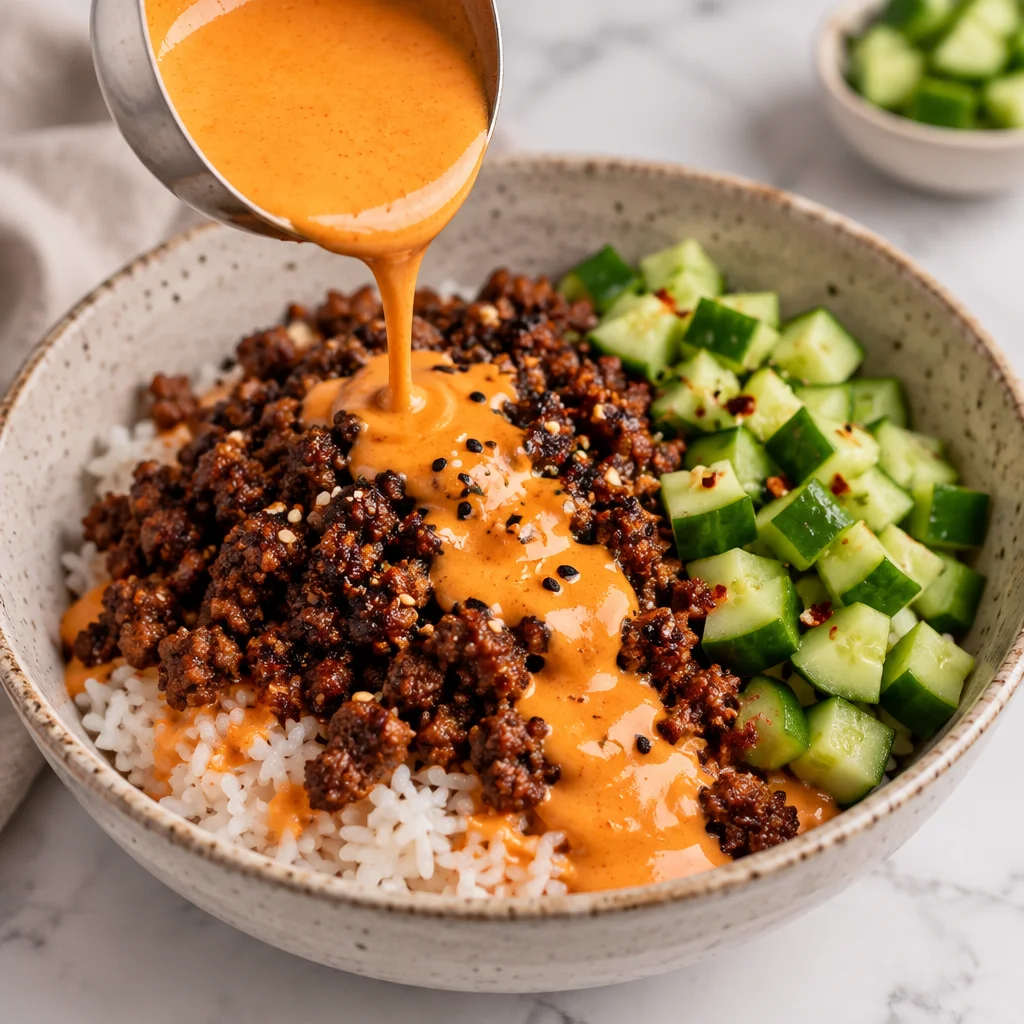
Gochujang Beef Rice Bowls are my answer to those nights when I want something cozy, spicy, and filling, but I do not want to babysit the stove for an hour. You get crispy, browned ground beef, a creamy gochujang broth that tastes way fancier than it is, and a rice bowl that feels like takeout but better. I started making these when I was bored of plain beef and rice, and now it is one of my most repeated dinners. The best part is you can make it mild or fiery depending on who is eating. If you love big flavor with simple steps, you are in the right place.
What Are Gochujang Beef Rice Bowls?
Think of Gochujang Beef Rice Bowls as a build your own situation, but with a clear plan. You start with warm rice, add savory crispy beef, then ladle over a creamy, spicy broth that ties everything together. It is not a soup and it is not dry. It is that perfect in between that makes every bite feel saucy and comforting.
I also love that it is flexible. If you have leftover rice, random veggies, or a half used tub of cottage cheese, this recipe actually helps you use it up instead of ignoring it in the fridge.
And if you are in a rice bowl phase like I usually am, you might also like these chicken rice bowls for a more classic, weeknight vibe.
Why Crispy Beef and Creamy Broth Work Together
This is the magic trick. Crispy beef gives you deep, toasty flavor and little crunchy bits. The creamy broth softens it just enough, so the bowl does not feel heavy or dry. It is basically texture therapy.
Also, gochujang has that sweet spicy funk going on, and creaminess makes it feel mellow and balanced. So even if you are a little nervous about spice, this combo keeps it friendly.
Key Ingredients for the Gochujang Broth
This broth is the cozy part. It is creamy, a little spicy, and super satisfying. Here is what makes it work:
- Gochujang for heat and sweetness
- Cottage cheese blended smooth for creaminess and protein
- Miso for savory depth
- Soy sauce for salt and that familiar umami
- Garlic and ginger for freshness
- Chicken or beef broth to loosen everything into a spoonable sauce
I know cottage cheese sounds random if you have never blended it into sauces, but trust me. When it is smooth, it acts like a high protein cream base without being heavy.
Ingredients for Sweet-Savory Crispy Beef
The beef side is simple, but it tastes bold because we layer flavor in the pan. I usually use ground beef with a little fat in it, like 80 20, because that is how you get the best crisping.
You will want:
Ground beef, sesame oil, soy sauce, a little brown sugar or honey, garlic, and optional rice vinegar for a tiny tang. Finish with sesame seeds if you have them. If you are into sweet heat bowls in general, these hot honey beef bowls are also a fun one to rotate in.
Gochujang, Miso, and Soy Sauce Substitutions
I try not to be precious about ingredients. Use what you can find.
Gochujang substitutes: There is not a perfect swap, but in a pinch you can mix a little sriracha with a spoon of honey or brown sugar. It will taste different, but still good.
Miso substitutes: If you do not have miso, you can add a splash more soy sauce and a tiny bit of peanut butter or tahini for body. Again, not identical, but it helps.
Soy sauce substitutes: Tamari works great. Coconut aminos work too, just know it is a bit sweeter.
How to Make the Creamy Gochujang Broth
This is where people think it is complicated. It is not. You basically blend and warm.
Blend cottage cheese until it is completely smooth. No grainy bits. Then blend in gochujang, miso, soy sauce, garlic, and ginger. Add broth a little at a time until it looks like a creamy sauce you would happily spoon over rice.
Pour it into a small pot and warm it gently. Do not blast it on high heat. Keep it at a low simmer so it stays silky.
This is also a great time to cook rice if you have not already. I love this 30-minute garlic turmeric rice with these bowls because it brings extra warmth and color.
How to Brown Ground Beef Until Crispy
If you want crispy ground beef, here is the deal: do not stir constantly.
Heat a skillet until it is hot. Add the beef and press it down into an even layer. Let it sit. When you finally stir, you should see real browning, not gray crumbles. Keep cooking until the moisture cooks off and the beef starts to get those crispy edges.
Practical tips that actually help:
Use a wide pan so the beef browns instead of steaming. Drain excess fat if there is a lot, but leave a little for flavor. Salt lightly early, then adjust later once the sauce goes in.
How to Caramelize the Sesame Beef Sauce
Once the beef is browned and crispy, you build that glossy sauce right in the pan. Add garlic for about 30 seconds, then soy sauce and a little brown sugar or honey. Stir and let it bubble for a minute or two until it clings to the beef. A tiny splash of rice vinegar at the end wakes everything up.
This step is quick, but it is where the bowl starts smelling unfairly good. Like people wandering into the kitchen asking what is happening.
How to Build the Rice Bowls
Now you assemble. This is my order, and it works every time.
Spoon hot rice into your bowl. Add a generous pile of crispy beef. Ladle creamy gochujang broth around it, not directly on top if you want the beef to stay crisp. Then add toppings.
If you want another Korean inspired bowl for comparison, these Korean BBQ steak rice bowls are super satisfying too.
How to Adjust the Spice Level
This is the part I care about when I am cooking for friends, because everyone is different with heat.
For milder bowls, start with less gochujang in the broth and add more later. You can also add a little extra blended cottage cheese to cool it down without making it watery.
For spicier bowls, add more gochujang, a pinch of gochugaru if you have it, or even a few drops of toasted chili oil on top. Just taste as you go. That is the whole trick.
Best Toppings for Gochujang Beef Bowls
Toppings make the bowl feel fresh and fun. My favorites are:
Quick cucumbers with a pinch of salt and splash of vinegar, shredded carrots, kimchi, sliced scallions, soft boiled eggs, sesame seeds, and a drizzle of sesame oil. Even a handful of baby spinach works because the warm broth wilts it instantly.
If you have picky eaters, put toppings in little bowls and let everyone choose. It makes dinner feel like a treat.
Protein, Rice, and Broth Variations
I make Gochujang Beef Rice Bowls a lot, and I still change them up depending on what I have.
Protein swaps: ground turkey, ground chicken, or even crumbled tofu can work. Just know lean meats do not crisp as easily, so use a hot pan and a little oil.
Rice swaps: jasmine rice, brown rice, sushi rice, or cauliflower rice if you want lighter. Sometimes I use leftover rice and pan fry it for a minute so it is hot and a little toasty.
Broth swaps: use chicken broth, beef broth, or even veggie broth. If you want a different creamy vibe, you might like these creamy Cajun chicken rice bowls on another night.
Tips for Smooth Cottage Cheese Broth
If you have ever had a sauce turn out a little grainy, it is usually the blending step.
Here is what helps: blend the cottage cheese alone first until totally smooth. Use a decent blender if you can. Add a splash of broth to help it move. Then add the gochujang and seasonings and blend again. Warm it gently, and do not let it boil hard.
If it thickens too much, just whisk in more broth. It is forgiving.
What to Serve with Gochujang Beef Rice Bowls
These bowls are pretty complete, but if you want something on the side, keep it simple and crunchy.
- Simple cucumber salad or quick pickled veggies
- Steamed edamame with salt
- Roasted broccoli or sautéed green beans
- A little fruit, like orange slices, if you want a refreshing bite
;
How to Store, Meal Prep, and Reheat
This is a great meal prep situation, but store things separately if you can. Keep rice in one container, crispy beef in another, and broth in a jar. Toppings go in their own little bag or container.
In the fridge, everything is good for about 3 to 4 days. Reheat rice and beef in the microwave, and warm the broth gently on the stove or in short microwave bursts, stirring in between. If the broth thickens in the fridge, add a splash of broth or water and stir.
If you are making Gochujang Beef Rice Bowls for lunches, I recommend packing the broth separately and pouring it in right before eating, so the beef stays as crispy as possible.
Common Questions
Can I make Gochujang Beef Rice Bowls without cottage cheese?
Yes. You can use Greek yogurt for a tangier taste, or a small splash of cream. Just warm gently so it does not separate.
What kind of gochujang should I buy?
Any standard Korean gochujang paste works. Look for one that lists red chili pepper paste, rice, and fermented soybeans. Start small, then add more to taste.
How do I keep the ground beef crispy?
Use a hot, wide pan, do not overcrowd, and do not stir constantly. When building the bowl, ladle broth around the beef instead of drowning it.
Is this recipe very spicy?
It can be, but it does not have to be. Use less gochujang and add extra creamy base to mellow it out.
Can I freeze it?
You can freeze the cooked beef and rice. I do not love freezing the creamy broth because the texture can change a bit, but it still works if you reblend or whisk hard while reheating.
A cozy bowl you will actually crave again
If you make these Gochujang Beef Rice Bowls once, you will probably start keeping gochujang on hand just for them. The crispy beef, creamy broth, and warm rice combo hits that comfort food sweet spot without being complicated. If you want more inspiration, I have bookmarked both Gochujang Beef Bowls with Spicy Cucumber Salad – Little Spice Jar and 20 Minute Korean Gochujang Beef Bowls. – Half Baked Harvest for extra topping and shortcut ideas. Try it your way, taste as you go, and do not stress the details. When you make it, I hope you get that quiet, happy moment after the first bite when you realize dinner is going to be really good.
Print
Gochujang Beef Rice Bowls
- Total Time: 40 minutes
- Yield: 4 servings 1x
Description
Cozy and satisfying rice bowls featuring crispy ground beef and a creamy, spicy gochujang broth.
Ingredients
For the Gochujang Broth
- 1 cup Cottage cheese (Blended smooth for creaminess)
- 2 tablespoons Gochujang (For heat and sweetness)
- 1 tablespoon Miso (For savory depth)
- 2 tablespoons Soy sauce (For salt and umami)
- 2 cloves Garlic, minced (For freshness)
- 1 inch Ginger, minced (For freshness)
- 1 cup Broth (chicken or beef) (To loosen the sauce)
For the Crispy Beef
- 1 pound Ground beef (Use 80/20 for best crisping)
- 1 tablespoon Sesame oil (For cooking the beef)
- 2 tablespoons Soy sauce (For flavoring beef)
- 1 tablespoon Brown sugar or honey (For sweetness)
- 2 cloves Garlic, minced (To add flavor to the sauce)
- 1 teaspoon Rice vinegar (Optional for tang)
- 1 tablespoon Sesame seeds (To finish the dish)
For Serving
- 4 cups Cooked rice (Warm, any variety works)
- 1 cup Quick cucumbers, shredded (For a fresh topping)
- 1 cup Kimchi (For additional flavor)
- 4 half Soft boiled eggs (Optional topping)
- 1 cup Sliced scallions (For garnish)
- 1 cup Shredded carrots (Optional topping)
- 1 cup Baby spinach (Optional topping that wilts with broth)
Instructions
Prepare the Gochujang Broth
- Blend the cottage cheese until completely smooth.
- Add gochujang, miso, soy sauce, garlic, and ginger to the blended cottage cheese.
- Gradually add broth to achieve a creamy sauce consistency.
- Pour the mixture into a small pot and warm gently without boiling.
Cook the Crispy Beef
- Heat a skillet until hot, then add ground beef and press down into an even layer.
- Cook without stirring until browned and crispy, then drain excess fat.
- Add garlic, soy sauce, and brown sugar or honey, stirring until bubbly.
Assemble the Bowls
- Spoon hot rice into bowls and add a generous portion of crispy beef.
- Ladle creamy gochujang broth around the beef, being careful not to pour directly over it.
- Top with your choice of garnishes like cucumbers, kimchi, or eggs.
Notes
Store components separately for meal prep, keeping rice and beef in one container and broth in another. Reheat gently, adding broth if needed to thin it out.
- Prep Time: 15 minutes
- Cook Time: 25 minutes
- Category: Dinner, Main Course
- Cuisine: asian, Korean
Nutrition
- Calories: 650
- Sugar: 5
- Sodium: 900
- Fat: 25
- Saturated Fat: 10
- Carbohydrates: 68
- Fiber: 3
- Protein: 35

Related posts:
 Sweet Potato Bowl Recipes 2025: 10 Viral Ideas to Try at Home
 Crockpot Sausage and Green Beans: Dump-and-Go Recipe
 Why This Crockpot Chicken Pot Pie Is the Easiest Comfort Food
 Cajun Potato Soup for Holidays and Cold Weather
 Delicious Shrimp and Corn Chowder That Will Warm Your Heart
 Crunchy Crispy Air Fryer Chicken & Mozzarella Wraps | Easy Air Fryer Recipe





 Appetizers & Sides
 Main Dishes
 Drinks & Wellness
 Desserts & Baking