
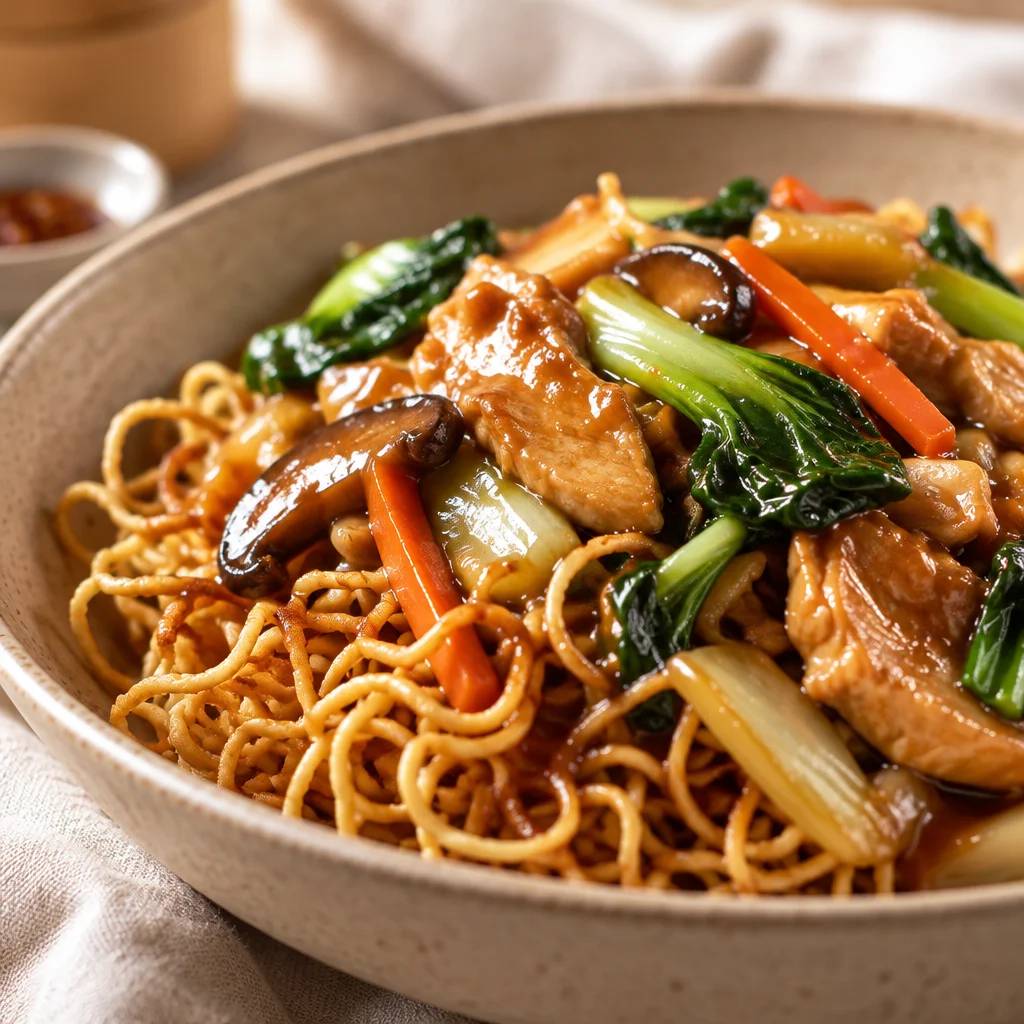
Cantonese chow mein combines crispy pan-fried noodles with a rich, glossy soy-based sauce for that restaurant-style flavor and crunch I always crave. It’s one of my favorite quick weeknight dinners, especially when I have a few odds and ends in the fridge and a bag of noodles waiting to be used. The trick is getting those noodles golden and crispy while keeping them from turning soggy once the sauce goes on. A few simple steps make all the difference.
What Is Cantonese Chow Mein
Cantonese chow mein, the way I grew up eating it, is all about crispy noodles on the bottom and saucy toppings on top. It is not the same as the soft stir-fried noodles you might see in a takeout box. Here, the noodles get pan-fried until they form a lightly browned “noodle pancake,” then you spoon a simple veggie topping and sauce over it.
I like it because it is forgiving. You can keep the base the same and switch the vegetables or protein based on what you have. On cold nights, I will sometimes pair it with something cozy like crockpot chicken corn chowder if I am feeding a crowd and want a soup on the side too.
The main goal is texture. You want crunchy edges, tender noodles inside, and a sauce that clings instead of pooling.
Why These Pan-Fried Noodles Turn Crispy
The crispiness is not magic, it is just moisture control plus steady heat. If the noodles are too wet, they steam and go soft. If the pan is not hot enough, they soak oil instead of crisping. And if you keep flipping them around too much, they never get a chance to brown.
My rule is simple. Let the noodles sit in the pan long enough to form a crust before you touch them. That crust is what gives you that crackly bite that makes Cantonese chow mein so fun.
Also, oil matters. You do not need a ton, but you do need enough to coat the pan well so the noodles fry, not stick.
Choosing Fresh Chow Mein Egg Noodles
If you can find fresh chow mein egg noodles in the refrigerated section, grab them. They usually come in a bundle and look slightly yellow. They cook quickly, and the texture is springy, which helps them hold up when you pan-fry.
If you are comparing options at the store, here is what I look for:
Fresh egg noodles: best chew, easiest crunch.
Thin wonton noodles: also great, crisp fast.
Dried chow mein noodles: workable, but you must boil properly.
Whatever you buy, check the package for cooking instructions and do not overcook. Overcooked noodles break and turn mushy when fried.
Ingredients for the Noodles and Vegetables
This is the part where you can relax. You do not need a long list. I usually make a basic vegetable version and add protein only if I feel like it.
- Chow mein egg noodles, fresh if possible
- Neutral oil (canola, avocado, or peanut)
- Garlic, minced
- Green onions
- Carrots, cut thin
- Bok choy or napa cabbage
- Bean sprouts
- Optional mushrooms or bell pepper
I love bean sprouts in Cantonese chow mein because they add crunch and keep the whole dish feeling light. If you want a cozy soup pairing on the side, shrimp and corn chowder is surprisingly good with these flavors, especially if you like a little sweet corn with salty soy sauce.
How to Mix the Cantonese Soy Sauce
This sauce is the heart of the dish. I keep it simple and balanced, salty but not harsh, and just thick enough to coat the vegetables.
In a small bowl, mix:
Soy sauce (mostly light soy)
Oyster sauce for depth
A tiny pinch of sugar to round it out
A splash of sesame oil at the end, not too much
A little cornstarch mixed with water to thicken
I always taste the sauce before it hits the pan. If it tastes slightly strong in the bowl, it will be perfect once it coats veggies and noodles. If it tastes perfect in the bowl, it might taste weak on the plate.
For meal planning, I sometimes make a double batch of sauce and use it later in quick dinners. It is the same idea I use when I cook something like crockpot chicken corn chowder and save a portion for another day.
Equipment and Heat for Pan-Frying
You do not need fancy gear, but you do need the right pan and decent heat control. A wide nonstick skillet works great. A well-seasoned cast iron pan also works, but you have to be more confident and keep the noodles moving only when needed.
Heat tip: medium-high is usually the sweet spot. Too low and the noodles get oily. Too high and the edges burn before the center warms through.
If your stove runs hot, lean closer to medium and just give it more time. This recipe rewards patience more than power.
How to Soften and Drain the Noodles
If you are using fresh noodles, you often just need a quick blanch, like 30 to 60 seconds, to loosen them up. If you are using dried, cook them until barely tender. Please do not cook them “until soft.” That is the road to broken noodles and sad texture.
Drain well, then rinse quickly with cool water to stop cooking. After that, let them sit in the colander for a minute. I even blot gently with a clean towel if they look wet. Dry noodles crisp. Wet noodles steam. That is the whole game.
This drying step feels annoying when you are hungry, but it is one of the main reasons homemade Cantonese chow mein can actually come out crispy.
Step-by-Step Cantonese Chow Mein
Here is my flow. I like doing it in two parts: crisp the noodles first, then do the toppings and sauce.
1) Crisp the noodles:
Heat 1 to 2 tablespoons oil in a wide pan. Spread noodles into an even layer. Press them down lightly. Let them cook without stirring for a few minutes until the bottom is golden. Flip in sections if you can, then crisp the other side. Slide onto a plate.
2) Cook the vegetables:
Add a bit more oil if needed. Toss in garlic and the white parts of green onion. Add carrots and bok choy stems first, then leafy parts later.
3) Sauce it:
Stir your sauce again, then pour it in. Let it bubble and thicken so it coats the vegetables.
4) Assemble:
Pile the saucy vegetables right over the crispy noodles and eat immediately.
This is the dinner I make when I want that takeout feeling but still want to know exactly what went into my pan. And yes, I have absolutely eaten it straight from the plate standing at the counter.
How to Crisp Noodles Without Burning Them
This is the part people struggle with, so here is what actually helps.
Spread them out. If the noodles are piled, they steam.
Do not stir constantly. Let a crust form.
Adjust heat as you go. If you smell burning, lower it and add a tiny splash more oil around the edges.
Flip in chunks. You are not making scrambled noodles, you are making a crispy layer.
If you want extra crunch, you can crisp a little longer, but remember the sauce will soften the top. That is why the bottom needs to be confidently crisp for Cantonese chow mein to really shine.
When to Add Bean Sprouts and Aromatics
I add garlic early, but I add bean sprouts late. Bean sprouts are delicate. If you cook them too long, they go limp and watery. I like tossing them in right at the end, after the sauce thickens, then turning off the heat. They stay bright and crunchy that way.
Green onions are similar. I use the whites early with garlic, and the greens at the very end like a fresh topping. This small timing trick keeps the whole dish tasting fresh even though it is cooked fast.
It is the same idea with quick seafood meals too. Overcooking is the fastest way to lose texture, which is why I keep things gentle when I make something like shrimp and corn chowder as well.
Tips for Balanced Sauce and Springy Noodles
My quick taste test trick
Before you pour the sauce into the pan, taste it. Then imagine it spread across a whole plate of noodles and vegetables. If it tastes a little too light, add a touch more soy sauce. If it tastes too sharp, add a pinch of sugar or a splash of water.
Keep noodles springy
Do not overboil. Drain well. Then pan-fry soon after. If noodles sit too long after boiling, they clump and get gummy.
Also, do not drown the noodles in sauce. Spoon the topping on top and let people mix as they eat. That is how Cantonese chow mein keeps its texture longer.
Avoiding Soggy or Greasy Chow Mein
Soggy chow mein usually happens when the noodles are too wet or the sauce is too thin. Greasy chow mein happens when the pan is not hot enough and the noodles soak up oil instead of frying.
Here are the fixes I actually use:
If it is soggy: drain noodles better next time, and thicken sauce with a little cornstarch slurry.
If it is greasy: heat the pan longer before adding noodles, and do not add extra oil unless the pan looks dry.
If it sticks: use a better nonstick pan or a bit more oil at the start.
Once you get the hang of it, this dish becomes a reliable go-to. I make Cantonese chow mein so often that I basically know when it is ready just by the sound of the noodles sizzling.
Noodle Substitutes and Sauce Swaps
Sometimes stores are out of the exact noodles. It happens. You still have options.
Noodle substitutes that work:
Wonton noodles, thin egg noodles, even spaghetti in a pinch (not the same, but still tasty if you crisp it well).
Sauce swaps if you are missing something:
No oyster sauce? Use a little hoisin plus a splash of water. No sesame oil? Skip it, the dish will still be good. Want heat? Add chili crisp or a pinch of white pepper.
The goal is still the same. Crispy base, savory topping, quick dinner.
Protein and Vegetable Variations
You can keep it vegetarian, or you can bulk it up.
Protein ideas:
Sliced chicken, shrimp, thin beef, or tofu. If using meat, cook it first, take it out, then add it back when the sauce goes in.
Vegetable ideas:
Snow peas, baby corn, mushrooms, broccoli, or whatever is hanging out in your crisper drawer.
I love that you can clear out leftovers this way. The crispy noodle base makes everything feel intentional, even if you are just using half a bell pepper and a handful of spinach. And if you are planning a bigger comfort-food dinner night, I have totally served this alongside crockpot chicken corn chowder for people who want both noodles and soup.
Serving Suggestions and Leftover Storage
How I serve it
- Serve immediately so the noodles stay crisp
- Add extra green onions on top
- Offer chili oil or chili crisp on the side
- Pair with a light soup, even something like shrimp and corn chowder if you want a fun mix of flavors
Storing leftovers
I will be honest, this is best fresh. But if you have leftovers, store noodles and topping separately if possible. Reheat noodles in a dry pan to bring back some crispness. Reheat the topping in a small pot or microwave, then spoon it over the noodles again.
If everything is already mixed, it will still taste good, it just will not be crunchy. Think of it more like saucy noodles the next day.
Common Questions
Q: Can I make Cantonese chow mein without oyster sauce?
Yes. Use a bit of hoisin sauce plus a splash of soy sauce and water. You will lose a little depth, but it still works.
Q: Why are my noodles not getting crispy?
They are probably too wet, or the pan is not hot enough. Drain better and let the pan heat for a full minute before adding noodles.
Q: Do I have to flip the noodles?
No, you can crisp just one side if you want. But flipping gives you more crunch overall and a sturdier noodle base.
Q: When do I add bean sprouts?
At the very end, after the sauce thickens. Turn off the heat, stir them in, and they stay crunchy.
Q: Can I prep anything ahead?
Yes. Chop vegetables and mix the sauce earlier in the day. Just wait to cook the noodles until right before eating.
A Cozy Final Bite Before You Go
If you remember just a few things, it is this: dry your noodles well, use steady medium-high heat, and do not fuss with the pan too much while the crust forms. Once you nail the crispy base, Cantonese chow mein becomes one of those recipes you can riff on forever. If you want to compare styles or pick up extra tips, I have enjoyed reading Dad’s Cantonese Chow Mein: A Chinese Chef’s Secrets and also this homey take from Cantonese Chow Mein… – Susan’s Savour-It!. Now go grab that pack of noodles, clear a little space on the stove, and give it a try tonight. I really think you will surprise yourself.
Print
Cantonese Chow Mein
- Total Time: 35 minutes
- Yield: 4 servings 1x
Description
A quick and delicious recipe for Cantonese chow mein featuring crispy pan-fried noodles topped with a savory sauce and fresh vegetables.
Ingredients
Noodles and Vegetables
- 8 oz Chow mein egg noodles, fresh if possible (Fresh noodles work best for texture.)
- 2 tbsp Neutral oil (canola, avocado, or peanut) (For frying the noodles.)
- 2 cloves Garlic, minced (Adds flavor to the dish.)
- 2 stalks Green onions (Chopped, reserve greens for topping.)
- 1 cup Carrots, cut thin (Sliced for quicker cooking.)
- 1 cup Bok choy or napa cabbage (Provides texture and flavor.)
- 1 cup Bean sprouts (Add crunch to the dish.)
- 1 cup Optional mushrooms or bell pepper (Use whatever vegetables you have.)
Cantonese Soy Sauce
- 3 tbsp Soy sauce (Mostly light soy.)
- 1 tbsp Oyster sauce (For depth of flavor.)
- 1 pinch Sugar (To round out the sauce.)
- 1 tsp Sesame oil (A splash for flavor.)
- 1 tbsp Cornstarch mixed with water (To thicken the sauce.)
Instructions
Crisp the Noodles
- Heat 1 to 2 tablespoons of oil in a wide pan.
- Spread noodles into an even layer and press them down lightly.
- Let them cook without stirring for a few minutes until the bottom is golden.
- Flip in sections if possible and crisp the other side.
- Slide onto a plate.
Cook the Vegetables
- Add a bit more oil to the pan if needed.
- Toss in garlic and the white parts of green onion.
- Add carrots and bok choy stems first, then the leafy parts later.
Sauce it
- Stir your sauce and pour it into the pan.
- Let it bubble and thicken to coat the vegetables.
Assemble
- Pile the saucy vegetables right over the crispy noodles.
- Serve immediately.
Notes
Best served fresh to maintain crispiness. Store leftovers separately to reheat for optimal texture.
- Prep Time: 20 minutes
- Cook Time: 15 minutes
- Category: Dinner, Main Course
- Cuisine: Chinese
Nutrition
- Calories: 350
- Sugar: 2
- Sodium: 750
- Fat: 12
- Saturated Fat: 2
- Carbohydrates: 54
- Fiber: 3
- Protein: 10

Related posts:
 Sweet Potato Bowl Recipes 2025: 10 Viral Ideas to Try at Home
 Crockpot Sausage and Green Beans: Dump-and-Go Recipe
 Why This Crockpot Chicken Pot Pie Is the Easiest Comfort Food
 Cajun Potato Soup for Holidays and Cold Weather
 Delicious Shrimp and Corn Chowder That Will Warm Your Heart
 Honey Gochujang Chicken With Sticky Air Fryer or Oven Glaze





 Appetizers & Sides
 Main Dishes
 Drinks & Wellness
 Desserts & Baking