
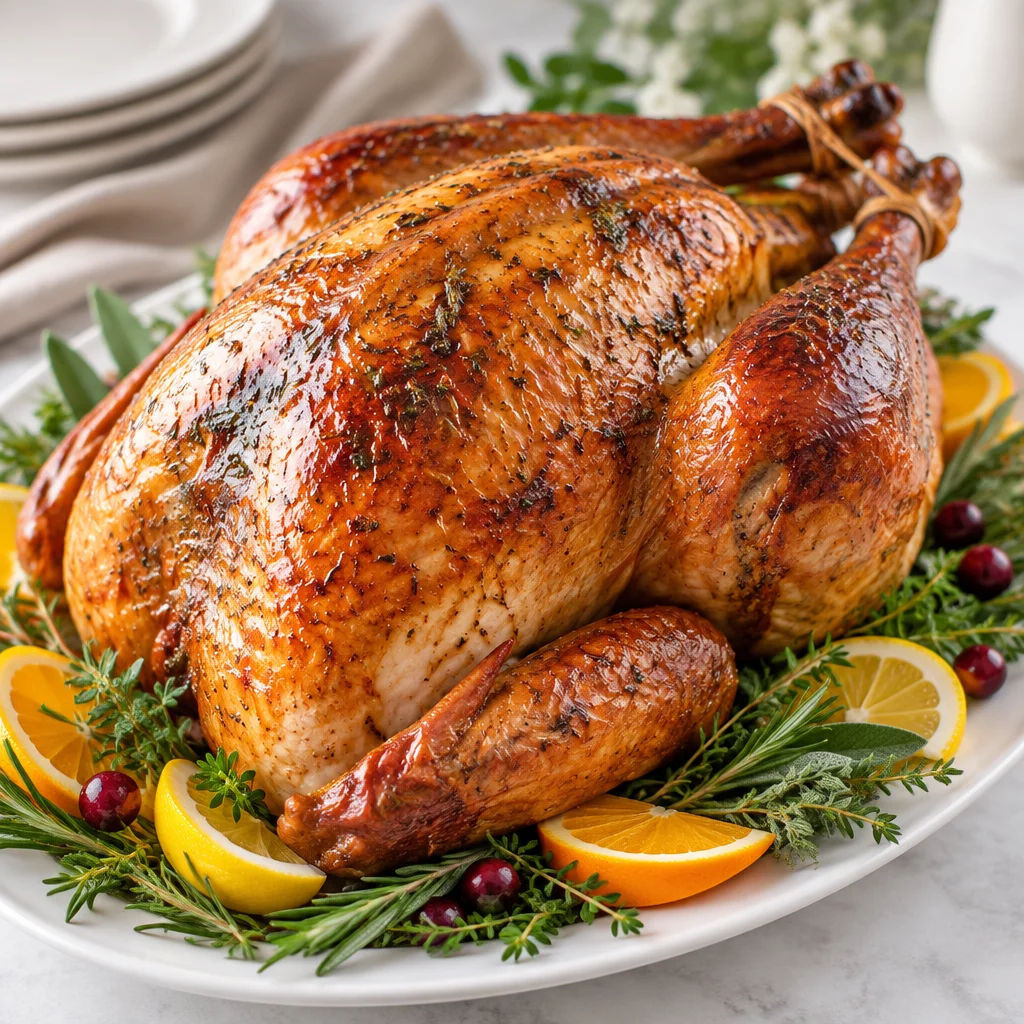
Cheesecloth Turkey saved me the year I swore I would never host again. You know the scene: the oven is full, people are hungry, and you are quietly panicking that the turkey breast is going to dry out before the legs are even close. This method is my calm in the chaos because the cheesecloth acts like a little moisture blanket while the bird roasts. You still get that holiday look, but with juicier slices and way less stress. If you have ever carved a turkey and watched the white meat turn crumbly, this one is for you.
What Is the Cheesecloth Turkey Method?
In plain English, the Cheesecloth Turkey method is when you soak a big piece of cheesecloth in melted butter and white wine, then drape it over the turkey while it roasts. The cloth slowly feeds the surface with moisture and flavor while also buffering the meat from harsh, direct oven heat.
I like it because it feels almost foolproof, even if you are not a confident turkey person. And if you want a more classic approach for comparison, I also keep this roast turkey recipe bookmarked for those years when I do not feel like pulling out cheesecloth.
Why Cheesecloth Helps Protect a Roasting Turkey
Turkey breast is basically the first part to dry out because it is lean. Meanwhile, the dark meat needs longer time to become tender. Cheesecloth helps by doing a few simple things:
It slows down browning early on, so the skin does not get too dark before the inside is done.
It holds moisture right on the surface, so the breast has a better chance of staying juicy.
It spreads flavor evenly since that butter and wine mixture touches everything under the cloth.
This is especially helpful if your oven runs hot or if you get distracted easily. I am saying this with love, because I have definitely started setting the table and totally forgotten I was supposed to baste something.
Ingredients for Herb Butter and White Wine Baste
This is the fun part because the kitchen starts smelling like a real holiday situation. Here is what I use, and yes, you can tweak it based on what you have.
- Unsalted butter, 1 to 1 and 1/2 cups, melted
- Dry white wine, 1 cup (pinot grigio or sauvignon blanc works)
- Garlic, 4 to 6 cloves, minced or grated
- Fresh herbs, a big handful (sage, thyme, rosemary, parsley)
- Salt and black pepper
- Optional: lemon zest or a squeeze of lemon for brightness
Quick note: use a dry wine you would actually drink. If it tastes super sweet in the glass, you probably will not love it on turkey.
How to Choose and Prepare a Whole Turkey
I usually buy a turkey based on headcount, plus leftovers. My sweet spot is about 1 to 1 and 1/4 pounds per person, especially if I want sandwich material later.
Plan ahead for thawing. If it is frozen, give it several days in the fridge on a tray. If you forget, the cold water thaw method can work, but it is annoying and you will be changing water forever.
Before roasting, do this:
Pat it dry with paper towels. Pull out the giblets and neck. Tuck the wing tips back so they do not burn. Salt the cavity lightly. If you want, you can add a halved onion, a couple garlic cloves, and herbs inside for aroma.
If you love turkey but do not always want a whole bird, try this roasted turkey breast option for smaller gatherings.
How to Make the Garlic and Fresh Herb Butter
Melt the butter gently. I do it in a saucepan on low so it does not splatter everywhere. Stir in garlic, chopped herbs, salt, pepper, and your wine. Let it warm together for a minute or two. You are not trying to boil it, just get it friendly and blended.
One tip I learned the hard way: keep a little of this mixture aside in a bowl for later basting, so you are not dipping your brush into a pot that has touched raw turkey drippings. It is a small thing, but it makes me feel better and it is just cleaner.
How to Soak and Position Cheesecloth on the Turkey
Get a big piece of cheesecloth, ideally the wide kind. Fold it into layers so you have a thick blanket. Then dunk it into the warm butter and wine mixture until it is fully soaked. Let the excess drip off, but do not wring it out like laundry. You want it wet.
Drape it over the turkey breast and down the sides. It should cover most of the top surface. If you have extra cloth, tuck it around the legs too. Then place the turkey on a rack in a roasting pan.
And yes, it looks a little odd at first. That is normal. Once it starts roasting, you will see why it works.
How to Roast a Turkey With Cheesecloth
I roast at 325 F. That steady, moderate heat gives the dark meat time without punishing the breast. Put the turkey in the oven and let it do its thing.
If you are a leftovers person, keep this in mind now: the juicier you keep the meat, the better your next day sandwiches. This turkey croissant sandwich is basically the reason I never mind cooking a big bird.
About the pan: I like to add a cup or two of broth in the bottom so the drippings do not burn. You can also add onion chunks and carrots under the rack for extra flavor in the gravy.
Basting Schedule for a Moist, Evenly Roasted Bird
Okay, here is the part people overcomplicate. You do not need to baste every five minutes. I baste every 30 to 40 minutes. Use the butter and wine mixture you set aside, or use some pan juices once everything is cooking and safe.
Keep it simple:
First baste about 30 minutes in, just to re-wet the cloth. Then keep going every 30 to 40 minutes until the turkey is close to done. If the cloth looks dry at any point, give it a little love.
And please, do not keep the oven door open forever. A quick in and out is best.
When and How to Remove the Cheesecloth
I remove the cheesecloth during the last stretch so the skin can finish browning. For most turkeys, that is around the last 30 to 45 minutes of roasting, but use your eyes too. If the breast temp is getting close and the skin is still pale, it is time.
Use tongs and lift carefully because it is hot and buttery. I set it in a bowl and toss it. Then I baste the exposed skin once more and let the turkey roast uncovered.
How to Brown and Crisp the Turkey Skin
Once the cheesecloth is off, your job is simple: let the skin get golden and crisp. If your oven browns unevenly, rotate the pan halfway through this uncovered stage.
If the breast is perfect but the skin is not quite there, you can raise the oven temp slightly, like to 350 F, for the final 10 to 15 minutes. Just watch closely so it does not go from golden to too dark.
Turkey Cooking Times and Safe Doneness Checks
Time is a guide, not a guarantee. Every turkey is a little different, and ovens can be moody. A thermometer is the only thing I fully trust.
Here is what I look for:
Breast: 160 F, then it will rise as it rests. Thigh: 170 to 175 F for tender dark meat.
Also check that the juices run clear when you wiggle the thigh area. If you are still nervous, keep cooking, but do it gently so you do not dry the breast. This is exactly why Cheesecloth Turkey is such a comfort.
How to Prevent Dry Breast Meat and Other Common Problems
Dry breast meat usually comes from overcooking, plain and simple. Here are my best real life fixes.
Start with a fully thawed turkey. A partially frozen bird cooks unevenly, and the breast pays the price.
Do not skip resting. If you carve right away, the juices run out onto the board instead of staying in your slices.
Use the cheesecloth correctly. It should be soaked, layered, and covering the breast well.
Shield hot spots. If one side browns faster, rotate the pan or tent that area loosely with foil after the cheesecloth comes off.
Also, if you want turkey flavor on a random weeknight without all the drama, I make this ground turkey and peppers recipe all the time.
Stuffed vs Unstuffed Turkey Adjustments
I am going to be honest, I rarely stuff the turkey anymore. It slows down cooking and makes temperature checks more stressful. If you love stuffing, bake it separately and you will still get all the flavor without worrying about undercooked center.
If you do stuff the bird, you must check the stuffing temp too. It needs to hit 165 F. Expect the turkey to take longer, sometimes a lot longer, and the breast can overcook while you wait. If you go stuffed, the cheesecloth method really helps protect the white meat, but it is still a balancing act.
Resting, Carving, and Making Gravy From Pan Juices
When the turkey hits temp, take it out and let it rest at least 20 to 30 minutes. I know it is hard because everyone is hovering, but resting is where the magic happens.
Carving: remove legs and thighs first, then slice the breast against the grain. Keep a serving platter nearby and pour a few spoonfuls of pan juices over the slices to keep them glossy and warm.
For gravy, skim off some fat from the drippings. Warm the pan juices in a saucepan, whisk in a little flour or cornstarch slurry, and add broth until you like the thickness. Taste and season at the end. The herb butter drippings do a lot of the work for you.
“I tried your Cheesecloth Turkey plan last Thanksgiving and my dad, who always complains turkey is dry, went back for seconds. That literally never happens.”
If you are planning out leftovers already, this ground turkey sweet potato bowl is also great for using extra cooked turkey meat in a cozy, meal prep kind of way.
Cheesecloth Turkey FAQs
Do I have to use real cheesecloth, or can I use something else?
Use real cheesecloth if you can. Paper towels can stick and break down. Thin cotton can work in a pinch, but it needs to be clean and food safe, and cheesecloth is just easier.
Will the turkey skin still get crispy?
Yes, as long as you remove the cloth for the final 30 to 45 minutes and let the skin roast uncovered. That uncovered time is where the crisp happens.
What white wine is best for this?
A dry white wine is best. Pinot grigio, sauvignon blanc, and unoaked chardonnay all work. Avoid anything super sweet.
Can I prep the herb butter ahead of time?
Totally. Make it a day ahead, keep it in the fridge, then melt it gently before soaking the cloth. It actually makes the day feel easier.
What if my turkey is browning too fast even with cheesecloth?
Your oven may run hot. Lower the temp slightly and add a little broth to the pan. You can also tent foil over the darkest spots after removing the cloth.
My favorite way to wrap this up and serve it
If you have been burned by dry turkey before, Cheesecloth Turkey is the confidence boost you need. You get a moist breast, flavorful drippings, and a bird that looks like you really knew what you were doing, even if you were secretly guessing half the time. If you want to see another take on it, I found this helpful read on Super Juicy Turkey Baked In Cheesecloth, and this step by step walkthrough is great if you are a visual learner: Cheesecloth Herb Roasted Turkey : 13 Steps (with Pictures). Try it once and I think it will become your new holiday safety net. And if you do make it, promise yourself you will stash a little extra meat for leftovers, because you will want them.
Print
Cheesecloth Turkey
- Total Time: 4 hours
- Yield: 10 servings 1x
Description
This Cheesecloth Turkey method ensures a moist and flavorful bird by draping cheesecloth soaked in butter and white wine over the turkey while it roasts.
Ingredients
Herb Butter and Wine Baste
- 1 to 1.5 cups Unsalted butter, melted
- 1 cup Dry white wine ((pinot grigio or sauvignon blanc works))
- 4 to 6 cloves Garlic, minced or grated
- 1 big handful Fresh herbs (sage, thyme, rosemary, parsley)
- to taste Salt and black pepper
- optional Lemon zest or a squeeze of lemon (for brightness)
Whole Turkey Preparation
- 1 whole Turkey (about 10–12 pounds for 10 servings) (Consider 1 to 1.25 pounds per person.)
- as needed Broth (1 to 2 cups in the roasting pan)
Instructions
Preparation
- Thaw the turkey in the fridge if frozen, or use the cold water method if necessary.
- Pat the turkey dry and remove giblets and neck. Salt the cavity lightly.
- If desired, add halved onion, garlic, and herbs inside the turkey for aroma.
Making the Herb Butter
- Melt the butter over low heat in a saucepan, then stir in garlic, herbs, salt, pepper, and wine.
- Keep a small portion aside for basting later.
Preparing the Cheesecloth
- Soak a large piece of cheesecloth in the warm butter and wine mixture, allowing excess to drip off.
- Drape the cheesecloth over the turkey, covering most of the surface.
Roasting the Turkey
- Preheat oven to 325°F (163°C). Place the turkey on a rack in a roasting pan with some broth underneath.
- Baste the turkey every 30 to 40 minutes, using the set-aside butter and wine mixture.
Finishing Touches
- Remove the cheesecloth during the last 30 to 45 minutes of roasting to allow the skin to crisp up.
- Check the internal temperature: breast should reach 160°F and thighs should be 170°F-175°F.
Resting and Carving
- Let the turkey rest for at least 20 to 30 minutes before carving.
- Carve the turkey and serve with pan juices.
Notes
If you love turkey but don’t always want a whole bird, try a roasted turkey breast option. Use real cheesecloth for best results. Prep the herb butter ahead of time if needed.
- Prep Time: 1 hour
- Cook Time: 3 hours
- Category: Dinner, Main Course
- Cuisine: American, Holiday
Nutrition
- Calories: 300
- Sodium: 620
- Fat: 22
- Saturated Fat: 12
- Carbohydrates: 1
- Protein: 25

Related posts:
 The Ultimate Guide to Sandwich Recipes: Easy, Delicious Ideas for Breakfast, Lunch & Dinner
 Cozy Creamy Chicken Potato Casserole
 easy hot honey chicken bowl
 Tropical Citrus Grilled Chicken Recipe (Key West Style Marinade)
 10 Summer BBQ Chicken Recipes for Family Cookouts
 10 Best Homemade Sandwich Recipes for Lunch, Dinner & Picnics





 Appetizers & Sides
 Main Dishes
 Drinks & Wellness
 Desserts & Baking