
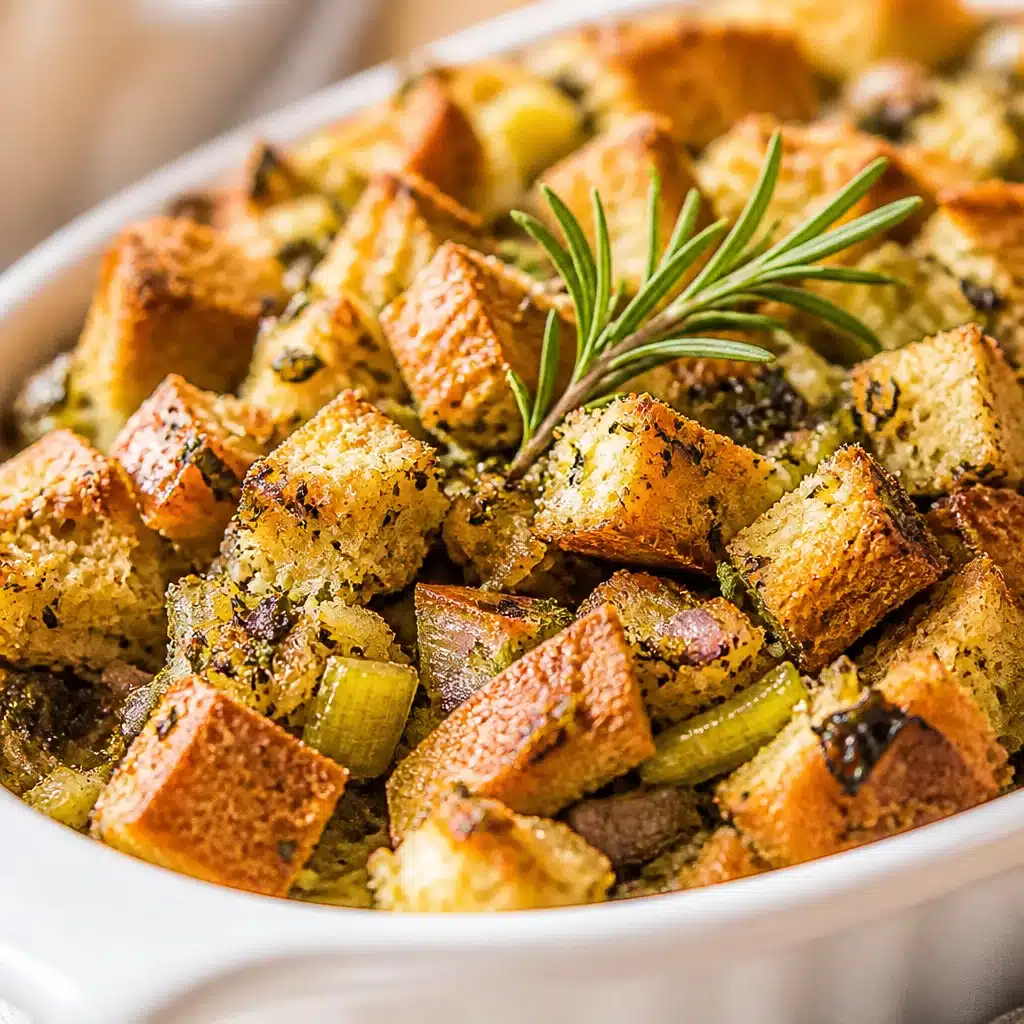
classic stuffing recipe is one of those things that sounds simple until you actually try to make it and it turns out either dry as sand or weirdly mushy. I have been there, standing in the kitchen, tasting a spoonful and thinking, why does this not taste like the cozy holiday stuffing in my head? The good news is you do not need fancy tricks, you just need the right bread, enough butter, and a handful of fresh herbs. This is the version I make every year when I want that warm, savory smell to fill the whole house. If you are cooking a big meal, this is the side dish that makes people hover near the oven.
What Makes a Classic Stuffing Recipe
To me, a true classic is all about simple comfort. A classic stuffing recipe should taste buttery, a little herby, and lightly savory from onions and celery. It should have soft middles with little chewy bits, plus a crisp top that you fight over.
Here is what I think makes it feel “classic” instead of random bread casserole:
- Butter for richness and that nostalgic flavor
- Onion and celery as the base
- Fresh herbs like sage, parsley, and thyme
- Broth added slowly so it is moist but not wet
- Eggs to help it hold together without turning dense
If you are building a whole meal, I usually pair this with something simple and cozy from my favorite roundups like these chicken dinner recipes. Stuffing makes even a basic roast chicken feel like a holiday.
Best Bread for Homemade Stuffing
Bread choice is everything. For a classic stuffing recipe, I usually grab a sturdy white bread, French bread, or a simple bakery loaf. You want something that can soak up broth but still keep its shape.
My personal favorites:
French bread: crusty, holds up well, not too sweet.
White sandwich bread: very traditional, gives a softer stuffing.
Challah: slightly richer, makes a softer bite, great if you like a little tenderness.
I avoid super airy bread because it turns to mush fast, and I avoid anything super seeded unless I want that flavor on purpose.
Also, if you are planning sides for a crowd, you might like browsing these easy side dish recipes for more simple ideas that do not steal the spotlight from the stuffing.
How to Dry or Toast Bread Cubes Properly
This step sounds boring, but it is the difference between stuffing that is perfectly moist and stuffing that feels like wet bread pudding. Dry bread cubes soak up flavor better.
Two easy options:
Air dry: Cube the bread and leave it out on a baking sheet for about 8 to 24 hours. Toss it once if you remember.
Oven toast: Bake cubes at 300°F for about 20 to 30 minutes, stirring once or twice. You are not trying to brown it hard, just dry it out.
If your bread cubes still feel squishy in the middle, give them a little longer. Dry bread equals better texture later.
Essential Vegetables Herbs and Seasonings
I keep the base classic: onion, celery, butter, herbs, salt, and pepper. That is it. Sometimes I add a little garlic, but only if the main meal is not already garlic heavy.
Here is my go to blend:
Vegetables: onion and celery, diced small so you do not get huge chunks.
Herbs: fresh parsley, fresh sage, fresh thyme.
Seasonings: salt, black pepper, and a tiny pinch of poultry seasoning if I want extra “holiday” vibes.
Take your time cooking the onion and celery in butter. You are not browning them hard, just softening them until your kitchen smells like something good is about to happen.
Fresh Herbs vs Dried Herbs for Stuffing
I love fresh herbs here because they taste brighter and more real, especially sage. When you bite into stuffing and get that little pop of herb flavor, it just feels special.
That said, dried herbs are totally fine. Use what you can find.
My quick rule for swapping
If a recipe calls for 1 tablespoon fresh herbs, use about 1 teaspoon dried. Dried herbs are stronger, and they can take over fast. If you are using dried sage, start small. You can always add more, but you cannot un sage the stuffing once it is done.
How Much Broth to Add for the Right Texture
This is where people panic, and I get it. You pour in broth and suddenly you are worried you ruined everything. The key is to add it gradually, toss, then pause.
For a classic stuffing recipe made with one large loaf worth of dried cubes (about 10 to 12 cups), I usually use 2 and a half to 3 and a half cups broth. The amount depends on how dry your bread is and how soft you like your stuffing.
You want the bread to feel damp and seasoned, not swimming. When you squeeze a handful gently, it should hold together a bit, but no liquid should drip out.
How Eggs Help Bind and Moisturize Stuffing
Eggs are the quiet heroes. They help the stuffing set up so it is scoopable, not just a pile of loose bread. They also add a little richness without making it taste eggy.
I use 2 eggs for a standard casserole dish batch. Beat them first, then stir them in after you add most of the broth. If you add eggs before the mixture is cooled a bit, you risk scrambling them, so let the veggie and butter mix cool for a few minutes before you combine everything.
How to Make Classic Stuffing Step by Step
This is the way I actually make it, no drama.
Ingredients I use most often
- 10 to 12 cups dried bread cubes
- 1 cup butter (2 sticks)
- 1 large onion, diced
- 3 to 4 celery stalks, diced
- 1 to 2 tablespoons chopped fresh sage (or less if you are cautious)
- 2 tablespoons chopped fresh thyme
- 1 cup chopped fresh parsley
- 2 to 3 and a half cups chicken or turkey broth, added slowly
- 2 eggs, beaten
- Salt and black pepper
Directions in real life order
1) Heat oven to 350°F and butter your baking dish.
2) Melt butter in a big skillet. Add onion and celery. Cook until soft, about 8 to 10 minutes.
3) Add herbs, salt, and pepper to the skillet. Stir for about 30 seconds so it smells amazing.
4) Put bread cubes in a big bowl. Pour the buttery veggie mix over the top and toss.
5) Add broth a little at a time, tossing between pours. Stop when the bread is moist but not soggy.
6) Let it cool for a couple minutes, then stir in beaten eggs.
7) Spoon into the baking dish, cover with foil, and bake.
If you are juggling a busy day and want other low effort options, I keep a list of comfort food helpers like these easy crockpot recipes for when the oven is already packed.
Best Baking Temperature and Time for Stuffing
I bake stuffing at 350°F. It is gentle enough to heat through without drying it out too fast.
My timing:
Covered: 25 to 30 minutes, so it stays moist.
Uncovered: 15 to 20 minutes, so the top gets golden.
You will know it is done when it is hot in the center and smells buttery and herby. If you like a softer stuffing, keep it covered longer. If you like it crisp, uncover earlier.
How to Keep Stuffing Moist Without Making It Soggy
The trick is moisture control from the start, not trying to fix it later. Add broth gradually, and remember it keeps absorbing while it rests.
Here are my practical tips:
Use dried bread, not fresh bread.
Do not drown it in broth, stop when it is just moist.
Bake covered first so steam keeps the inside tender.
Let it rest 10 minutes after baking so the texture settles.
If you ever overshoot and it feels too wet before baking, add another handful of dried bread cubes and toss again. It sounds too easy, but it works.
How to Get a Crisp Golden Top
I love that crunchy top. It is the part I secretly go back for when everyone is talking in the other room.
For a crisp top:
Uncover for the last 15 to 20 minutes.
Dot a few tiny bits of butter on top if you want extra browning.
Spread the stuffing in an even layer so it crisps evenly.
If you want a little extra help, broil for 1 to 2 minutes at the end, but do not walk away. Broilers go from golden to burnt in the time it takes to answer a text.
Easy Variations with Sourdough Sausage or Gluten-Free Bread
Once you have the basic method, you can play around without losing the cozy feel.
Sourdough: Gives a tangy flavor and a slightly chewier bite. Great if your meal is rich and you want balance.
Sausage: Brown 1 pound of breakfast sausage, drain, and mix it in. It turns the stuffing into a full on side dish that eats like a meal.
Gluten-free: Use a gluten-free loaf that is not too soft. Toast it longer than usual because gluten-free bread can hold moisture differently.
If you are into quick kitchen experiments, I have also tried random viral ideas like this ice water hack for speeding up prep moments, and while it is not a stuffing thing, I love having little time savers up my sleeve during holiday cooking.
How to Make Stuffing a Day Ahead
Making stuffing ahead saves your sanity. I do it when I know the oven will be busy or when I just want a calmer cooking day.
Two ways:
Option 1: Assemble everything in the baking dish, cover, and refrigerate overnight. The next day, let it sit on the counter 20 to 30 minutes, then bake as usual (it may need 10 extra minutes covered).
Option 2: Dry the bread, chop the veggies, and mix the herbs the day before. Then assemble and bake the day of.
Either way, keep the broth handy because bread can soak up extra moisture overnight. You might need a small splash more before baking.
How to Store and Reheat Leftover Stuffing
Leftover stuffing is honestly one of my favorite parts. I eat it for breakfast with an egg on top, no shame.
Storage:
Cool leftovers, then store in an airtight container in the fridge for up to 4 days.
Reheating:
Oven: Put in a baking dish, add a splash of broth, cover with foil, and warm at 325°F until hot.
Microwave: Add a tiny splash of broth, cover loosely, and heat in short bursts, stirring once.
If it seems dry, broth fixes it fast. If it seems too wet, uncover in the oven for a few minutes.
And if you are watching ingredients for any reason, I have seen people doing super simple kitchen resets like this 3 ingredient recipe idea. It is not stuffing, obviously, but I like having lighter options around when the leftovers start piling up.
Classic Stuffing FAQs
Can I bake stuffing inside the turkey?
You can, but I usually do not. It is harder to control food safety and texture. Baking in a dish is simpler, and you get a better crisp top.
Why did my stuffing turn out dry?
Most of the time it needs more broth, or it baked uncovered too long. Next time, add broth more generously and keep it covered for the first half of baking.
Why is my stuffing mushy?
Your bread may not have been dried enough, or you added too much broth too fast. Dry the cubes well and add broth gradually.
Can I freeze stuffing?
Yes. Freeze baked stuffing in an airtight container for up to 2 months. Thaw in the fridge overnight and reheat covered with a splash of broth.
Do I really need eggs?
They help it hold together and stay moist. If you skip them, it will be a bit looser and more crumbly, but still tasty.
A Cozy Dish You Will Make Again
If you take one thing from my kitchen, let it be this: a classic stuffing recipe is mostly about dried bread, plenty of butter, and adding broth slowly until it feels just right. Once you get the texture you like, the rest is easy, and those fresh herbs make it smell like pure comfort. If you want to compare approaches, I have bookmarked Best Stuffing Recipe – Our Favorite Buttery Herb Stuffing and Stuffing Recipe | The Girl Who Ate Everything because it is fun to see how other home cooks do it. Now go bake your batch, let it rest, and do not be surprised if someone “samples” half the crispy top before dinner even starts.

Classic Stuffing
- Total Time: 1 hour 30 minutes
- Yield: 10 servings 1x
Description
A cozy and savory classic stuffing made with bread, butter, fresh herbs, and vegetables that brings comfort to any holiday meal.
Ingredients
Main Ingredients
- 10 to 12 cups dried bread cubes (Use sturdy white bread, French bread, or a simple bakery loaf.)
- 1 cup butter (2 sticks) (Use for richness and flavor.)
- 1 large onion, diced (Cook until soft.)
- 3 to 4 stalks celery, diced (Cook with onion.)
- 2 tablespoons chopped fresh thyme (Adds flavor.)
- 1 cup chopped fresh parsley (Adds brightness.)
- 2 to 3.5 cups chicken or turkey broth (Add gradually to achieve desired moistness.)
- 2 large eggs, beaten (Helps to bind the stuffing.)
- to taste salt and black pepper (Season to preference.)
- 1 to 2 tablespoons chopped fresh sage (Use cautiously if unsure.)
Instructions
Preparation
- Preheat the oven to 350°F (175°C) and grease your baking dish.
- In a large skillet, melt the butter over medium heat. Add the diced onion and celery, cooking until softened, about 8 to 10 minutes.
- Add the fresh herbs, salt, and pepper to the skillet. Stir and cook for an additional 30 seconds.
- In a large bowl, combine the dried bread cubes with the buttery vegetable mixture. Toss well.
- Gradually pour in the broth, tossing as you add, until the bread is moist but not soggy.
- Let the mixture cool slightly, then stir in the beaten eggs.
- Transfer the stuffing to the prepared baking dish, cover with foil, and bake in the oven.
Baking
- Bake covered for 25 to 30 minutes to keep moisture in.
- Remove the cover and bake for an additional 15 to 20 minutes until the top is golden and crisp.
- Check that the stuffing is hot in the center before serving.
Notes
For a crisp golden top, uncover for the last 15 to 20 minutes. You can also dot with butter for better browning. Variations include using sourdough, sausage, or gluten-free bread. When preparing ahead, allow to sit for 20 to 30 minutes before baking.
- Prep Time: 30 minutes
- Cook Time: 1 hour
- Category: Holiday, Side Dish
- Cuisine: American
Nutrition
- Calories: 250
- Sugar: 1
- Sodium: 500
- Fat: 12
- Saturated Fat: 7
- Carbohydrates: 30
- Fiber: 1
- Protein: 6

Related posts:
 Make-Ahead Holiday Appetizers Everyone Loves (Easy Finger Foods for Parties)
 The Best Basil Aioli Recipe with Fresh Basil and Garlic
 Easy Sautéed Mushrooms Recipe with Garlic Butter
 Best Cucumber Ranch Crack Salad (Creamy, Crunchy & Ready in 10 Minutes)
 Italian Crispy Breaded Eggplant Recipe
 Oven Roasted Sweet Potatoes (Crispy & Caramelized)





 Appetizers & Sides
 Main Dishes
 Drinks & Wellness
 Desserts & Baking