
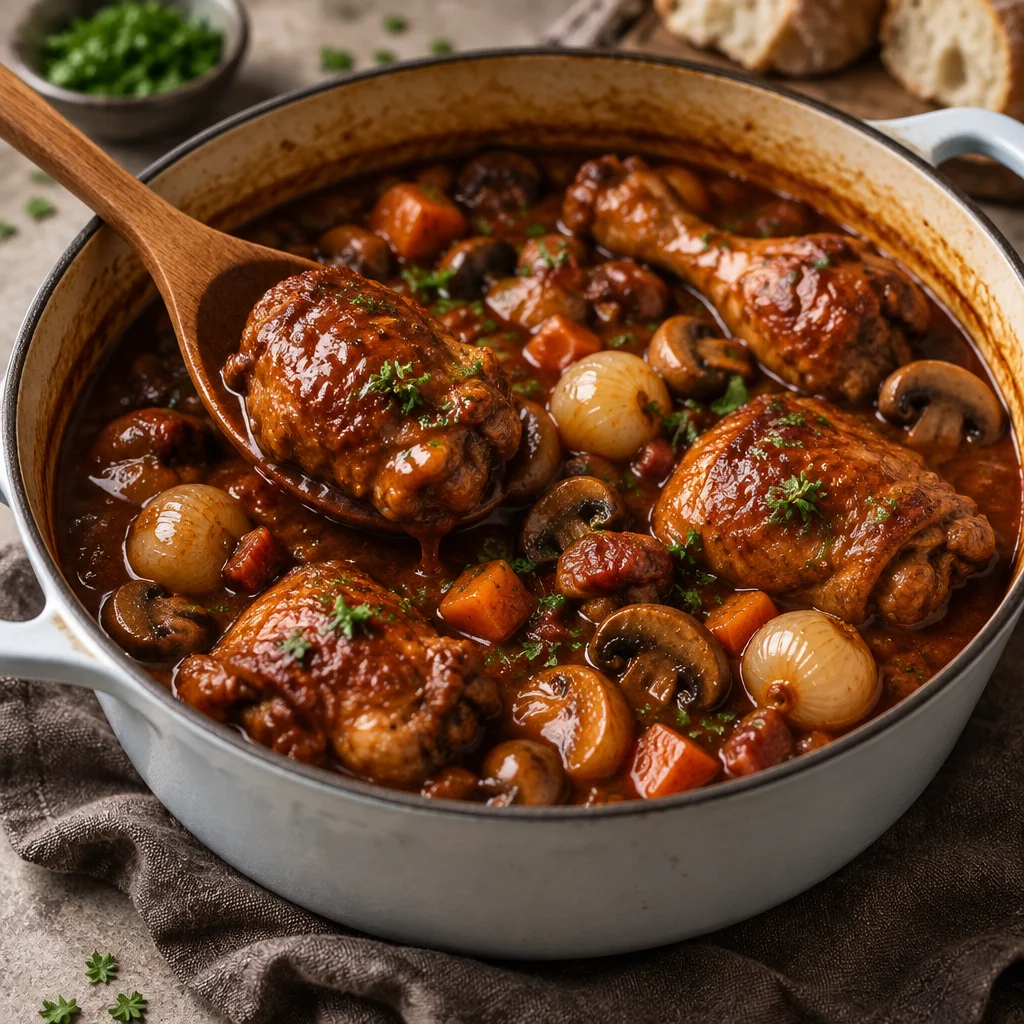
coq au vin is what I make when I want dinner to feel special, but I also need it to be mostly hands off once it’s in the oven. You know those days when you want something cozy and impressive, yet you’re not trying to juggle five pans and a bunch of fancy steps? This is that meal. It’s chicken braised in red wine until it turns super tender, with a sauce that tastes like you worked way harder than you did. The first time I made it, my kitchen smelled like a tiny French bistro and I was fully sold. Let’s get you there too.
What Is Coq au Vin and Why Does It Work
At its heart, coq au vin is a simple idea: brown chicken, add wine and aromatics, then let time do the heavy lifting. The red wine slowly cooks down, mixing with chicken juices, bacon fat, herbs, and vegetables to make a deep, savory sauce.
It works because braising is forgiving. Even if your knife cuts aren’t perfect or you get distracted for a minute, the oven gently brings everything together. The wine adds acidity, which helps tenderize, and the long cook makes the sauce taste rich and rounded.
If you love big flavor dinners like this, you might also like something bold but totally different like authentic Thai drunken noodles on a weeknight when you want spicy comfort instead of cozy French comfort.
Choosing Chicken Pieces for Braising
Use pieces that can handle a longer cook without drying out. I’m a dark meat person here, no shame. Thighs and drumsticks stay juicy and taste amazing after simmering in wine.
My go to chicken mix
- Bone in, skin on thighs for tenderness and flavor
- Drumsticks because they’re affordable and fun to serve
- If you want some white meat, add a couple bone in breasts, but pull them a bit earlier if they’re done
You can do all thighs if you want. Honestly, that’s my favorite version for coq au vin because the texture stays silky and forgiving.
Ingredients for the Classic Red Wine Sauce
This dish tastes fancy, but the ingredient list is pretty normal. The magic is in the combination and the order you add things.
Here’s what I consider the core:
- Red wine (more on picking it in a second)
- Bacon or pancetta for smoky depth
- Onion plus pearl onions later if you have them
- Carrots for sweetness
- Garlic, always
- Tomato paste just a spoon or two to deepen color and flavor
- Chicken stock to round out the braise
- Thyme and a bay leaf
- Flour (or butter plus flour) to thicken at the end
Little side note: if you’re into pantry staples and multipurpose kitchen ingredients, I’ve played around with things like apple cider vinegar in other recipes for brightness, but for this one the wine already gives you that tang, so you don’t need it.
Which Red Wine Is Best for Coq au Vin
The best red wine is one you’d actually drink. It doesn’t need to be expensive, but it shouldn’t be super sweet or “cooking wine.” Think medium bodied and dry.
Easy picks:
Pinot Noir is classic. Gamay is great if you can find it. Merlot works too, especially for a softer, rounder sauce. I usually grab a Pinot Noir under $15 and call it a day.
One quick rule: if you taste the wine and you don’t like it in a glass, you probably won’t love it reduced into a sauce either.
Bacon, Mushrooms, and Pearl Onion Substitutions
Let’s be real, not everyone has pearl onions waiting in the fridge. And sometimes mushrooms are a hard no for someone at the table. You can still make a very good coq au vin.
Try these swaps:
No bacon? Use pancetta, or even a couple tablespoons of olive oil plus a little smoked paprika for that smoky vibe.
No pearl onions? Chop a yellow onion into thick wedges, or use frozen pearl onions to save time.
No mushrooms? Skip them, or replace with extra carrots and onions. The sauce will still be rich and satisfying.
And if you’re someone who likes experimenting with fun side dishes, this crispy veggie situation is surprisingly good next to braised chicken: air fryer bang bang cauliflower.
Dutch Oven and Equipment Essentials
You don’t need fancy gear, but you do want something oven safe and big enough to hold the chicken in a snug layer.
What helps the most:
Dutch oven or a heavy lidded pot. A wide one is easier for browning. Tongs make turning chicken less annoying. A wooden spoon is perfect for scraping up the browned bits, and those bits matter a lot for flavor.
If you don’t have a Dutch oven, use a deep oven safe skillet with a lid, or even a roasting pan tightly covered with foil. Just make sure it seals well so the braise doesn’t dry out.
How to Prepare and Brown the Chicken
This is the step people rush, and I get it, you’re hungry. But browning is where you build that restaurant style taste at home.
Here’s my simple approach:
Pat the chicken dry. Season generously with salt and pepper. Heat the pot, add a little oil, then brown the chicken skin side down until it’s a deep golden color. Don’t move it around too much. Flip and brown the other side lightly, then set it on a plate.
The chicken doesn’t have to cook through here. You’re just creating flavor and giving the skin a head start.
Building Flavor With Bacon and Aromatics
In the same pot, cook the bacon until it renders its fat and gets a little crisp. Then add chopped onion and carrots and let them soften. Add garlic for the last minute so it doesn’t burn. Stir in tomato paste and let it cook for about 30 seconds so it loses that raw taste.
This is also when I pause and take a whiff because it smells ridiculously good. Like, this is the point where you start believing dinner is going to be a win.
“I made this for my family on a rainy Sunday and everyone went quiet at the table, the good kind of quiet. The sauce tasted like it came from a cozy little restaurant.”
Reducing the Wine and Braising in the Oven
Pour in the wine and scrape the bottom of the pot to lift up all those browned bits. Let the wine simmer for a few minutes to cook off the sharp alcohol edge. Then add chicken stock, thyme, and a bay leaf.
Put the chicken back in, nestling it into the liquid. Cover and braise in the oven at 325°F to 350°F until the chicken is very tender. For me, that’s usually around 45 to 70 minutes depending on the pieces.
Cooking Time and Safe Chicken Doneness
I don’t like guessing, so I use a thermometer when I can. Chicken is considered safe at 165°F, but dark meat feels best closer to 175°F to 190°F because the texture turns more tender.
Practical signs it’s done:
The meat pulls easily from the bone. The sauce looks slightly thickened from simmering. And when you poke a thigh, the juices run clear and it feels soft, not springy.
Sautéing the Mushrooms and Pearl Onions
I like to cook mushrooms separately so they brown instead of turning pale and soggy in the braise. Quick sauté in butter or oil, let them get golden, then set aside.
For pearl onions, you can sauté them too, or simmer them in a little water and butter until tender, then let them lightly brown. Add mushrooms and onions near the end so they keep their texture and look pretty in the pot.
How to Thicken and Balance the Sauce
Once the chicken is tender, pull it out onto a plate. Then you can thicken the sauce to your liking.
Two easy thickening options
Option 1: Flour slurry Mix a tablespoon of flour with a couple tablespoons of cool water, then whisk into the simmering sauce.
Option 2: Butter and flour Mash softened butter with flour, then whisk little bits into the sauce until it lightly coats a spoon.
Balance matters too. If it tastes too sharp, add a small pinch of sugar. If it tastes flat, add salt. If it tastes heavy, a tiny splash of wine or stock can loosen it. Then add your sautéed mushrooms and pearl onions back in, plus the chicken, and warm everything through.
Common Mistakes and Troubleshooting Tips
I’ve made every mistake at least once, so here are the ones that actually matter.
The sauce tastes bitter: The wine may have been too tannic, or you reduced it too aggressively. Add a bit more stock and a pinch of sugar, then simmer gently.
The sauce is thin: Reduce it uncovered for a few minutes, then thicken with flour or butter and flour.
The chicken skin is soggy: Braising does that. If you want, you can pop the chicken under the broiler for a couple minutes at the end, but watch it closely.
It tastes bland: Usually this is just salt. Add it slowly, taste, and you’ll see the sauce wake up.
What to Serve With Coq au Vin
coq au vin has a rich sauce, so I like serving it with something that soaks it up. If there’s sauce left in the pot, I consider that a very good sign.
My favorite sides
- Mashed potatoes or buttery egg noodles
- Rice, simple and reliable
- Crusty bread for dunking
- Green beans or a simple salad to balance the richness
If you want a hearty side that eats like a meal on its own, try black beans and rice with sausage on another night. Different flavor profile, same cozy energy.
Make-Ahead, Storage, Freezing, and Reheating
This is one of those dishes that gets even better the next day. The flavors settle and the sauce tastes more blended.
Make ahead: Cook it fully, cool it, and refrigerate. Skim off any hardened fat the next day if you want.
Storage: Keep in an airtight container for up to 3 to 4 days.
Freezing: Freeze in portions for up to 2 to 3 months. The sauce might loosen a bit after thawing, but you can simmer it to bring it back.
Reheating: Warm gently on the stove, covered, with a splash of stock if needed. Try not to boil hard, it can make the chicken tougher.
And if you’re into chicken dinners with a totally different vibe, this sweet savory one is great for meal prep too: authentic char siu chicken.
Common Questions
Can I make coq au vin without alcohol?
You can, but it won’t taste like classic coq au vin. If you need a substitute, use extra stock plus a splash of grape juice and a tiny bit of vinegar for tang, then reduce it well.
Do I have to marinate the chicken in wine first?
Nope. Some recipes do, but browning and a steady braise gives you plenty of flavor without planning ahead.
Why is my sauce purple and kind of harsh?
That’s usually young or very tannic wine, or not enough simmer time. Let it cook gently a bit longer and balance with salt, a pinch of sugar, or a touch more stock.
Can I cook it on the stovetop instead of the oven?
Yes, keep it on very low heat and stir occasionally to prevent sticking. The oven is easier for even cooking, but stovetop works.
Is coq au vin supposed to be thick like gravy?
Not super thick. I like it glossy and lightly thickened so it coats the chicken, but still feels like a sauce.
A cozy French dinner you can actually pull off
When I want a meal that feels a little grown up but still comforting, coq au vin is the one I come back to. Brown the chicken, build the sauce, and let the oven take over while you relax a bit. If you want to compare methods, I’ve found Coq au Vin – RecipeTin Eats really helpful for seeing another home cook’s approach, and Coq au vin – Wikipedia is a fun read for the backstory and how the dish fits into French cooking. Make it once, and you’ll see why it’s such a classic. Put on some music, pour a small glass of that same wine, and go make your kitchen smell amazing.
Print
Coq au Vin
- Total Time: 1 hour 20 minutes
- Yield: 6 servings 1x
Description
Coq au vin is a classic French dish featuring chicken braised in red wine, complemented with vegetables and herbs, creating a rich and savory sauce that feels impressive yet is easy to prepare.
Ingredients
For the Chicken
- 6 pieces Bone in, skin on chicken thighs and drumsticks (Thighs and drumsticks are recommended for tenderness.)
For the Sauce
- 750 ml Red wine (Preferably medium-bodied and dry, like Pinot Noir.)
- 150 g Bacon or pancetta (For smoky depth.)
- 1 large Onion, chopped
- 200 g Carrots, chopped (For sweetness.)
- 4 cloves Garlic, minced
- 2 tablespoons Tomato paste (To deepen color and flavor.)
- 500 ml Chicken stock (To round out the braise.)
- 3 sprigs Thyme
- 1 leaf Bay leaf
- 2 tablespoons Flour (For thickening the final sauce.)
Instructions
Preparation
- Preheat your oven to 325°F (160°C).
- Pat the chicken dry and season generously with salt and pepper.
Browning the Chicken
- Heat a Dutch oven over medium-high heat, add a little oil, and brown the chicken skin side down until golden, about 5-7 minutes. Flip and brown the other side lightly.
- Remove chicken from the pot and set on a plate.
Building Flavor
- In the same pot, cook the bacon until crispy and fat is rendered.
- Add onion and carrots, cooking until softened, then add garlic and tomato paste and cook for another 30 seconds.
Braising
- Pour in the red wine and scrape up any browned bits. Let simmer for a few minutes.
- Add chicken stock, thyme, and bay leaf, then nestle the chicken back into the pot.
- Cover and braise in the oven for 45 to 70 minutes until the chicken is tender.
Finishing the Sauce
- Once the chicken is tender, remove it to a plate.
- Thicken the sauce using a flour slurry or butter and flour mixture, adjusting seasoning as needed.
- Add any sautéed mushrooms and pearl onions back into the sauce, then return chicken to warm through.
Notes
This dish gets even better the next day. Store it in an airtight container for up to 3-4 days, or freeze in portions for 2-3 months.
- Prep Time: 20 minutes
- Cook Time: 1 hour
- Category: Dinner, Main Course
- Cuisine: French
Nutrition
- Calories: 460
- Sugar: 4
- Sodium: 800
- Fat: 24
- Saturated Fat: 9
- Carbohydrates: 22
- Fiber: 3
- Protein: 37










 Appetizers & Sides
 Main Dishes
 Drinks & Wellness
 Desserts & Baking