
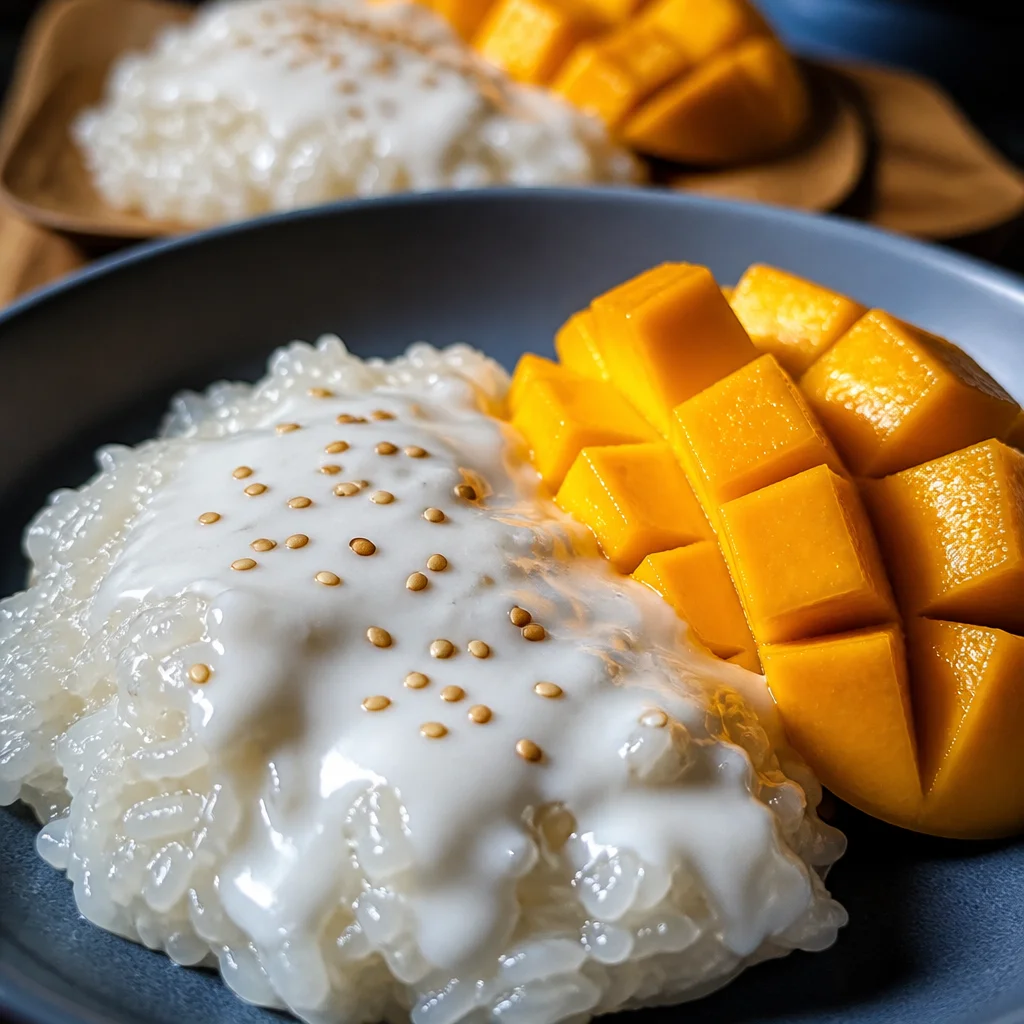
Easy Thai Mango Sticky Rice (In Rice Cooker) Recipe Video is the thing I wish I had the first time I tried making this at home. I remember standing in my kitchen with a bag of sticky rice, a can of coconut milk, and absolutely no clue why my rice kept turning into a sad gummy brick. If you have ever ordered mango sticky rice from a street cart and then wondered why yours does not taste the same, you are in the right place. This recipe is my cozy, repeatable way to get that sweet coconut smell and that chewy rice texture without stress. And yes, we are going for that true street food vibe with a creamy sauce and juicy mango on top.
Key Ingredients for Authentic Mango Sticky Rice (Glutinous Rice, Coconut Milk, Ripe Mangoes)
The magic is honestly in the basics. You do not need a huge list, but the ingredients have to be the right kind. When people tell me they made “mango sticky rice” and it tasted off, it is usually because they used the wrong rice or a coconut milk that was too thin.
Here is what I always grab:
- Glutinous rice (sticky rice): This is non negotiable. Regular jasmine rice will not give you that chewy bite.
- Coconut milk: Full fat tastes best and makes the sauce rich.
- Ripe mangoes: Sweet, soft, and fragrant. More on picking them in the next section.
- Sugar: Plain white sugar is classic, but you can adjust.
- Salt: Just a bit to balance the sweetness. This is what makes it taste like real Thai street food.
- Optional: a little cornstarch slurry to thicken the coconut sauce, and toasted sesame seeds or mung beans for topping.
Also, small side note. If you are into Thai flavors in general, I love keeping a simple dressing around for savory meals too. This easy Thailand salad dressing recipe is great when you want something bright and tangy to balance out dessert night.
How to Choose the Best Mangoes for Mango Sticky Rice (Sweet, Ripe, Seasonal Varieties)
Mango choice can make or break mango sticky rice. You want mangoes that taste sweet on their own, because the rice is rich and creamy, and the fruit is what makes the whole plate feel fresh.
My easy checklist:
Smell the stem end. If it smells fruity and strong, you are in a good place.
Gentle give. It should feel slightly soft when you press, like a ripe peach, not squishy like it is about to collapse.
Ignore color a bit. Some varieties stay green even when ripe, so smell and feel matter more.
Best varieties if you can find them: Ataulfo or Honey mangoes are super creamy and sweet, and they slice nicely. If you ever see Thai mangoes in season, grab them, because they taste like what you get from a street stall. Mango season is a real thing, and when mangoes are in their prime, mango sticky rice basically sells itself.
Understanding Sticky Rice (Glutinous Rice): Types, Texture, and Preparation Tips
Let us clear up the confusing part. “Glutinous” does not mean it has gluten. It just means it gets sticky when cooked. This is the classic rice used for mango sticky rice, and it is what gives that chewy, satisfying bite.
Things that help a lot:
Rinse it until the water is mostly clear. This keeps it from getting oddly pasty.
Soak it. Soaking is the secret to even cooking. If you skip it, you can end up with crunchy centers.
If you are shopping and you see “sweet rice” or “sticky rice” at an Asian grocery, that is usually the right one. I like the white sticky rice most for dessert because it looks clean and classic next to bright mango slices.
By the way, sticky rice is also amazing in savory meals, which is why I always laugh when I am cooking dessert rice and thinking about dinner. If you want an easy savory bowl idea for another day, this chicken rice bowls recipe is a nice weeknight option.
Traditional Steaming Method for Thai Sticky Rice (Step-by-Step Guide)
Street vendors and many home cooks in Thailand often steam sticky rice. It gives you that fluffy but chewy texture that feels light, not heavy.
Traditional method, simple version:
1) Rinse sticky rice until the water is mostly clear.
2) Soak in plenty of water for 4 hours or overnight.
3) Drain well. Really well. Let it sit in the strainer a few minutes.
4) Line a steamer basket with cheesecloth or a clean thin towel so the grains do not fall through.
5) Steam for about 20 to 30 minutes, flipping the rice halfway through so it cooks evenly.
The rice should look glossy and feel tender, with a nice chew. Not wet, not mushy. Steaming takes a little more effort, but if you want the most traditional feel, this is it.
Easy Rice Cooker Method for Mango Sticky Rice (Quick Homemade Version) {video_youtube}
If you want mango sticky rice without pulling out a steamer setup, the rice cooker method is my go to. It is not exactly the same as steaming, but it gets you very close, and it is incredibly realistic for home kitchens.
Here is my rice cooker approach:
1) Rinse sticky rice several times.
2) Soak it for at least 4 hours, then drain.
3) Add the soaked drained rice to the rice cooker.
4) Add water, but less than you would for jasmine rice. For 1 cup sticky rice, start with about 3/4 cup water, then adjust next time based on your brand. Some sticky rice brands thirstier than others.
5) Cook on the regular white rice setting. When it finishes, let it sit on warm for 10 minutes before fluffing.
This is where people panic, but do not. Even if it looks a tiny bit firm right when it finishes, the resting time helps it settle. Then you mix in the coconut sweetener mixture and it softens perfectly.
How to Make Creamy Coconut Milk Sauce for Sticky Rice (Sweet & Salty Balance)
This sauce is the whole personality of mango sticky rice. It is sweet, but it also has that little salty edge that keeps you going back for another bite.
Basic coconut sauce setup:
In a small pot, warm full fat coconut milk with sugar and salt. Keep it on low heat and stir until the sugar dissolves. Do not boil it hard, because coconut milk can separate and get oily.
I usually make two “batches” from the same pot:
Batch one is thinner, and it gets mixed into the cooked sticky rice to sweeten it.
Batch two is slightly thicker for drizzling on top. If you want it thicker, add a tiny cornstarch slurry and stir gently until it coats a spoon.
Taste it. It should taste like coconut ice cream vibes, but with a tiny salty kick at the end. That balance is what makes it taste like Thai street food and not just “rice with coconut.”
Step-by-Step Thai Mango Sticky Rice Recipe (Authentic Street Food Style)
This is my complete street style method. Once you make it once, it becomes one of those recipes you can do without thinking much. It is also one of my favorite desserts to make for friends because everyone thinks it is way harder than it is.
What you will need (serves 4)
- 1 1/2 cups glutinous rice (sticky rice)
- 1 1/2 cups full fat coconut milk
- 1/2 cup sugar (adjust to taste)
- 1/2 tsp salt, plus a pinch more for the topping sauce if you like
- 2 to 3 ripe mangoes, sliced
- Optional toppings: toasted sesame seeds, toasted mung beans
Directions
1) Rinse the sticky rice until the water is mostly clear, then soak 4 hours or overnight.
2) Cook the rice using either steaming or rice cooker method.
3) While the rice cooks, warm coconut milk, sugar, and salt on low heat until dissolved.
4) Reserve about 1/2 cup coconut sauce for drizzling later. If you want it thicker, gently thicken this reserved portion with a tiny cornstarch slurry.
5) Put cooked rice in a bowl, then slowly pour in the remaining coconut sauce and fold it in. Cover and let it sit 15 to 20 minutes so the rice absorbs the flavor.
6) Plate the sweet coconut sticky rice, add fresh mango slices, then drizzle with the reserved sauce. Add toppings if you want.
That is it. Real mango sticky rice at home. If you are like me, you will “taste test” half the coconut sauce while plating, so no judgment if you need to make a little extra next time.
Expert Tips for Perfect Sticky Rice Texture (Chewy, Fluffy, Never Mushy)
Texture is the whole point of mango sticky rice. Here is what actually helps, based on the mistakes I made so you do not have to.
Soak long enough. This is the difference between chewy and chalky.
Drain well. Extra soak water can make the rice weirdly wet.
Do not drown it in coconut sauce. Add gradually. The rice should look glossy and hydrated, not swimming.
Let it rest after mixing. The rice needs a few minutes to absorb the coconut mixture and soften into that perfect street food texture.
If you are feeding a crowd and want easy make ahead meals for the rest of the weekend, I have definitely paired dessert night with slow cooker dinners. This list of 10 easy crockpot recipes has saved me more than once.
Common Mistakes to Avoid When Making Mango Sticky Rice
I have seen all of these happen, including in my own kitchen.
1) Using jasmine rice and expecting it to work. It will not turn into sticky rice, it will just be sweet coconut rice, which is tasty but different.
2) Skipping the soak. You will get uneven grains.
3) Boiling coconut milk hard. Keep it gentle so it stays creamy.
4) Using under ripe mango. Sour mango ruins the whole sweet dessert mood.
5) Refrigerating the rice uncovered. It dries out fast and gets tough around the edges.
Mango Sticky Rice Variations (Vegan, Dairy-Free, Low-Sugar, and Modern Twists)
The classic version is already naturally vegan and dairy free because it uses coconut milk. So you are kind of winning right away.
Easy variations I actually like:
Low sugar: Reduce sugar in the coconut sauce and rely on very ripe mango. Add a little extra salt to keep flavor.
Pandan twist: Add pandan extract or a pandan leaf while warming the coconut sauce for that Southeast Asian bakery smell.
Black sticky rice: This looks dramatic and tastes nutty, but it takes longer and can be heavier. Still delicious.
Modern topping: A small scoop of coconut ice cream on the side feels like a fun restaurant plate.
Serving Suggestions & Presentation Ideas for Thai Dessert Style Plating
This is the part where you can make it look like you bought it from a street stall. The plating is simple, but a few small touches really help.
- Scoop the rice using a small bowl or cup, then flip it onto the plate for a neat mound.
- Fan the mango slices next to the rice.
- Drizzle coconut sauce right before serving so it looks glossy and fresh.
- Sprinkle toasted sesame seeds or crunchy mung beans for texture.
If you are planning a casual dinner and want something comforting before dessert, I have done a simple baked meal like this chicken rice casserole recipe and then finished with mango sticky rice. People leave happy.
How to Store, Reheat, and Keep Sticky Rice Fresh Without Drying Out
Sticky rice is best the day you make it. But you can totally store leftovers if you do it the right way.
To store: Put the rice in an airtight container while it is still slightly warm, then refrigerate. Store mango separately so it does not get slippery.
To reheat: Sprinkle a tiny bit of water over the rice, cover, and microwave in short bursts. You can also steam it for a few minutes. Then add a fresh drizzle of coconut sauce to bring it back to life.
How long it lasts: About 2 to 3 days in the fridge. After that, it starts to lose that soft chew and turns dry.
Seasonal & Cultural Insights: Thai Street Food Tradition and Mango Season Dessert Trends
One reason mango sticky rice feels so special is that it is tied to the seasons. In Thailand, mango season brings the best fruit, and street food stalls really show off what is fresh. It is one of those desserts that is simple, but it feels like a celebration because the mango is so good.
I love that it is also a “real life” dessert. You can buy it in a little foam container, eat it with a plastic spoon, and still feel like you are eating something thoughtful. Sweet fruit, creamy coconut, and chewy rice is a combo that just makes sense.
Common Questions
Can I make mango sticky rice without soaking the rice?
I do not recommend it. If you are truly stuck, soak for at least 1 hour, but the texture will be better with 4 hours or overnight.
Why is my sticky rice hard in the middle?
Usually not soaked long enough, or it did not cook evenly. Soak longer next time and make sure it rests after cooking.
Can I use light coconut milk?
You can, but it will taste thinner and less rich. If you only have light coconut milk, consider thickening the topping sauce slightly and adding a pinch more salt.
What if my coconut sauce tastes flat?
Add a tiny pinch more salt and taste again. That sweet salty balance is what makes it pop.
Is mango sticky rice served warm or cold?
Usually the rice is slightly warm or room temp, and the mango is fresh. That contrast is part of what makes mango sticky rice so good.
Alright, go make it and enjoy every bite
If you take anything from this post, let it be this: soak the rice, use full fat coconut milk, and pick mangoes that smell amazing. Once you get the rhythm, mango sticky rice becomes one of those desserts you can whip up whenever you spot good mangoes at the store. If you want another take on the rice cooker approach, I found Thai Mango Sticky Rice (In Rice Cooker) – Farah J. Eats really helpful, and it is always fun to compare notes. And if you like seeing how other home cooks do it, this mango sticky rice – smelly lunchbox post is a good read too. Now grab a spoon, drizzle that coconut sauce, and treat yourself like you just stepped up to a Bangkok street cart.
Print
Thai Mango Sticky Rice
- Total Time: 4 hours 30 minutes
- Yield: 4 servings 1x
Description
A cozy and repeatable recipe for authentic Thai mango sticky rice made easily in a rice cooker, featuring sweet coconut sauce and ripe mango slices.
Ingredients
Main Ingredients
- 1.5 cups glutinous rice (sticky rice) (Essential for the chewy texture.)
- 1.5 cups full fat coconut milk (For a rich creamy sauce.)
- 0.5 cups sugar (Adjust to taste.)
- 0.5 teaspoons salt (To balance sweetness.)
- 2–3 pieces ripe mangoes (Choose sweet, soft, and fragrant mangoes.)
Optional Toppings
- as needed tablespoons toasted sesame seeds (For added texture.)
- as needed tablespoons toasted mung beans (For a traditional finish.)
Instructions
Preparation
- Rinse the sticky rice several times until the water is mostly clear.
- Soak the rice in water for at least 4 hours or overnight.
Cooking
- Drain the soaked rice and add it to the rice cooker.
- Add about 3/4 cup of water to the rice cooker, then cook using the regular white rice setting.
- Let it sit on warm for 10 minutes after cooking before fluffing.
- In a small pot, warm coconut milk with sugar and salt on low heat until the sugar dissolves. Do not boil.
- Reserve about 1/2 cup of the coconut sauce for drizzling later.
- Fold the remaining coconut sauce into the cooked rice, cover, and let it sit for 15-20 minutes to absorb flavors.
Serving
- Plate the sweet coconut sticky rice, add sliced mangoes, and drizzle with reserved coconut sauce.
- Sprinkle toppings if desired and serve.
Notes
Best served fresh. Store leftovers in an airtight container after slightly cooling. Refrigerate mango separately to avoid slipping.
- Prep Time: 4 hours
- Cook Time: 30 minutes
- Category: Dessert, Snack
- Cuisine: asian, Thai
Nutrition
- Calories: 350
- Sugar: 18
- Sodium: 150
- Fat: 12
- Saturated Fat: 10
- Carbohydrates: 60
- Fiber: 2
- Protein: 6

Related posts:
 Vegan Gluten-Free Lemon Sandwich Cookies with Lemon Curd (Easy Healthy Recipe)
 Glazed Strawberry Bread Recipe (Moist & Easy Strawberry Loaf Cake)
 Chocolate Strawberry Yogurt Clusters (Viral TikTok Frozen Yogurt Bites Recipe)
 Sourdough Discard Banana Bread (Ultra Moist & Easy Recipe)
 Easy Apple Pie Jam Recipe – Homemade Spiced Apple Jam for Canning
 Fluffy Pumpkin Cinnamon Rolls with Pumpkin Spice Filling





 Appetizers & Sides
 Main Dishes
 Drinks & Wellness
 Desserts & Baking