
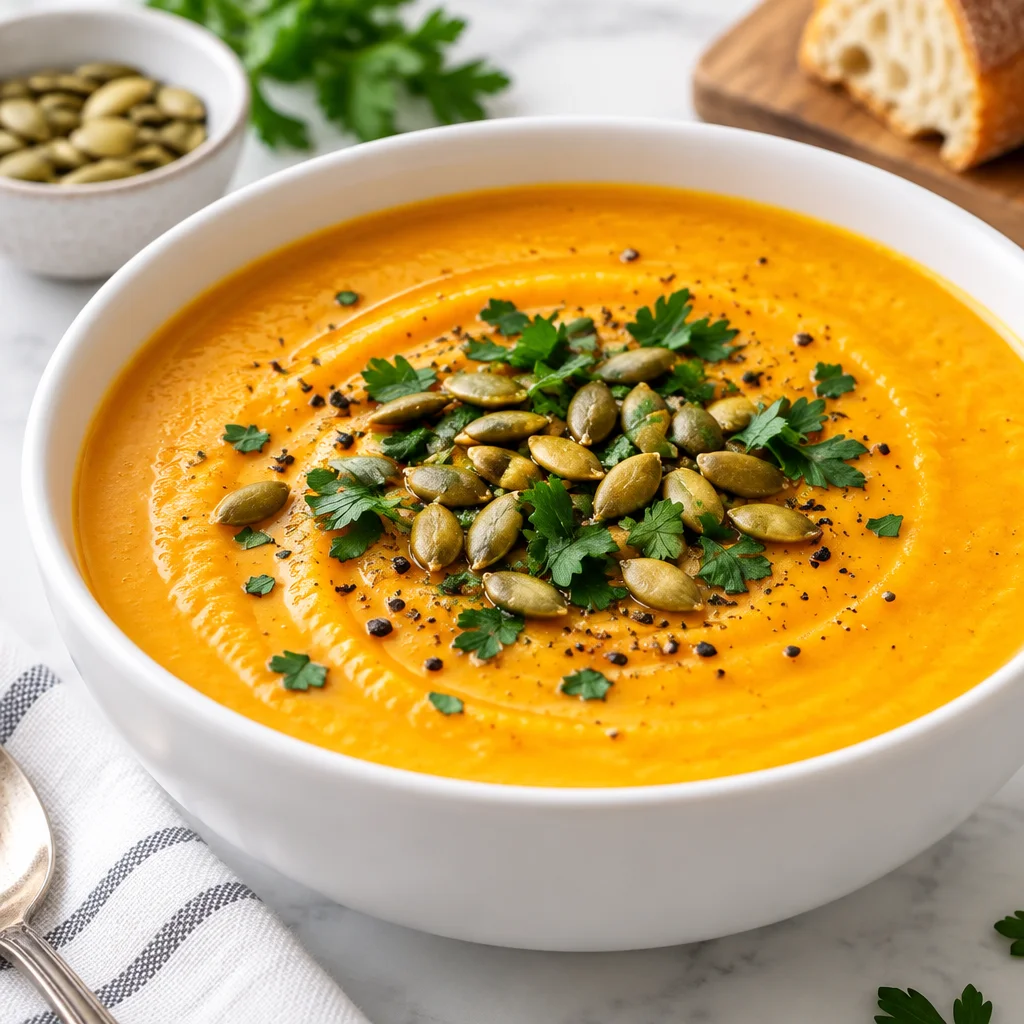
roasted butternut squash soup is my go to answer for those nights when you want something cozy but you do not want to babysit a pot on the stove for hours. You know the vibe: it is chilly, you are hungry, and you want dinner to taste like you tried harder than you did. This one has roasted squash, a little ginger zip, a touch of maple, and warm spices that make your kitchen smell like a dream. It is also simple enough for a weeknight and still feels special for guests. If you have ever made squash soup that tasted kind of flat, this version fixes that.
Why Roasting Makes Butternut Squash Soup More Flavorful
Roasting is the secret that turns basic squash into something you actually crave. When the squash bakes in a hot oven, the natural sugars caramelize a bit, and you get those deeper, toasty notes you cannot fake with boiling. The onion and garlic mellow out too, so everything tastes rounder and less sharp.
Also, roasting drives off extra water. That matters because watery squash is the #1 reason soup tastes thin and boring. With roasting, your roasted butternut squash soup starts out concentrated, and then you control the texture with broth at the end.
If you love cozy veggie soups, you might also like my fall favorite that combines two classics: butternut squash sweet potato soup. It is like autumn in a bowl.
Ingredients for a Creamy Soup Without Cream
I am not anti cream. I just do not think you need it here. The roasted squash gives you a naturally silky base, and a few smart add ins make it taste rich without dairy.
- Butternut squash, halved and seeded
- Onion, cut into thick wedges
- Garlic, cloves left whole (peeled or unpeeled both work)
- Olive oil
- Fresh ginger (or ginger paste in a pinch)
- Maple syrup (just a little, not a dessert situation)
- Warm spices like cinnamon and nutmeg
- Vegetable broth or chicken broth
- Salt and black pepper
- Optional: coconut milk, cashew butter, or oat milk for extra creaminess
I usually keep the spice list short. A tiny pinch of nutmeg plus ginger does so much. This is one of those roasted butternut squash soup recipes where less is more, as long as you season well.
How to Choose and Safely Cut Butternut Squash
Look for a squash that feels heavy for its size and has a matte, even tan skin. If it has shiny skin, it is often a little under ripe. Small scratches are fine. Soft spots are not.
Cutting it can feel intimidating, so here is what I do. First, I slice off a thin piece from the bottom so it has a flat base and will not roll. Then I cut the squash in half lengthwise with a sharp chef knife. If it is stubborn, I rock the knife gently and take my time. No rushing, no slipping.
One more tip: if your squash is super hard, microwave it for 1 to 2 minutes to soften the skin just a touch. It makes the first cut easier and safer.
Preparing the Onion and Garlic for Roasting
This step is simple, but it really impacts flavor. I cut the onion into wedges so they do not burn fast. For garlic, I usually toss whole cloves right on the tray. If I am feeling lazy, I leave the peels on, roast them, and squeeze out the soft garlic later like toothpaste. It is oddly satisfying.
Drizzle everything with olive oil and add a pinch of salt. Salt early helps the vegetables taste like themselves, only better.
Sometimes I add a tiny sprinkle of cinnamon right on the squash before roasting. Not enough to scream cinnamon, just enough to whisper cozy.
How to Roast Squash Halves at 425°F
I roast at 425°F because it hits the sweet spot between caramelization and speed. Place the squash halves cut side down on a parchment lined sheet pan. Scatter the onion wedges and garlic around them.
Roast for about 35 to 45 minutes. The squash is ready when a fork slides in easily and the edges look browned. If your onion is getting too dark before the squash is tender, pull the onion off early and keep roasting the squash.
Let everything cool for a few minutes before you handle it. Then scoop the squash flesh out with a spoon. It should come out easily in big soft pieces. This is where your roasted butternut squash soup begins to feel inevitable, like you are already winning dinner.
Blender Versus Immersion Blender: Which Works Best?
I have used both, and they both work. It just depends on your vibe and what dishes you want to wash.
My honest take on each option
If you want the smoothest soup possible, a countertop blender is hard to beat. If you want quick and fewer dishes, the immersion blender is your friend.
Quick notes:
Countertop blender: smoother texture, but blend in batches and vent the lid so hot steam can escape.
Immersion blender: easiest cleanup, slightly more rustic texture, but still very creamy if you blend long enough.
If you are into soups you can throw together fast, check out this super simple weeknight option: 4 ingredient potato soup. It is cozy in a totally different way.
How to Blend the Roasted Vegetables Into Soup
I usually start by blending the roasted squash, onion, and garlic with about 2 cups of broth until smooth. Then I pour it into a pot and add more broth until it looks like soup. That sounds obvious, but it is easy to over thin it too fast, so go slowly.
From there, warm it gently on the stove. You do not need a hard boil. A soft simmer is perfect.
This is also a great time to add ginger. I like to grate fresh ginger directly into the pot so it melts in. Start small, taste, and add more if you love that warm zing.
Balancing Sweetness, Ginger, Nutmeg, and Salt
This is the part that makes the bowl feel special. Squash is naturally sweet, so maple syrup should be a supporting actor, not the main character. I start with 1 teaspoon and go from there.
For spices, I do:
Ginger: bright and a little spicy
Nutmeg: warm and cozy, use a pinch
Cinnamon: optional, but so nice with maple
Then salt. Salt is what turns “tastes like vegetables” into “tastes like dinner.” Add a little, stir, taste. Repeat. If your roasted butternut squash soup tastes kind of dull, it probably needs either salt or a splash more maple to round it out.
“I made this for my family and everyone went quiet for a minute, the good kind of quiet. The ginger and maple combo is perfect, not too sweet.”
If you want another comfort meal that still feels light, this avgolemono Greek lemon chicken soup recipe is a totally different flavor profile, but it hits that same soothing note.
How to Adjust Soup Thickness and Creaminess
Some people like it thick like a puree. Some want it more sippable. You can do either.
Easy ways to tweak texture
To thicken: simmer it uncovered for 5 to 10 minutes, or blend in a small handful of roasted carrots if you have them.
To thin: add warm broth a splash at a time until it is where you want it.
To make it creamier without dairy: add a few tablespoons of coconut milk or a spoonful of cashew butter. Coconut milk adds a slight coconut note, so if you want neutral creaminess, cashew butter is my pick.
Once you get the texture right, your roasted butternut squash soup basically becomes a choose your own adventure bowl.
Troubleshooting Bitter Garlic, Bland Flavor, or Grainy Texture
Let us fix the common issues, because soup should not be stressful.
Bitter garlic: It probably roasted too long or got too dark on the pan. Next time, tuck cloves under the squash or pull them off the tray early. If it already happened, add a touch more maple and a pinch of salt to balance it.
Bland flavor: Add salt first. Then add a splash of acid, like a teaspoon of apple cider vinegar or lemon juice. Acid wakes everything up.
Grainy texture: This usually comes from not blending long enough, or blending with too little liquid at first. Blend longer, and if you have a countertop blender, that will smooth it out faster.
If you want a soup with bold flavors that is totally different from squash, this asian potsticker soup is a fun one for busy nights.
Dairy-Free Additions and Other Recipe Variations
This soup is naturally flexible, which is one reason I make it so often.
Easy variations:
More protein: top with shredded rotisserie chicken or white beans.
More spice: add a pinch of cayenne or a few red pepper flakes.
More smoky: a tiny pinch of smoked paprika is surprisingly good.
Apple twist: roast an apple half alongside the squash and blend it in for a fruitier sweetness.
Savory route: skip the maple, add extra black pepper and thyme.
My main rule is simple: change one thing at a time so you know what you liked.
Soup Garnishes: Pepitas, Fresh Herbs, and Crunchy Toppings
Toppings are not just for looks. They add texture, and texture keeps a bowl interesting.
My favorites:
Pepitas toasted in a dry pan with a pinch of salt
Chopped cilantro or parsley
Croutons or crunchy chickpeas
A swirl of coconut milk
Freshly cracked black pepper
If you are serving guests, put a few topping options in little bowls and let everyone build their own. It feels fun and takes pressure off you.
What to Serve With Roasted Butternut Squash Soup
I like pairing this with something crisp or something cheesy. The soup is smooth and sweet leaning, so a salty side balances it.
Good choices:
Grilled cheese or a melty quesadilla
Simple arugula salad with lemon and olive oil
Garlic bread
Roasted Brussels sprouts
If you have extra roasted squash and want to turn it into dinner the next day, try this cozy pasta style situation: creamy orzo with roasted butternut squash and spinach delight. It is comfort food but still feels fresh.
Making Ahead, Refrigerating, Freezing, and Reheating
This soup is amazing for meal prep. I actually think it tastes better the next day after the flavors settle.
Fridge: Store in an airtight container for up to 4 days.
Freezer: Freeze in portions for up to 3 months. I like using freezer bags laid flat so they stack easily.
Reheat: Warm gently on the stove, stirring often. Add a splash of broth if it thickened in the fridge.
If you added coconut milk, it can sometimes separate a little after freezing. It is not ruined. Just whisk while reheating and it comes back together.
Frequently Asked Questions About Roasted Squash Soup
Can I use pre cut butternut squash?
Yes. Roast it on a sheet pan like you would roast potatoes. It may cook a little faster, so start checking around 25 minutes.
Do I have to peel the squash?
Not if you roast it in halves. You scoop the soft flesh out after roasting, so the skin never goes into the soup.
How do I make it vegan?
Use vegetable broth and skip any dairy toppings. Coconut milk or cashew butter both keep it creamy and fully vegan.
Why does my soup taste too sweet?
Go easy on the maple next time. For a quick fix, add more salt and a small squeeze of lemon. A little acid pulls it back into balance.
Can I make roasted butternut squash soup spicy?
Totally. Add cayenne, chili flakes, or a tiny spoon of chili crisp when you serve it.
Your Coziest Bowl Is Waiting
If you take anything from this, let it be this: roasting does the heavy lifting, and the rest is just blending and tasting until it makes you happy. Keep the ginger and maple light, be generous with salt, and do not forget something crunchy on top. If you want to compare notes with other cooks, I have learned a lot from recipes like Roasted Butternut Squash Soup – Cookie and Kate and the super comforting take in Chef John’s Roasted Butternut Squash Soup Recipe – Allrecipes. Now go make a pot of roasted butternut squash soup, and future you will be so glad there is a container waiting in the fridge.
Print
Roasted Butternut Squash Soup
- Total Time: 55 minutes
- Yield: 4 servings 1x
Description
A cozy and flavorful roasted butternut squash soup with warm spices, ginger, and a hint of maple syrup.
Ingredients
Main Ingredients
- 1 medium Butternut squash, halved and seeded
- 1 large Onion, cut into thick wedges
- 4 cloves Garlic, whole (peeled or unpeeled)
- 2 tablespoons Olive oil
- 1 tablespoon Fresh ginger, grated or ginger paste (Can use ginger paste in a pinch)
- 1 tablespoon Maple syrup (Just a little, not a dessert situation)
- 1 teaspoon Cinnamon (Optional pinch to sprinkle on squash before roasting)
- 1 teaspoon Nutmeg (Use a tiny pinch)
- 4 cups Vegetable broth or chicken broth
- to taste Salt
- to taste Black pepper
- optional Coconut milk, cashew butter, or oat milk (For extra creaminess)
Instructions
Preparation
- Preheat your oven to 425°F (220°C).
- Slice off a thin piece from the bottom of the butternut squash for stability, then cut in half lengthwise.
- Cut onion into wedges and prepare garlic by leaving whole.
- Drizzle the squash, onion, and garlic with olive oil and sprinkle with salt and cinnamon if using.
Roasting
- Place the squash halves, cut side down, on a parchment-lined baking sheet.
- Scatter the onion wedges and garlic around the squash.
- Roast for 35 to 45 minutes, until the squash is tender and browned on the edges.
- Let everything cool slightly before scooping out the squash flesh.
Blending
- In a blender, combine the roasted squash, onion, garlic, and about 2 cups of broth.
- Blend until smooth, adjusting the texture with more broth as needed.
- Transfer to a pot and warm gently on the stove.
Seasoning
- Grate fresh ginger into the soup, starting with a small amount and adjusting to taste.
- Add maple syrup, nutmeg, and salt to taste, balancing sweetness and seasoning.
Serving
- Serve warm, garnished with optional toppings such as pepitas, herbs, or croutons.
Notes
This soup can be refrigerated for up to 4 days or frozen for up to 3 months. Reheat gently on the stove, adding more broth if needed.
- Prep Time: 10 minutes
- Cook Time: 45 minutes
- Category: Dinner, Soup
- Cuisine: American, Vegetarian
Nutrition
- Calories: 200
- Sugar: 4
- Sodium: 500
- Fat: 8
- Saturated Fat: 1
- Carbohydrates: 28
- Fiber: 4
- Protein: 3

Related posts:
 The Ultimate Guide to Sandwich Recipes: Easy, Delicious Ideas for Breakfast, Lunch & Dinner
 Cozy Creamy Chicken Potato Casserole
 easy hot honey chicken bowl
 Tropical Citrus Grilled Chicken Recipe (Key West Style Marinade)
 10 Summer BBQ Chicken Recipes for Family Cookouts
 10 Best Homemade Sandwich Recipes for Lunch, Dinner & Picnics





 Appetizers & Sides
 Main Dishes
 Drinks & Wellness
 Desserts & Baking