
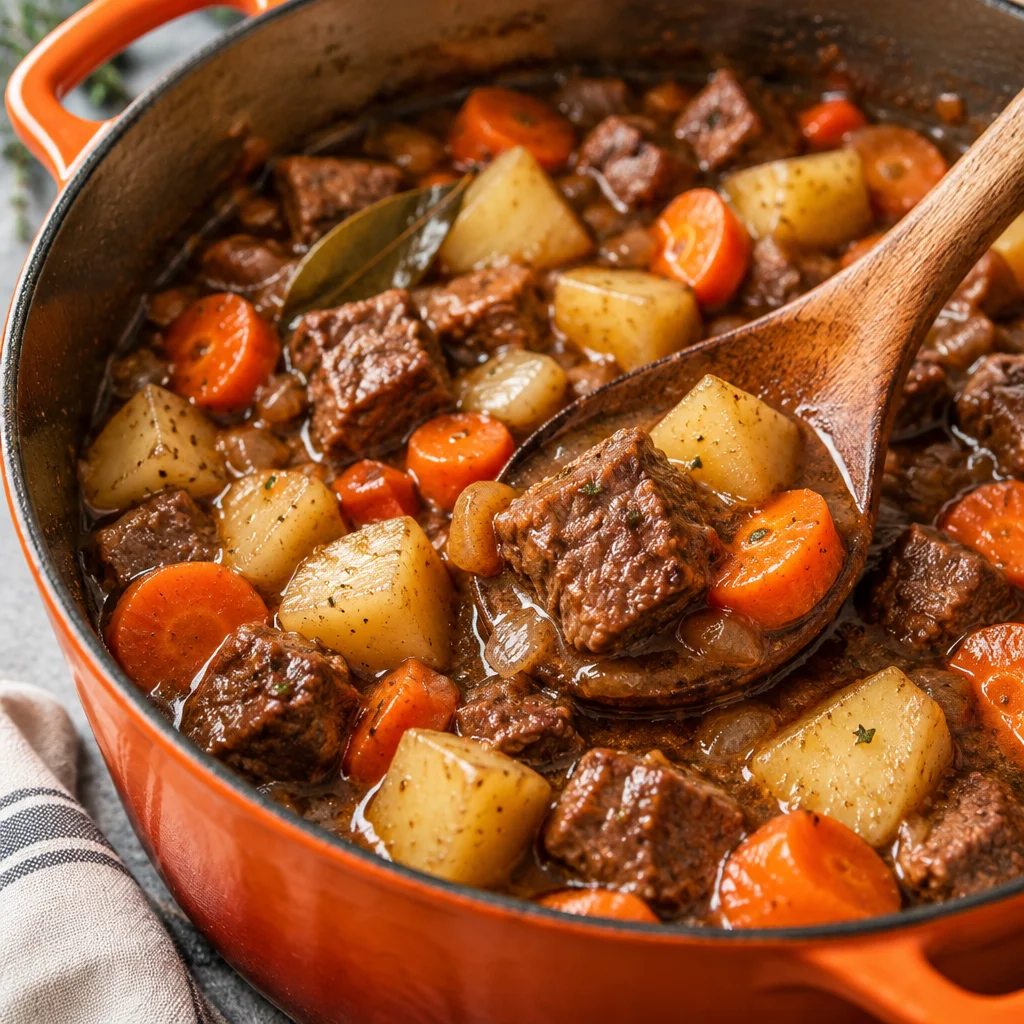
old fashioned beef stew is the kind of dinner you think about at 3 pm on a cold day when you already know you want something cozy and filling. Maybe you are tired of takeout, maybe your fridge looks a little random, or maybe you just want a meal that makes the whole house smell like you have your life together. This is my go to pot of comfort: tender beef, hearty vegetables, and a broth that turns into a rich gravy right in the pot. It is simple, forgiving, and it tastes even better the next day. If you have had beef stew that was bland or had chewy meat, I promise we can fix that.
What Makes Old-Fashioned Beef Stew So Comforting
For me, it is the slow simmer and the way everything gets friendly in the pot. The beef turns buttery, the vegetables soak up flavor, and the broth gets that deep, savory taste that feels like a warm blanket.
Also, old fashioned beef stew does not ask for fancy ingredients. It is mostly pantry stuff plus a good cut of beef and a handful of vegetables. It is the meal I make when someone I love is having a rough week, or when I want leftovers that actually make me excited for lunch.
And let us be honest, it is hard to feel grumpy when your kitchen smells like onions, garlic, and beef slowly cooking together.
Ingredients for Rich Beef Stew
This is the ingredient list I come back to again and again. You can tweak it, but if you follow this once, you will understand the rhythm of it.
- Beef chuck cut into bite size cubes
- Salt and pepper
- Flour for coating (helps with browning and thickening)
- Oil for searing
- Onion, chopped
- Garlic, minced
- Tomato paste
- Beef broth (low sodium is easiest to control)
- Worcestershire sauce
- Bay leaf
- Dried thyme or Italian seasoning
- Carrots
- Celery
- Potatoes
- Optional peas at the end
If you love slow cooker dinners too, you might also like this beef stew in a crock pot for the days you do not want to watch a simmer.
Choosing the Best Beef Cut for Slow Simmering
Use chuck. I know it is not the “prettiest” cut in the case, but it is the one that behaves best in stew. Chuck has enough fat and connective tissue to break down during cooking, which is exactly what makes the beef tender instead of dry.
Try to avoid lean stew meat that is not labeled clearly. Sometimes those mixed packages are bits of different cuts, and they do not all finish at the same time. If chuck is labeled as chuck roast, just cut it yourself. It takes five minutes and the results are worth it.
One more thing: cut the pieces similar in size, so you are not chewing one huge chunk while the small pieces fall apart.
Potatoes and Vegetables That Hold Their Shape
My favorites are Yukon Gold potatoes or red potatoes. They hold together nicely and get creamy around the edges. Russets can work, but they are more likely to break down and make the stew extra thick. Not a bad thing, just different.
For vegetables, stick to the classics: carrots, celery, and onion. Add mushrooms if you like that earthy flavor. If you want peas, toss them in at the end so they stay bright.
Try not to cut the vegetables too small. Big chunks feel more old school and they do not turn to mush as easily.
Seasoning and Ingredient Substitutions
This is where you can make the stew taste like your house. Worcestershire sauce gives a deep savory punch. Tomato paste adds a little sweetness and color. Thyme makes it taste like it has been simmering all day, even if you started late.
Easy swaps if you are missing something:
If you do not have Worcestershire, a splash of soy sauce works. If you do not have tomato paste, a little ketchup can pinch hit. If you want a different flavor direction, you might enjoy this coconut Thai curry beef bowls another night for something cozy but totally different.
Best Pot and Equipment for Stovetop Stew
I use a heavy Dutch oven. Anything heavy with a lid works, but the thicker the pot, the less likely you are to scorch the bottom. You want steady heat and a gentle simmer.
Here is what I grab:
Large heavy pot with lid, cutting board, sharp knife, wooden spoon, and a small bowl for the cornstarch slurry later.
If you do not have a Dutch oven, use a sturdy soup pot and keep the heat low once it starts simmering.
Preparing and Browning the Beef
This is the part you cannot rush, even though it is tempting. Browning is where a lot of the flavor comes from.
Pat the beef dry with paper towels. Wet beef steams instead of browning. Season it well with salt and pepper, then toss lightly with flour.
Heat oil in your pot until it shimmers. Add beef in batches, leaving space between pieces. Let it sit until it releases easily and has a brown crust. Flip and brown the other side. Move browned pieces to a plate and repeat.
When you are done, you should have browned bits on the bottom of the pot. That is pure gold for flavor.
How to Make Beef Stew Step by Step
This is the flow I follow every time. It is simple, but each step matters.
- Brown the beef in batches and set aside.
- In the same pot, sauté onion and celery until softened, then add garlic.
- Stir in tomato paste and cook for a minute.
- Pour in beef broth and scrape up the browned bits from the bottom.
- Add Worcestershire, bay leaf, thyme, and the beef back in.
- Bring to a gentle simmer, cover, and cook until the beef starts to soften.
- Add carrots and potatoes, then simmer again until everything is tender.
If you like a stew with lots of “everything in the pantry” vibes, this crock pot shipwreck stew is another fun one to bookmark.
Simmering Time and How to Tell When Beef Is Tender
Plan on about 2 to 2.5 hours total simmer time on the stovetop, sometimes a bit more depending on how big your beef pieces are. Keep it at a gentle simmer, not a rolling boil. Boiling can make the beef tough and can break down the vegetables too fast.
How do you know the beef is ready? The best test is to take a piece out and try it. It should be easy to chew, not bouncy or rubbery. If it is still chewy, it just needs more time. Stew is patient like that.
“I made this on Sunday and my whole family went quiet at the table, like the good kind of quiet. The beef was actually tender, which never happens when I make stew. This is officially on repeat.”
Thickening the Broth With a Cornstarch Slurry
Sometimes the stew thickens on its own, especially if you floured the beef and simmered it uncovered for a few minutes. But if you want that classic spoon coating gravy, a cornstarch slurry is the easiest fix.
Mix 1 tablespoon cornstarch with 1 tablespoon cold water in a small bowl. Stir until smooth, then pour it into the gently simmering stew while stirring. Let it cook for 2 to 3 minutes. If you want it thicker, repeat with a smaller amount instead of dumping in a lot at once.
Tips for Deeper Flavor and Balanced Seasoning
A few little things make a big difference:
Brown in batches so you get real color. Scrape the bottom when you add broth. Season at the end after the broth reduces, because flavors concentrate as it cooks.
I also like adding a tiny splash of vinegar or lemon juice at the end. Not enough to taste sour, just enough to wake everything up. And if it tastes flat, it usually needs more salt, not more herbs.
If you love beef dinners with bold sauce flavor, you might also enjoy Chinese beef and broccoli for a quicker weeknight option.
Common Beef Stew Problems and How to Fix Them
Stew is forgiving, but stuff happens. Here are the common issues I hear about and what actually helps.
The beef is tough: It needs more time. Keep simmering gently. Tough means the collagen has not broken down yet.
The stew is bland: Add salt in small pinches, then taste. A splash of Worcestershire or a tiny bit of vinegar can also help.
The stew is too thin: Use the cornstarch slurry, or simmer uncovered for 10 to 15 minutes to reduce.
The vegetables are mushy: Next time, add potatoes and carrots later, and keep your simmer gentle.
Easy Ingredient Variations and Adjustments
Once you make old fashioned beef stew the classic way, it is fun to play.
Add mushrooms with the onions for extra savory flavor. Stir in frozen peas at the end for color. Toss in a pinch of smoked paprika if you want a slightly smoky vibe. If you like a soupier version packed with vegetables, check out this crockpot beef and vegetable soup for another cozy bowl idea.
If you are cooking for someone who cannot do potatoes, try chunks of sweet potato or even turnips. Just know sweet potatoes cook faster, so add them later.
What to Serve With Beef Stew
My favorite is warm bread. I want something to mop up the gravy, always.
Easy serving ideas:
Crusty bread, biscuits, buttered noodles, rice, or a simple green salad with a tangy dressing. If you are feeding a crowd, add a basic veggie side like roasted green beans so the meal feels extra complete.
And if you have leftovers, ladle stew over mashed potatoes. It is comfort on comfort and I will not apologize for it.
Make-Ahead, Refrigerating, Freezing, and Reheating
This is one of those meals that gets better overnight. The flavor settles in and the broth thickens a bit.
Make ahead: Cook it fully, cool it down, then refrigerate. The next day, skim off any extra fat if you want, then reheat gently.
Refrigerate: Store in a sealed container for up to 4 days.
Freeze: Freeze in portions for up to 3 months. Thaw in the fridge overnight.
Reheat: Warm on the stove over medium low heat, stirring now and then. If it is too thick, add a splash of broth or water.
Common Questions
Can I make this old fashioned beef stew without flour?
Yes. Skip the flour when browning. You can still thicken at the end with cornstarch or just reduce the broth uncovered.
Do I have to sear the beef first?
You do not have to, but it really helps the flavor. If you skip it, the stew can taste a little flat and boiled.
Why are my potatoes falling apart?
They might be cut too small, simmered too hard, or you used a potato that breaks down easily. Try Yukon Gold or red potatoes and keep the simmer gentle.
Can I cook it longer if dinner is late?
Yes, just keep it on low heat and add a little extra broth if it reduces too much. The beef usually gets even more tender.
What is the best way to add peas?
Stir them in during the last 5 minutes so they stay sweet and bright.
A Cozy Pot Worth Making Again
If you have been chasing that classic bowl of old fashioned beef stew with tender beef and hearty vegetables, this is the method that finally made it click for me. Brown the beef, simmer low and slow, and do not be shy with seasoning at the end. If you want to compare notes with other trusted versions, I like reading Beef Stew Recipe – NYT Cooking and Angel’s Old Fashioned Beef Stew Recipe – Allrecipes because they remind you how many small roads lead to a great pot. Make it once, tweak it to your taste, and I bet it becomes one of those dinners you can practically make from memory. Let me know what you add to yours, because I am always looking for a new twist.
Print
Old Fashioned Beef Stew
- Total Time: 3 hours
- Yield: 6 servings 1x
Description
A cozy and filling beef stew made with tender beef and hearty vegetables in a rich broth that turns into gravy.
Ingredients
Main Ingredients
- 2 lbs Beef chuck cut into bite size cubes (Use a good cut of beef for tenderness.)
- 1 tsp Salt
- 1 tsp Black pepper
- 1/4 cup Flour (For coating the beef.)
- 2 tbsp Oil (For searing the beef.)
- 1 large Onion, chopped
- 3 cloves Garlic, minced
- 2 tbsp Tomato paste
- 4 cups Beef broth (Low sodium is easier to control.)
- 2 tbsp Worcestershire sauce
- 1 leaf Bay leaf
- 1 tsp Dried thyme or Italian seasoning
- 3 medium Carrots, chopped
- 3 stalks Celery, chopped
- 4 medium Potatoes, diced (Yukon Gold or red potatoes recommended.)
- 1 cup Peas, optional (Add at the end for color and sweetness.)
Instructions
Preparation
- Pat the beef dry with paper towels. Season with salt and pepper, then toss lightly with flour.
- Heat oil in a heavy Dutch oven until it shimmers. Add beef in batches and brown each piece. Remove browned beef and set aside.
Cooking
- In the same pot, sauté onions and celery until softened, then add garlic and cook for another minute.
- Stir in tomato paste, then pour in beef broth and scrape up browned bits from the bottom.
- Add Worcestershire sauce, bay leaf, thyme, and the browned beef back to the pot.
- Bring to a gentle simmer, cover, and cook for 1.5 to 2 hours until the beef is tender.
- Add carrots and potatoes, and simmer again until everything is tender.
Thickening the Broth
- If desired, thicken the broth with a cornstarch slurry. Mix 1 tablespoon cornstarch with 1 tablespoon cold water, stir until smooth, then add to the stew.
Notes
This stew gets better overnight, and can be made ahead. Refrigerate leftovers for up to 4 days or freeze for up to 3 months.
- Prep Time: 30 minutes
- Cook Time: 2 hours 30 minutes
- Category: Dinner, Main Course
- Cuisine: American
Nutrition
- Calories: 420
- Sugar: 4
- Sodium: 600
- Fat: 15
- Saturated Fat: 5
- Carbohydrates: 30
- Fiber: 5
- Protein: 35












 Appetizers & Sides
 Main Dishes
 Drinks & Wellness
 Desserts & Baking