
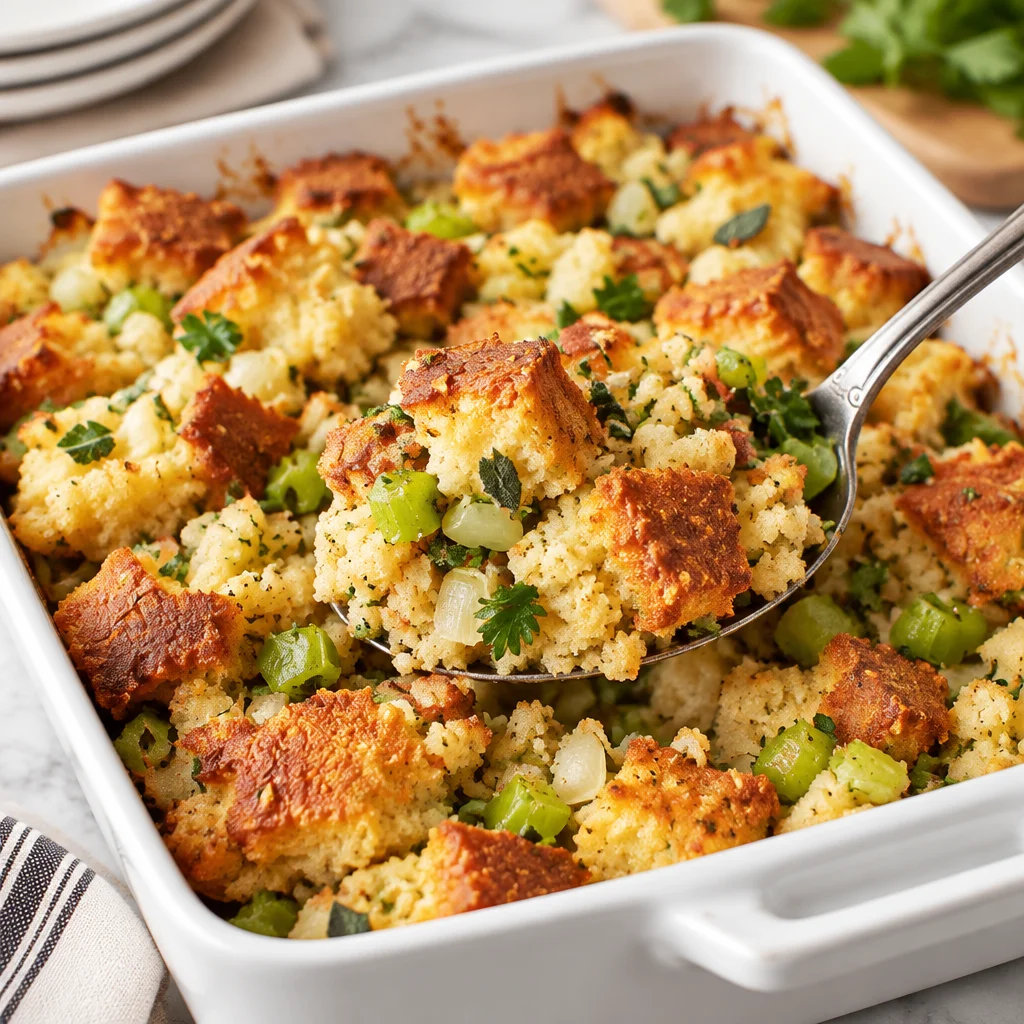
Thanksgiving stuffing is one of those dishes that can make you feel weirdly stressed, even if you cook all the time. You want it cozy and herby, not wet and sad, and you definitely want those crispy edges that everybody fights over. I have made this version so many times that I can do it while chatting in the kitchen, and it still comes out reliable. It is full of celery, lots of herbs, and just enough butter to taste like the holidays. If you are hosting and you need one side dish that people actually remember, this is it.
What Makes Classic Thanksgiving Stuffing?
To me, classic stuffing is all about familiar flavors and the right texture. You want that warm, savory bread taste, little pops of onion and celery, and herbs that smell like Thanksgiving the second they hit the heat.
The big thing is balance. The middle should be soft and spoonable, but not mushy. The top and edges should get crisp, golden, and a little toasty. That contrast is basically the whole point.
If you are building a full menu, I usually plan stuffing first and then fill in the rest. I keep a running list of ideas in this roundup of Thanksgiving side dishes 2025 because it helps me not panic-shop on Thanksgiving morning.
Best Bread for Traditional Stuffing
My go to is a basic white sandwich loaf or a bakery Italian loaf. Nothing fancy. You want bread that tastes good on its own but is not too sweet. If you like a heartier vibe, you can mix in some sourdough for extra flavor.
I have tried brioche and challah too, and they are delicious, but they can make things richer and softer faster. Great if that is what you want, but for crispy edges, I like a plainer bread mix.
Quick bread tips that save the day:
- Cut bread into bite size cubes, not tiny crumbs.
- Mix two breads if you want, like Italian plus sourdough.
- Avoid super fresh, squishy bread unless you dry it well first.
Why Dry Bread Matters More Than Stale Bread
People always say, use stale bread, but what we really mean is dry bread. Stale can still be bendy in the middle. Dry bread is what actually drinks up broth without turning into paste.
Here is what I do: I cube the bread, spread it on a baking sheet, and bake it at 300 F for about 20 to 30 minutes, stirring once. You are not trying to brown it, just dry it out. If you can snap a cube in half easily, you are good.
This step is boring, I know. But it is the secret to Thanksgiving stuffing that is fluffy in the middle and crisp on top instead of soggy all the way through.
Key Ingredients and Fresh Herbs
This is where the flavor lives. Celery is non negotiable for me. It adds crunch and that classic Thanksgiving aroma. Onion is the other must. Then we pile in herbs until it smells like the holiday table.
My herb mix (use what you love)
I like a blend of fresh parsley, sage, thyme, and rosemary. If you only have dried herbs, it is still fine. Just use less since dried is stronger.
Also, do not underestimate salt and pepper. Bread needs seasoning, and you want every bite to taste like something.
For another cozy twist on these flavors, this turkey stuffing meatloaf is honestly such a fun weeknight spinoff when you want Thanksgiving energy without the whole event.
;
Broth Butter and Eggs for the Right Texture
Let us talk texture, because this is where most stuffing heartbreak happens. Butter brings richness and helps browning. Broth adds moisture and flavor. Eggs help the whole thing hold together lightly, kind of like a gentle set, not a dense casserole.
I usually melt butter and cook the onion and celery in it until they are soft. Then I add herbs so they wake up in the heat. After that, it all gets tossed with dry bread cubes.
For broth, I like turkey or chicken broth. If you are cooking for vegetarians, vegetable broth works great too. Just taste it first. Some boxed broths are super salty, and stuffing can get too salty fast.
Ingredient Substitutions and Popular Add-Ins
This recipe is flexible, so use what you have and what your people like. Stuffing is kind of like pizza, everybody has an opinion, and somehow they are all correct.
Easy swaps:
- Butter: Use plant based butter if needed.
- Eggs: You can skip them, it will just be looser and more crumbly.
- Celery: If somebody hates celery, try chopped fennel for a similar vibe.
Popular add ins if you want to go beyond the classic:
Sausage, chopped apples, dried cranberries, toasted pecans, or mushrooms. If you add a lot of extras, just remember you may need a splash more broth.
If you are planning a big holiday spread, I like to bounce between this recipe and ideas from Thanksgiving side dishes 2025 so the table feels varied without getting complicated.
How to Make Thanksgiving Stuffing Step by Step
This is my simple method for Thanksgiving stuffing with herbs, celery, and crispy edges. Nothing fussy, just solid steps.
What you will need
- About 12 to 14 cups dry bread cubes
- 1 cup butter (2 sticks), plus a little for the dish
- 2 cups chopped celery
- 1 to 2 cups chopped onion (I like a lot)
- Fresh herbs: parsley, sage, thyme, rosemary (or dried)
- 2 to 3 cups broth (plus extra if needed)
- 2 eggs, lightly beaten
- Salt and pepper
Directions
1) Preheat oven to 350 F. Butter a 9×13 baking dish.
2) In a big pan, melt butter. Cook onion and celery until softened, about 8 to 10 minutes.
3) Stir in herbs, salt, and pepper. Let them cook for about 30 seconds so they smell amazing.
4) Put dry bread cubes in a big bowl. Pour the buttery veggie mix over top and toss.
5) Add broth slowly, tossing as you go, until the bread feels moistened but not swimming.
6) Add beaten eggs and toss again.
7) Spread into the baking dish. Bake until golden with crispy edges.
If you love repurposing holiday flavors, bookmark this turkey stuffing meatloaf for the days when you want the stuffing vibe in a totally different form.
How Much Broth to Add Without Making Stuffing Soggy
This is the part I do by feel every single time. Bread brands vary, cube size varies, and add ins change everything. Start with 2 cups of broth and toss well. Let it sit for a minute. Then decide.
You want the bread to feel soft on the outside but still a little firm in the center before baking. If it already feels like wet pudding, it is too far.
If you accidentally overdo it, do not panic. Spread it out in the dish and bake uncovered. The oven can save you if you give it time and surface area.
Baking Time and Temperature for Crispy Edges
I bake my Thanksgiving stuffing at 350 F. For a 9×13 dish, it usually takes 35 to 45 minutes. If you want extra crispy edges, bake it uncovered the whole time.
If you are worried about it drying out, cover with foil for the first 20 minutes, then uncover to finish. But honestly, I like it uncovered because that is how you get those browned bits along the sides.
One more tip: do not pack it down tight. A looser layer helps the top get crisp and keeps the inside from turning dense.
How to Tell When Stuffing Is Done
I look for a few things. The top should be golden brown, especially around the edges. When you scoop into the center, it should be hot and steamy. Texture wise, it should hold together lightly but still spoon easily.
If you are unsure, you can use a thermometer. The center should hit 165 F, especially important if you cook it with eggs and broth and it has been sitting out while you cook other things.
Common Stuffing Mistakes and How to Fix Them
I have made every mistake at least once, so here is the honest list.
Mistake 1: Soggy stuffing
Next time, dry the bread more and add broth slower. For today, bake uncovered longer and stir once halfway through to let steam escape.
Mistake 2: Dry stuffing
Warm a little broth and drizzle it over, then cover with foil for 10 minutes. Dry spots usually just need a small rescue.
Mistake 3: Bland stuffing
Salt matters. Also, add more herbs and black pepper. If it tastes flat, a bit more broth can help too because broth brings seasoning.
Mistake 4: Not enough crispy edges
Use a wider dish, do not cover it, and do not pack it down. Crispy edges love space.
When I am building my holiday menu, I also check Thanksgiving side dishes 2025 for sides that are low stress, because stuffing already takes enough attention.
Can You Cook This Stuffing Inside the Turkey?
You can, but I usually do not. Baking Thanksgiving stuffing in a dish is easier to control, and you get more crispy edges. When stuffing is inside the turkey, it is more likely to be softer and it takes longer to heat through.
If you do stuff the turkey, it is important that the center of the stuffing reaches 165 F. That means the turkey may need to cook longer too. For food safety and sanity, I prefer baking it separately and using turkey drippings or broth for flavor.
How to Make Thanksgiving Stuffing Ahead
This is a lifesaver for Thanksgiving week. You can dry the bread cubes up to a few days early and keep them in a bag. You can also chop celery and onion the day before.
If you want to fully assemble ahead, mix everything except the broth and eggs, then store in the fridge. The day you bake, add broth and eggs right before it goes in the oven. That helps keep the bread from getting weirdly gummy.
And if you are planning leftovers on purpose (no shame), you can also cook extra and turn it into next day comfort food. I have even used leftover stuffing flavors as inspiration for turkey stuffing meatloaf, which is surprisingly good with a little gravy on top.
How to Store Freeze and Reheat Leftovers
Let leftovers cool, then store in an airtight container in the fridge for up to 4 days. For freezing, pack it into freezer containers or bags, press out air, and freeze up to 2 months.
To reheat, I like the oven best. Put stuffing in a baking dish, add a splash of broth, cover with foil, and warm at 350 F until hot. Then uncover for a few minutes to bring back crispy edges.
If you microwave it, it still tastes good, but you will lose the crunch. Sometimes I microwave a portion and then toss it into a hot pan with a little butter to crisp it back up.
Thanksgiving Stuffing FAQs
Can I use dried herbs instead of fresh?
Yes. Use about one third the amount, since dried herbs are stronger. Taste and adjust.
Do I really need eggs?
No, but eggs help the Thanksgiving stuffing hold together. Without eggs it will be more crumbly, which some people actually prefer.
How do I make it more crispy?
Bake uncovered, use a wider dish, and do not pack it down. Also, a little extra butter on top never hurts.
Why does my stuffing taste bland even with broth?
It usually needs more salt and pepper, or your broth is mild. Add seasoning in layers, especially when cooking the onions and celery.
Can I double the recipe?
Absolutely. Use two pans so you still get crispy edges, and rotate the pans halfway through baking.
Your Cozy Game Plan for Stuffing Day
If you take nothing else from me, remember this: dry your bread, season boldly, and add broth slowly. That combo is how you get Thanksgiving stuffing that is soft in the middle with those irresistible crispy edges. If you want to compare methods, I have pulled ideas from the Best Stuffing Recipe – Our Favorite Buttery Herb Stuffing and also the super helpful step by step from Thanksgiving Stuffing Recipe (Our Very Best) – The Kitchn. Pick the approach that fits your kitchen and your people. Then bake it, steal the first crispy corner for yourself, and enjoy the fact that you nailed it.
Print
Thanksgiving Stuffing
- Total Time: 1 hour 15 minutes
- Yield: 8 servings 1x
Description
A cozy and herby stuffing perfect for Thanksgiving, with crispy edges and a soft, flavorful middle.
Ingredients
Bread Ingredients
- 12–14 cups dry bread cubes
- 1 cup butter (2 sticks), plus a little for the dish
Vegetables
- 2 cups chopped celery
- 1–2 cups chopped onion
Herbs and Seasoning
- 4 tablespoons fresh herbs (parsley, sage, thyme, rosemary) or equivalent dried
- 1 teaspoon salt
- 1 teaspoon pepper
Liquids
- 2–3 cups broth (turkey, chicken, or vegetable)
- 2 large eggs, lightly beaten
Instructions
Preparation
- Preheat oven to 350°F. Butter a 9×13 baking dish.
- Melt butter in a big pan. Cook onion and celery until softened, about 8 to 10 minutes.
- Stir in herbs, salt, and pepper, cooking for about 30 seconds.
- Put dry bread cubes in a big bowl and pour the buttery veggie mix over top. Toss well.
- Add broth slowly, tossing as you go, until the bread is moistened but not soggy.
- Add beaten eggs and toss again to combine.
Baking
- Spread the mixture into the prepared baking dish.
- Bake for 35 to 45 minutes until golden and crispy on the edges, covering with foil for the first 20 minutes if desired.
Notes
To make ahead, dry bread cubes a few days in advance and refrigerate. For leftovers, store in an airtight container for up to 4 days, or freeze for up to 2 months.
- Prep Time: 30 minutes
- Cook Time: 45 minutes
- Category: Side Dish
- Cuisine: American
Nutrition
- Calories: 300
- Sugar: 1
- Sodium: 600
- Fat: 15
- Saturated Fat: 8
- Carbohydrates: 35
- Fiber: 2
- Protein: 5

Related posts:
 Spring Salad with Goat Cheese for Easter – Light, Colorful & Delicious
 Make-Ahead Holiday Appetizers Everyone Loves (Easy Finger Foods for Parties)
 The Best Basil Aioli Recipe with Fresh Basil and Garlic
 Easy Sautéed Mushrooms Recipe with Garlic Butter
 Best Cucumber Ranch Crack Salad (Creamy, Crunchy & Ready in 10 Minutes)
 Italian Crispy Breaded Eggplant Recipe





 Appetizers & Sides
 Main Dishes
 Drinks & Wellness
 Desserts & Baking