
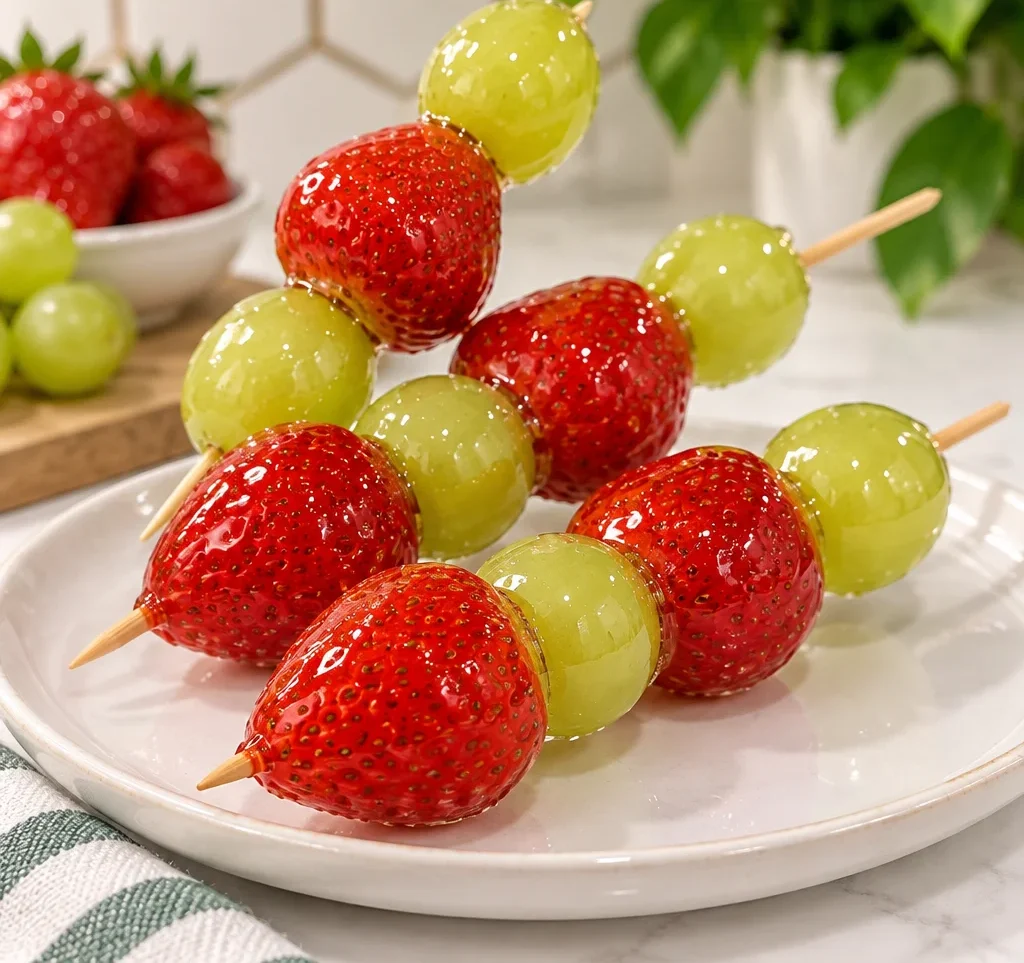
tanghulu recipe days usually start like this in my kitchen: I buy gorgeous fruit, promise myself I will eat it “the healthy way,” and then I catch myself craving that street snack crunch you hear from a mile away. If you have ever watched candied fruit videos and thought, mine would absolutely turn into a sticky mess, you are in the right place. I have made every mistake so you do not have to. This post is the simple, chatty, no stress way I make crunchy candied fruit at home. Let’s get you that glassy crackly shell that actually snaps.
What Is Tanghulu and Why Is It So Crunchy?
Tanghulu is a classic Chinese candied fruit snack where fruit gets dipped in hot sugar syrup that hardens into a thin, clear shell. The magic is that the sugar cools fast and turns into a brittle coating, kind of like a lollipop layer around juicy fruit.
That crunch happens when your syrup reaches the hard crack stage. At that point, sugar has cooked hot enough that it hardens as it cools, instead of staying bendy or tacky. The fruit inside stays fresh and bright, so you get that fun contrast: crisp shell, juicy bite.
It is honestly one of the most satisfying kitchen sounds ever.
The Best Fruits for Tanghulu Skewers
You can candy a lot of fruits, but some are easier to work with because they are firm and not too wet. My top picks are strawberries and grapes because they are easy to skewer and they look adorable.
Here are fruits that behave well:
- Strawberries: choose small to medium ones with a dry surface.
- Green or red grapes: super easy and very “street snack” vibes.
- Blueberries: tiny but cute, best in clusters on a skewer.
- Mandarin segments: possible, but they need extra drying time.
- Apple chunks: firm, crisp, and great for a carnival feel.
If you are planning a snack night with other quick hits, my kitchen tends to swing between sweet and savory, so I will sometimes pair tanghulu with something spicy and crunchy like this air fryer bang bang cauliflower recipe. Totally different, but weirdly perfect together.
Tanghulu Ingredients and the Right Sugar to Use
This is one of those recipes where you really do not need much. But the ingredients matter because sugar can be picky.
Use plain white granulated sugar. Not powdered sugar, not brown sugar, not coconut sugar. White sugar melts cleanly and gives you that clear shell.
My go to ingredients are:
- Fruit of choice, washed and fully dried
- Granulated sugar
- Water
- Optional: a tiny splash of lemon juice (helps reduce crystallizing for some people)
That is it. No corn syrup required for a basic tanghulu recipe, though some people like adding a little to make it extra stable.
Equipment You Need for Reliable Candy Coating
You do not need fancy tools, but the right setup makes this way less stressful. I like having everything ready before I even turn on the stove because once the syrup is ready, things move fast.
Here is what I recommend:
Small heavy pot (a light pot can heat unevenly)
Wooden skewers or bamboo sticks
Parchment paper or a silicone mat for setting the fruit down
Candy thermometer (optional but super helpful)
Pastry brush (optional, for brushing down sugar crystals)
On busy days I am usually juggling a bunch of recipes, so I love easy cooking methods too. If you are in that season of life, this list of 10 easy crockpot recipes is a lifesaver for dinner while you play with candying fruit for dessert.
How to Wash Dry and Skewer the Fruit
This part seems basic, but it is secretly the most important. Water is the enemy of crisp candy coating. If the fruit is wet, your shell can turn cloudy or sticky, or it can slide right off.
My routine:
1) Wash the fruit gently and drain it well.
2) Lay it on paper towels and pat it dry.
3) Let it air dry another 10 to 20 minutes if you can.
4) Insert skewers and make sure each piece feels secure.
For strawberries, I like to remove any super wet leaves and dry around the tops carefully. For grapes, I roll them around on a towel until they feel totally dry.
The Best Sugar-to-Water Ratio for Tanghulu
This is where a lot of people get stuck, so I am going to keep it simple. The ratio I use most often is:
2 parts sugar to 1 part water
That could look like 1 cup sugar plus 1/2 cup water, or 2 cups sugar plus 1 cup water if you are making a bigger batch. It is flexible, but keep the ratio steady for consistency.
I usually do 1 cup sugar and 1/2 cup water for a small batch, which covers about 8 to 12 skewers depending on fruit size.
If you are the type who loves quick kitchen tricks, you might also enjoy this 7 second ice water hack recipe. It is a totally different thing, but it gives the same “wow that was fast” energy.
How to Reach the Hard-Crack Stage at 300°F
If you have a thermometer, this is straightforward. Add sugar and water to your pot. Stir gently just until the sugar looks mostly wet, then stop stirring. Bring it to a boil over medium heat.
Let it bubble until it hits 300°F. That is the hard crack stage, and it is the sweet spot for that thin, shattering tanghulu shell.
A few tips that help:
Do not stir once it is boiling. Stirring can kickstart crystallization.
If you see sugar crystals on the sides of the pot, lightly brush them down with a damp pastry brush.
Watch the color. You want it clear to very pale gold. Darker means it is moving into caramel territory.
How to Test Tanghulu Syrup Without a Candy Thermometer
No thermometer? You can still do this. Use the cold water test. Keep a small bowl of ice water next to your stove.
When the syrup has been boiling for a while, drip a tiny bit of syrup into the ice water.
If it forms hard threads that snap when you bend them, you are at hard crack. If it turns into a soft bendy blob, it needs more time. If it dissolves or stays gummy, it needs more time.
It is a little old school, but it works. Just be careful because the syrup is very hot.
How to Dip and Coat Fruit with a Thin Candy Shell
Once your syrup is ready, you want to move with purpose. Not panic, just purpose.
Take a skewer and tilt the pot slightly if needed so the syrup is deep enough to dip. Dip the fruit in and rotate it to coat. Lift it up and let extra syrup drip off for a second or two. Then set it on parchment or a silicone mat.
The coating should harden quickly, usually within a minute or two. If you want that smooth, pretty look, try to do one clean dip instead of repeated dunking.
Also, do not touch the candy coating right away. I know it is tempting.
Tips for a Clear Crisp and Even Sugar Coating
This is the section I wish someone had handed me the first time I tried it.
Dry fruit completely. I will say it again because it matters that much.
Use medium heat so the syrup cooks evenly and does not scorch.
Do not stir after boiling. Gentle swirling of the pot is fine if you need it.
Work quickly once it hits 300°F because the syrup thickens as it cools.
Go for thin. A delicate shell is better than a thick jawbreaker layer.
This is also a fun moment to pull out something special for dinner if you are hosting. I once served tanghulu after a fancy at home seafood night, and it felt like a restaurant dessert moment. If that sounds fun, this 10 minute juicy lobster tail recipe is shockingly doable.
Tanghulu Troubleshooting for Sticky Chewy or Crystallized Sugar
If your tanghulu recipe does not come out perfect on the first try, welcome to the club. Here is what is usually happening.
Sticky coating: syrup probably did not reach hard crack, or the fruit was wet, or your kitchen is very humid. Cook a bit longer next time and dry fruit better.
Chewy coating: same issue, it needs a higher temp. Chewy means you are hanging out below 300°F.
Sugar crystallized in the pot: stirring too much or crystals on the sides fell back in. Next time, stop stirring once boiling starts and brush down the sides with water.
Cloudy coating: moisture on fruit, or sugar crystallization started. Dry fruit and avoid stirring.
I tried this method with grapes after failing twice, and the shell finally snapped like glass. Drying the fruit longer was the missing step for me.
If you are also experimenting with other simple recipes with very few ingredients, I have been seeing people chat about minimalist stuff a lot lately. This 3 ingredient mounjaro recipe is another example of that super simple approach, just in a totally different category.
Fruit Variations from Strawberries and Grapes to Citrus
Once you nail the basic tanghulu recipe, it gets really fun. You can mix colors and shapes and make a little platter.
Some variation ideas:
Strawberry and blueberry mixed skewers
Green grape only for that classic look
Apple cubes with a tiny pinch of salt on the fruit before dipping
Mandarin segments if you have the patience to dry them well
I do not recommend super watery fruits like watermelon. They are delicious, but they fight the candy shell.
When to Serve Tanghulu for the Best Crunch
Tanghulu is at its absolute best right after it sets. Like, you make it, it hardens, and you serve it. That is when the shell is loud and crisp and the fruit is cold and juicy.
If I am making it for friends, I prep the fruit and skewers ahead of time, then cook the syrup right before we are ready to eat. It becomes a little kitchen show, and people love watching the dip and the instant shine.
How to Store Tanghulu and Why It Softens
I am going to be honest: tanghulu does not store perfectly. The sugar shell hates moisture, and fruit naturally releases moisture as it sits. That moisture gets trapped between fruit and candy and the shell starts to soften.
If you must store it, do this:
Set tanghulu in a single layer, not stacked.
Keep it at cool room temperature if your house is not humid.
If you refrigerate it, expect the shell to soften faster due to condensation.
For best results, make only what you will eat within a couple of hours. That is the real secret to a crunchy bite.
How to Clean Hardened Sugar from Pots and Utensils
This part is way easier than it looks. Do not try to scrub rock hard sugar right away.
Fill the pot with water and bring it to a gentle simmer. The hardened sugar will dissolve back into the water. Tongs and spoons can soak in hot water too. In about 10 minutes, everything usually wipes clean.
It feels like a chore, but it is kind of satisfying when the sugar melts away like it was never there.
Common Questions
Why did my candy coating turn sticky?
Most often it means your syrup did not reach 300°F, or your fruit was not completely dry. Humidity can also do it, so try making it on a dry day if possible.
Can I use frozen fruit?
I do not recommend it. Frozen fruit releases a lot of water as it thaws, and the candy shell will slide off or turn cloudy fast.
Do I have to use skewers?
Skewers make dipping safer and easier, but you can use toothpicks for grapes or small strawberries. Just be careful around hot syrup.
How long does tanghulu stay crunchy?
Usually 1 to 3 hours at its peak crunch, depending on fruit and humidity. After that, it slowly softens.
Is tanghulu safe for kids?
Yes to eat, but the hot syrup is not a kid job. I keep kids away from the stove, then let them help with skewering and decorating once everything is cool.
My favorite way to enjoy this crunchy treat
If you have been wanting to try tanghulu recipe at home, I hope this makes it feel doable and not intimidating. Focus on super dry fruit, a clean syrup, and hitting that hard crack temperature so the shell snaps. If you want to compare methods, I also like reading other home cook versions like Tanghulu Recipe (Chinese Candied Fruit) – FeedMi and Tanghulu Recipe – A Cozy Kitchen because it is comforting to see how different kitchens approach it. Make a small batch first, eat it fresh, and enjoy that crackly bite while it is at its best. And if your first try is not perfect, keep going, because once you nail it, you will want to make tanghulu recipe again the next day.
Print
Tanghulu
- Total Time: 30 minutes
- Yield: 12 skewers 1x
Description
Tanghulu is a classic Chinese candied fruit snack featuring fruit dipped in hot sugar syrup that hardens into a crisp shell, creating a delightful contrast between the crunchy exterior and juicy interior.
Ingredients
Main Ingredients
- 1 cup Granulated sugar (Use plain white granulated sugar for a clear shell.)
- 1/2 cup Water (Mix with sugar for syrup.)
- to taste pieces Fruit of choice (e.g., strawberries, grapes, blueberries, apple chunks) (Make sure fruit is washed and fully dried.)
- 1 splash Lemon juice (optional) (Helps reduce crystallization.)
Instructions
Preparation
- Wash the fruit gently and drain it well.
- Lay it on paper towels and pat it dry. Let it air dry for 10 to 20 minutes.
- Insert wooden skewers or bamboo sticks into the fruit pieces.
Making the Syrup
- In a small heavy pot, combine sugar and water. Stir gently until sugar looks mostly wet; then stop stirring.
- Heat over medium heat until it comes to a boil and reaches 300°F (hard crack stage).
- Avoid stirring once it’s boiling; brush down any sugar crystals on the pot’s sides with a damp pastry brush.
Coating the Fruit
- Once syrup reaches hard crack, tilt the pot slightly and dip the fruit in the syrup, coating it evenly.
- Lift the fruit and let extra syrup drip off for a few seconds before placing it on parchment paper to harden.
Notes
Tanghulu is best served immediately after coating. If storing, keep in a single layer at cool room temperature. Avoid humidity to preserve the crispiness of the shell.
- Prep Time: 20 minutes
- Cook Time: 10 minutes
- Category: Dessert, Snack
- Cuisine: Chinese
Nutrition
- Calories: 80
- Sugar: 20
- Carbohydrates: 21

Related posts:
 Sakura Mochi: A Japanese Dessert You Can Easily Make at Home
 Deliciously Simple Candied Orange Slices
 Decadent Hot Cross Bun Recipe
 Irresistibly Super Moist Chocolate Chip Banana Bread Recipe
 Crispy Air Fryer Churro Bites- Sweet & Simple
 Vegan Gluten-Free Lemon Sandwich Cookies with Lemon Curd (Easy Healthy Recipe)





 Appetizers & Sides
 Main Dishes
 Drinks & Wellness
 Desserts & Baking