
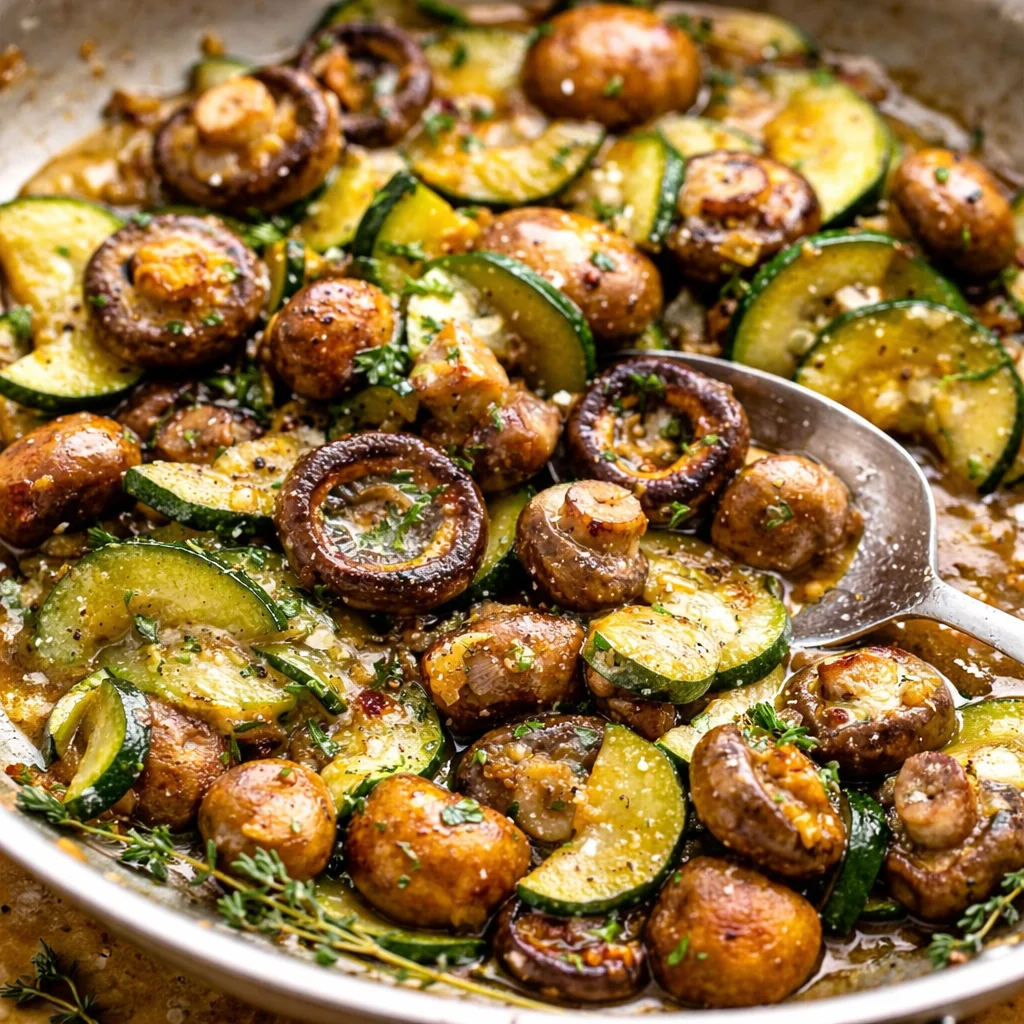
Sauteed Zucchini, Mushrooms, And Onions is my go to move when it is one of those nights where I want real food fast, but I am not in the mood to babysit the stove for an hour. You know the vibe: the sink has a couple of cups, you are hungry, and you still want something that tastes like you tried. This is warm, savory, and a little bit sweet from the onions, and it goes with almost anything. Plus, it is a great way to use up zucchini before it turns into that sad, soft drawer surprise. If you have 15 minutes and one skillet, you are in business.
Essential Ingredients for the Best Zucchini and Mushroom Sauté
I keep this recipe simple on purpose, because the veggies are the main event. The trick is using a few smart ingredients that give you big flavor without turning it into a whole production. This is also one of those recipes where you can totally riff based on what is in your fridge.
Here is what I usually grab:
- Zucchini, sliced into coins or half moons
- Mushrooms, sliced (baby bellas are my usual)
- Onion, thinly sliced (or shallot if you want it a little sweeter)
- Olive oil or avocado oil for high heat cooking
- Butter (optional but really nice for finishing)
- Garlic, minced
- Salt and pepper
- Optional extras: lemon juice, red pepper flakes, fresh herbs
If you love easy veggie sides, you might also like this healthy sauteed vegetables post. It is the same low stress energy.
Choosing the Right Squash: Italian Zucchini vs. Yellow Summer Squash
Italian zucchini is the classic here. It is a little firmer, cooks evenly, and keeps a nice bite when you do it right. Yellow summer squash is also great, just a bit softer and slightly sweeter.
If I am cooking for picky eaters, zucchini tends to “disappear” better, especially when it is browned and mixed with mushrooms and onions. If I am cooking for me and I want color, I will do half zucchini and half yellow squash. It looks prettier and makes the skillet feel like a real side dish, not just a leftover veggie situation.
Quick tip: choose squash that feels firm and not too thick. The giant garden zucchini can be watery and seedy, which makes sogginess more likely.
Mushroom Varieties: From Baby Bellas to Umami-Rich Shiitakes
Mushrooms are doing a lot of heavy lifting in Sauteed Zucchini, Mushrooms, And Onions because they bring that deep, savory flavor that makes the whole thing feel satisfying.
My favorites for this:
Baby bellas (cremini): reliable, easy to find, and they brown beautifully.
White button mushrooms: milder, still good, usually cheaper.
Shiitakes: more intense and umami rich, great if you want a bolder flavor.
If you use shiitakes, just remember to remove the tough stems. They are kind of chewy in a not fun way.
Also, do not rinse mushrooms under water if you can avoid it. They soak it up and then dump it into your pan later. I usually wipe them with a damp paper towel or give them a quick brush off.
Aromatic Bases: Shallots, Fresh Garlic, and Green Onions
This is where the kitchen starts smelling like you know what you are doing. Onions add sweetness, garlic adds that familiar cozy flavor, and green onions can bring a fresh bite at the end.
Here is my usual approach:
Onion goes in early enough to soften and lightly brown.
Garlic goes in late so it does not burn and turn bitter.
Green onions are optional, but I love them sprinkled on at the end for a little lift.
Shallots are a great swap for regular onion if you want something a little more delicate. I use them when I am serving this with fish or shrimp and I want the flavors to feel lighter.
How to Sauté Zucchini and Mushrooms Without Getting Soggy
Let us talk about the thing that ruins a lot of veggie skillets: water. Zucchini and mushrooms both release moisture, and if you crowd the pan or keep the heat too low, you will end up steaming everything. It will still be edible, but it will not have that browned, savory flavor that makes you go back for another bite.
The fix is not complicated. You want high heat, a wide skillet, and enough space so the veggies actually touch the pan instead of piling up on each other.
Another big deal is timing. If you dump everything in at once, the mushrooms and zucchini release water at the same time and you are basically making a vegetable sauna.
Step-by-Step Instructions: The Staggered Cooking Method
This method is the whole reason the recipe works in 15 minutes. You are cooking in stages so each vegetable gets its moment to brown. It sounds fancy, but it is just common sense once you do it once.
Step 1: Achieving Golden-Brown Caramelized Mushrooms
Heat a large skillet over medium high heat and add oil. Add mushrooms in a single layer and let them sit. Really, do not touch them for a couple minutes. When they start to brown, stir and let them brown again.
Once they are mostly golden, remove them to a plate. This feels annoying, but it is worth it because it keeps them from getting soft later.
Step 2: Searing Zucchini for a Tender-Crisp Texture
Add a little more oil if the pan looks dry. Toss in the zucchini and spread it out. Let it sear so it gets those browned edges. Stir only occasionally. If you stir constantly, it will not brown.
Cook until it is tender crisp, not mushy. You want it to still have a little bite.
Step 3: Deglazing and Finishing with Aromatics
Now add the sliced onions and cook until they soften. Add the mushrooms back in. Then add garlic for the last 30 seconds to 1 minute.
If you want extra flavor, splash in a tiny bit of broth, lemon juice, or balsamic at the end and scrape up the browned bits on the pan. That is where the good stuff lives.
Pro Tips for Perfectly Browned Stovetop Vegetables
These are the small things that make Sauteed Zucchini, Mushrooms, And Onions taste like something you would order at a cozy restaurant, even though you made it in old sweatpants.
Use a big pan. A cramped pan makes everything wet.
Let the mushrooms sit. Browning needs patience for a minute or two.
Cut evenly. Similar sizes cook at the same speed.
Finish with fat. A small pat of butter at the end makes it taste fuller and richer.
If you are planning a full dinner, I love this with something comforting like Chinese beef and broccoli. The veggie skillet fits right in next to those savory flavors.
The Secret to Moisture Control: Why High Heat and Pan Space Matter
Moisture control is the difference between browned veggies and limp veggies. High heat helps water evaporate quickly, and pan space helps the veggies actually fry a bit instead of steaming.
If you only have a small skillet, cook in two batches. I know that sounds like extra work, but it is still fast, and the results are so much better.
Also, do not cover the pan. Covering traps steam, and steam is the enemy of browning.
When to Add Salt: Preventing Water Release and Mushiness
Salt pulls water out of vegetables. That is not a bad thing, but if you salt too early, you can accidentally make your pan watery.
My rule: salt near the end. I usually add a small pinch when the onions go in, then I adjust at the very end once everything is browned and tasting good.
If you are using salty add ons like soy sauce or parmesan, go even lighter on salt until the end.
Flavor Variations and Custom Seasoning Ideas
This recipe is easy to customize, which is great if you get bored eating the same thing. The base is simple, so seasonings really shine.
Garlic Butter and Fresh Herb Garnish (Thyme, Parsley, Basil)
My favorite: turn off the heat, add a small pat of butter, and toss with chopped parsley or basil. Thyme is also amazing with mushrooms. It makes everything taste a little more earthy and cozy.
Adding a Kick: Red Pepper Flakes and Black Garlic
Red pepper flakes are the easiest way to wake the whole pan up. Just a pinch is enough. If you have black garlic, chop a little and stir it in at the end. It is sweet, funky, and super flavorful.
Acidic Brightness: Balsamic Glaze or Fresh Lemon Juice
A squeeze of lemon juice at the end makes the veggies taste fresh and not heavy. Balsamic glaze is sweeter and gives a little sticky shine. Both are great, just pick your mood.
Dietary-Friendly Adaptations: Keto, Vegan, Paleo, and Whole30
This is already a pretty friendly recipe for a lot of eating styles, which is one reason I make it so often.
Keto: keep the onions moderate if you track carbs closely, and finish with butter or olive oil.
Vegan: skip the butter or use a plant based one.
Paleo and Whole30: use compliant oil, skip any added sugar balsamic glazes, and lean on lemon and herbs instead.
Honestly, it is just veggies and fat with seasonings, so you have a lot of flexibility.
What to Serve with Sautéed Zucchini and Mushrooms
This skillet goes with so many meals that it is almost unfair. I serve it as a side, or I pile it on top of rice, pasta, or quinoa when I want it to be the main thing.
Some favorites from my kitchen:
- With chicken and rice dishes like Caribbean chicken and rice
- Alongside a simple protein like baked chicken, steak, or salmon
- Over rice with a fried egg for a lazy but satisfying lunch
- Tossed into pasta with parmesan and a squeeze of lemon
If you are building out a full spread, browsing the appetizers and sides category can give you more easy add ons without making dinner complicated.
Meal Prep and Storage: How to Reheat Without Losing Crispness
This keeps well, but the texture is always best right after cooking. If you are meal prepping, store it in an airtight container in the fridge for up to 3 to 4 days.
To reheat, skip the microwave if you can. The microwave makes zucchini soft fast. Reheat in a hot skillet for a few minutes so the moisture can cook off again. If you have to microwave it, do it in short bursts and do not cover it tight.
One more thing: if you plan to meal prep, undercook the zucchini slightly. It will finish cooking when you reheat it.
Common Mistakes to Avoid When Sautéing Summer Vegetables
I have made every single one of these mistakes, so no judgment.
Crowding the pan: it steams instead of browning.
Stirring nonstop: no contact with the pan means no color.
Salting too early: hello, watery skillet.
Cooking zucchini too long: it goes from tender crisp to floppy fast.
Adding garlic too early: burnt garlic tastes bitter and takes over the whole dish.
If your pan does get watery, do not panic. Turn the heat up and keep cooking until the liquid evaporates. It will still taste good.
Common Questions
1) Can I make Sauteed Zucchini, Mushrooms, And Onions with frozen zucchini?
You can, but it will be softer and release more water. If you do it, cook it from frozen on high heat and expect more of a stir fry texture than a browned sauté.
2) What is the best pan to use?
A wide skillet, ideally stainless steel or cast iron, helps you get better browning. Nonstick works too, but it usually browns a little less.
3) How do I keep mushrooms from getting rubbery?
Brown them first and do not overcrowd the pan. Let them sit and develop color before you stir.
4) Can I add protein to make it a full meal?
Yes. Toss in cooked chicken, shrimp, or even chickpeas at the end just to warm through.
5) Why did my zucchini turn mushy?
Usually it is low heat, too much stirring, or salting too early. Next time, crank the heat and cook in batches if needed.
A Quick Wrap Up Before You Cook
If you want a fast side dish that actually tastes like something, Sauteed Zucchini, Mushrooms, And Onions is the answer. Keep the heat high, do not crowd the pan, and salt near the end so you get that savory browned flavor instead of a watery mess. If you want another take on this style of skillet veggies, check out Skillet Zucchini and Mushrooms – Diethood for more inspiration. Now grab that skillet and go make dinner feel easy again.
Print
Sauteed Zucchini, Mushrooms, And Onions
- Total Time: 15 minutes
- Yield: 4 servings
Description
A quick and easy vegetable side dish featuring sautéed zucchini, mushrooms, and onions, perfect for busy nights.
Ingredients
Main Ingredients
- 2 medium Zucchini, sliced into coins or half moons (Italian zucchini is preferred.)
- 8 ounces Mushrooms, sliced (baby bellas are recommended) (Other varieties like shiitakes can be used.)
- 1 medium Onion, thinly sliced (Shallots can be used for a sweeter taste.)
- 2 tablespoons Olive oil or avocado oil (For high heat cooking.)
- 1 tablespoon Butter (Optional but adds richness.)
- 2 cloves Garlic, minced
- to taste Salt and pepper (Add salt towards the end to prevent mushiness.)
Optional Extras
- to taste Lemon juice (For brightness.)
- to taste Red pepper flakes (For added heat.)
- to taste Fresh herbs (like parsley, thyme, or basil) (For garnish and flavor.)
Instructions
Preparation
- Heat a large skillet over medium-high heat and add olive oil.
- Add mushrooms in a single layer and let them brown without stirring for a couple of minutes.
- Once they are mostly golden, remove them to a plate.
Sautéing Vegetables
- Add a bit more oil if needed, then add zucchini to the skillet and let it sear.
- Cook the zucchini until it is tender-crisp, stirring occasionally to avoid steaming.
- Add the sliced onion to the skillet and sauté until softened.
- Return the mushrooms to the pan, then add minced garlic for the last 30 seconds to 1 minute.
Serving
- Finish with optional butter, lemon juice, and fresh herbs before serving.
Notes
Store leftovers in an airtight container in the fridge for 3-4 days. To reheat, use a skillet for best texture.
- Prep Time: 5 minutes
- Cook Time: 10 minutes
- Category: Side Dish, Vegetable
- Cuisine: American










 Appetizers & Sides
 Main Dishes
 Drinks & Wellness
 Desserts & Baking