
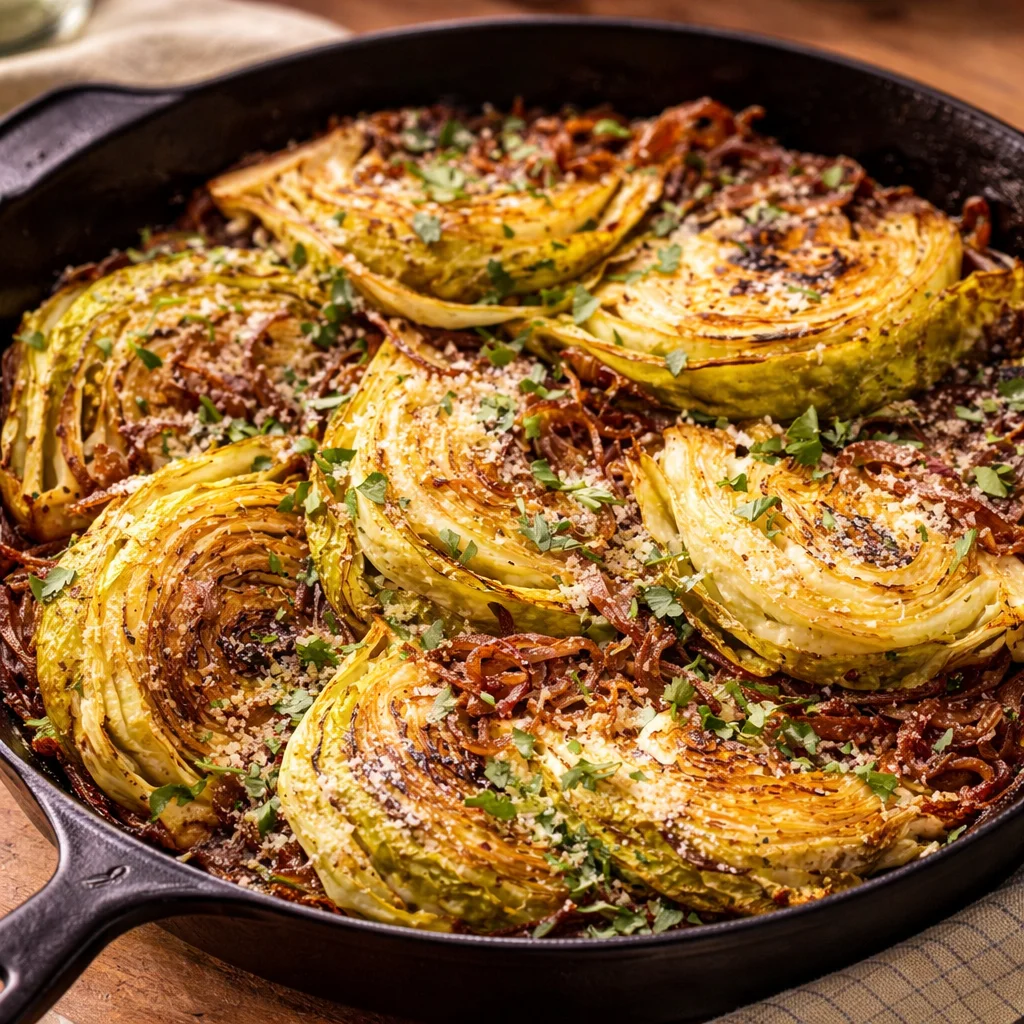
Melted Cabbage is my go to move when I have a head of cabbage in the fridge and zero patience for anything fussy. You know that night when you want something warm and cozy, but you also want to feel like you did something smart with your groceries? This is that recipe. It turns simple cabbage wedges into soft, sweet, savory goodness with golden edges that taste almost buttery. The oven does most of the work, and the payoff feels way bigger than the effort. If you have broth, a little fat, and salt, you are basically in business.
Essential Ingredients for Tender Caramelized Cabbage Wedges
I like this recipe because the ingredient list is short and forgiving. The cabbage brings the bulk, and the rest is just building flavor. If you want the classic version, keep it simple the first time, then start playing around later.
- Cabbage, cut into wedges with the core left in place so they stay together
- Olive oil or butter for searing and richness
- Salt and black pepper, do not be shy with the salt
- Broth (chicken or veggie) for the braise
- Garlic (optional but highly recommended)
- Something acidic like lemon juice or a splash of vinegar to wake it up at the end
This is one of those recipes where quality matters in small ways. Use a broth you actually like the taste of, because the cabbage soaks it up. And if you are using butter, let it brown just a bit. That little nutty smell is the start of magic.
Choosing the Best Cabbage: Green, Savoy, or Red?
I usually grab green cabbage because it is cheap, sturdy, and easy to find. But you have options, and each one cooks a little differently.
Green cabbage is the classic. It gets sweet as it cooks, and it holds together well as wedges. It is also the easiest to brown without getting weird.
Savoy cabbage has those crinkly leaves that feel a bit more tender. It melts faster, so keep an eye on it near the end. The texture is softer and almost silky.
Red cabbage works, but it is a different vibe. It stays a bit firmer and has more earthy flavor. Also, it can turn your broth purple, which is not a problem, just a heads up.
If you are into other cabbage dinners, you might also like this cozy skillet style recipe here: cowboy cabbage recipe. It is a different direction but still very weeknight friendly.
The Science of “Melting”: Why Low and Slow Braising Works
The first time I made Melted Cabbage, I was shocked that cabbage could taste this sweet. Here is what is happening in normal terms.
When cabbage cooks slowly with a little liquid, the leaves relax and soften layer by layer. The heat breaks down the tough structure, and the natural sugars come out. At the same time, the outside edges that touch the hot pan and oven heat start to brown, and browning equals flavor.
The key is not rushing it. A fast cook can leave you with cabbage that is either crunchy in the middle or kind of bitter. Low and slow makes it tender, mellow, and almost buttery in the center.
Step-by-Step Guide: How to Make Perfect Melting Cabbage in the Oven
I make this on busy nights because it is predictable. You do a quick sear, add broth, and let the oven take over. Here is my simple flow.
1) Heat the oven to 425 F. You want enough heat to brown the edges.
2) Cut the cabbage into 6 to 8 wedges. Keep the core attached on each wedge. That is what holds it together.
3) Sear the wedges in a hot oven safe pan with oil or butter. Give them a few minutes per side until you see real golden spots.
4) Add aromatics like sliced garlic or a pinch of chili flakes if you want. Toss them into the fat in the pan so they wake up.
5) Pour in broth around the cabbage, not directly over the top. You want a braise, not a boil. About 3 quarters of an inch of liquid in the pan is plenty.
6) Roast uncovered for 15 minutes, then cover and roast another 20 to 30 minutes until the stems are fork tender.
7) Finish with acid like lemon or vinegar, and taste for salt. This little step makes it taste brighter and more balanced.
When you pull it out, let it sit for a couple minutes before serving. The wedges settle, the broth thickens slightly, and everything tastes more put together.
The Importance of the Sear: Achieving Deep Golden-Brown Edges
If you skip the sear, you will still get tender cabbage, but you will miss the best part. Those browned edges are where the flavor lives. They taste a bit sweet, a bit roasted, and kind of like the crust on good bread.
My tips for a good sear are simple:
Start with a hot pan. If the oil is not shimmering, wait.
Do not move the wedges too soon. Let them sit until they release easily.
Do not crowd the pan. If you stack wedges on top of each other, they steam instead of brown.
Also, a little extra fat helps. This is cabbage, not a salad. Let it be comforting.
Mastering the Braising Liquid: Aromatics, Broth, and Acidity
The braising liquid is basically your sauce, even if it is thin. By the end, it picks up cabbage sweetness, garlic, and all the savory browned bits from the bottom of the pan.
Here are my favorite combos:
Simple and classic: chicken broth, garlic, black pepper, lemon at the end.
Cozy and rich: veggie broth, butter, a pinch of smoked paprika, splash of apple cider vinegar.
Spicy: broth plus chili flakes, then finish with a tiny drizzle of chili oil.
The main thing is balance. Broth brings salt and savory. Aromatics bring personality. Acid brings lift. If you taste it and it feels flat, it probably needs either more salt or a squeeze of lemon.
Best Cookware for Success: Cast Iron Skillet vs. Dutch Oven
I have made Melted Cabbage in both, and both work, but they behave differently.
Cast iron skillet is awesome for browning. It gets hot, stays hot, and gives you those deep golden edges. It is my top pick if you are doing wedges and want them pretty and crisp on the outside.
Dutch oven holds heat beautifully and traps moisture well. If you like the cabbage extra soft and you want more braising liquid, use the Dutch oven. It is also easier if you are making a bigger batch.
If you do not have either, use any oven safe pan and just pay attention to browning. The recipe is flexible, but heat control helps a lot.
Expert Tips for Fork-Tender Texture Without Falling Apart
This is the part that separates okay cabbage from the kind you keep sneaking bites of straight from the pan.
Leave the core on when cutting wedges. Trim only the very bottom if it is dirty or dry.
Cover for tenderness, uncover for browning. If it is getting too dark too fast, cover sooner.
Check the thickest part with a fork, not the leafy edges. The edges always soften first.
Add broth if needed. If the pan dries out, splash in a bit more. Dry pan equals scorched cabbage.
And one more thing, do not overcook it until it is collapsing. You want it tender but still wedge shaped, so it feels satisfying on the plate.
Flavor Variations: Garlic Butter, Spicy Chili Crunch, and Herb-Infused Options
This recipe is a blank canvas, and it loves a little extra flavor. Once you have the basic technique down, try one of these.
Garlic butter: use butter for the sear, add sliced garlic, and finish with a little more melted butter on top. It is simple and honestly hard to beat.
Spicy chili crunch: spoon a little chili crunch over the finished wedges and let it melt into the hot cabbage. The crispy bits plus soft cabbage is such a good contrast.
Herb infused: toss in thyme or rosemary while it braises, then finish with parsley. It makes the kitchen smell like you have your life together.
If you are in the mood for a heartier cabbage dinner, check out this one too: sausage and cabbage stir fry. Different texture, same kind of cozy satisfaction.
Dietary Adaptations: Vegan, Keto-Friendly, and Gluten-Free Instructions
This is one of the easiest side dishes to adapt without losing what makes it good.
Vegan: use olive oil or vegan butter and veggie broth. Finish with lemon. You can also add nutritional yeast for a savory boost.
Keto-friendly: this already fits well. Use butter, and consider adding a little grated parmesan at the end if that works for you.
Gluten-free: just make sure your broth is labeled gluten free. Everything else is naturally fine.
I like recipes like this because you can feed a mixed crowd without making separate dishes. Everybody gets the same golden wedges, and nobody feels like they got the boring plate.
What to Serve with Melted Cabbage: Perfect Main Dish Pairings
Melted Cabbage plays well with so many mains. It is soft, savory, and a little sweet, so it works with rich meats, simple proteins, or even beans.
- Roast chicken or chicken thighs with crispy skin
- Pork chops or sausage links
- Meatloaf or burgers, especially in colder months
- White beans with herbs and olive oil for a meatless plate
- Fried eggs on top for a lazy but perfect dinner
If you love cabbage with that old school comfort food feel, you might also want this: southern fried cabbage recipe. It is a totally different method, but the flavor is bold and familiar.
How to Store, Reheat, and Meal Prep Braised Cabbage Wedges
This is a great meal prep side because it reheats without turning sad, as long as you do it the right way.
To store: keep wedges in an airtight container with a few spoonfuls of the braising liquid. Refrigerate up to 4 days.
To reheat: warm in a skillet with a splash of broth, then let it sit a bit to re brown one side. You can microwave it, but the edges will be softer.
To meal prep: roast a whole head, then use leftovers in wraps, bowls, or chopped into scrambled eggs. It is also really good tucked next to rice with a drizzle of the pan juices.
Troubleshooting Common Issues: Avoiding Soggy or Bitter Cabbage
If cabbage has ever betrayed you, I get it. Here are the common problems and quick fixes.
It is soggy: too much liquid or too low heat. Next time use less broth and uncover for the last 10 to 15 minutes to let moisture cook off.
It is bitter: undercooked cabbage can taste sharper. Cook it longer and finish with acid. A squeeze of lemon really helps.
It is falling apart: wedges were cut too thin or the core was removed. Keep thicker wedges and leave the core on.
It is bland: it needs salt or better broth. Salt in layers, and taste the liquid before it goes in.
It is burnt on the bottom: pan got too dry. Add a splash more broth during cooking and reduce the oven temp slightly.
Common Questions
Can I make Melted Cabbage ahead of time?
Yes. Make it, cool it, then reheat in a skillet to bring back some browning on the edges.
How do I know when the wedges are done?
Poke the thickest part near the core with a fork. It should slide in easily, with a little resistance still holding the wedge together.
Do I have to use broth?
Broth gives the best flavor, but water plus a little extra salt and a small knob of butter works in a pinch.
Why did my cabbage not brown?
Your pan probably was not hot enough, or it was crowded. Sear in batches if you need to.
Can I add cheese?
Absolutely. A sprinkle of parmesan at the end melts nicely and adds a salty bite.
A cozy little cabbage habit worth keeping
If you try this, you will see why Melted Cabbage keeps showing up in my kitchen. It is simple, affordable, and it turns into something that feels way more special than it should. Keep the sear strong, let it braise low and slow, and do not forget that last splash of acid. If you want another solid reference point, this Melting Cabbage Recipe | The Kitchn is a helpful read too. Now grab that cabbage, turn on the oven, and let dinner basically cook itself.

Melted Cabbage
- Total Time: 55 minutes
- Yield: 4 servings
Description
A simple and cozy recipe transforming cabbage wedges into tender, caramelized goodness with deep flavor through low-and-slow braising.
Ingredients
Main Ingredients
- 1 head Cabbage, cut into wedges with the core left in place (Use green, savoy, or red cabbage.)
- 2 tablespoons Olive oil or butter (Use for searing and richness.)
- to taste Salt and black pepper (Be generous with salt.)
Braising Liquid
- 1 cup Broth (chicken or veggie) (Use a broth you enjoy.)
- 3 cloves Garlic (Optional but highly recommended.)
- 1 tablespoon Lemon juice or vinegar (For finishing touch.)
Instructions
Preparation
- Heat the oven to 425 F.
- Cut the cabbage into 6 to 8 wedges, keeping the core attached on each wedge.
- Sear the wedges in a hot oven-safe pan with oil or butter until golden brown on each side.
- Add sliced garlic or chili flakes to the pan during the last minute of searing.
- Pour in broth around the cabbage wedges, avoiding pouring directly on top.
- Roast uncovered for 15 minutes, then cover and roast for another 20 to 30 minutes until tender.
- Finish with a splash of lemon juice or vinegar and taste for salt.
- Let sit for a couple of minutes before serving.
Notes
This recipe is flexible; experiment with different broths and additional flavors like herbs or spices. Store leftovers in an airtight container in the fridge for up to 4 days.
- Prep Time: 10 minutes
- Cook Time: 45 minutes
- Category: Side Dish
- Cuisine: American











 Appetizers & Sides
 Main Dishes
 Drinks & Wellness
 Desserts & Baking
Brown cabbage is a traditional dish with a sweet, rich flavor and comforting texture
I can’t agree more – thank you so much for the lovely comment!