
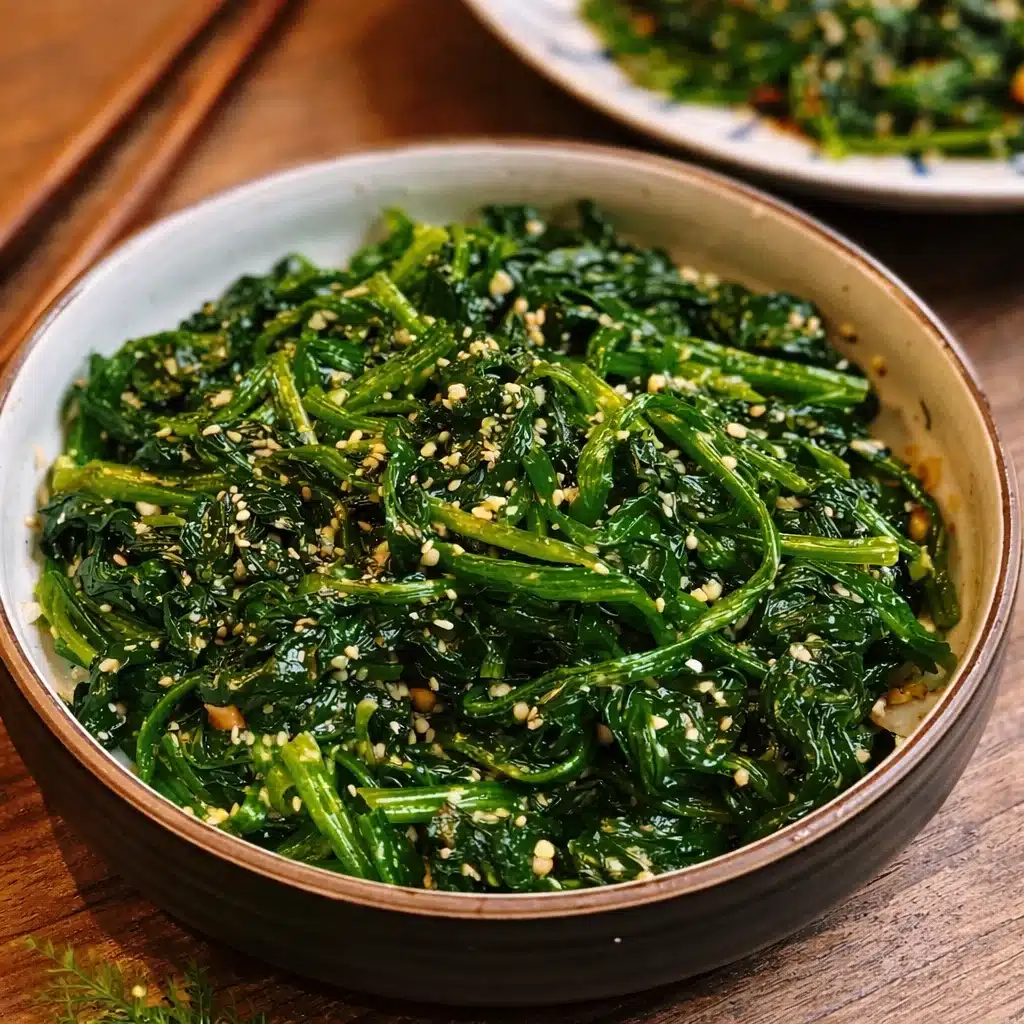
Korean Spinach Salad 2 Ways is my go to move when I want something fresh on the table but I also do not want to overthink dinner. You know those nights when you have protein cooking and you realize you have zero vegetables prepped? This fixes that fast. It is bright, a little savory, and it somehow makes a basic meal feel complete. Plus, you can keep one version mild and make the other one spicy for the heat lovers.
Ingredients for Korean Spinach Salad
I love this dish because the ingredient list is short, and most of it is pantry stuff if you cook even a little bit. The only thing that really matters is getting decent spinach and using fresh garlic, because that flavor shows up right away.
- Fresh spinach (baby spinach or regular spinach both work)
- Salt (for blanching water and seasoning)
- Toasted sesame oil
- Sesame seeds (toasted if possible)
- Garlic (minced or grated)
- Soy sauce (or tamari)
- Optional mild sweetness: a tiny pinch of sugar or a drip of honey
- For the spicy version: gochugaru or gochujang
- Optional add ins: chopped scallions, a little rice vinegar
Quick note: if you are already planning a salad night, you might like my crunchy, hearty salad vibes too. This bacon ranch chopped salad is a totally different direction, but it is another easy crowd pleaser when you want something bold.
How to Prepare and Blanch Spinach Properly
This is the part that makes people nervous, but it is honestly simple. The goal is tender spinach that is still green, not sad and mushy. I used to overcook it because I walked away for literally one minute too long. Now I treat blanching like a quick dip.
My simple blanching method
Bring a pot of water to a boil and salt it like you are cooking pasta. Drop the spinach in and press it down gently. For baby spinach, 20 to 30 seconds is enough. For thicker bunch spinach, it might take 45 seconds. The moment it turns bright green and soft, pull it out fast.
Then rinse under cold water or dunk it into an ice bath. Squeeze out the water with your hands. Do not be shy here. Extra water will water down your seasoning and make the salad taste bland.
If you are meal prepping other simple things too, I like pairing this with something easy to pack. This air fryer chicken mozzarella wraps situation is so good for quick lunches next to a little container of seasoned spinach.
Step-by-Step Korean Spinach Salad Recipe
Here is the base version I make the most. It is mild, savory, and super family friendly. This is the one I bring to the table first, then I do a spicy bowl right next to it.
Step 1: Blanch the spinach, cool it down, and squeeze it well.
Step 2: Put spinach in a bowl and gently loosen it with your fingers so it is not one big clump.
Step 3: Add 1 to 1 and a half teaspoons soy sauce, 1 teaspoon sesame oil, 1 small garlic clove minced, and a pinch of salt if needed.
Step 4: Add 1 teaspoon sesame seeds. Taste it. If it feels flat, add a tiny bit more soy sauce or a tiny pinch of sugar.
Step 5: Let it sit for 5 minutes before serving. It tastes better when it has a minute to mingle.
This mild bowl is what I think of when someone says Korean Spinach Salad 2 Ways. It is the clean, classic side that goes with basically anything.
Spicy Sigeumchi Namul Variation (Gochugaru or Gochujang)
Now for the fun one. If you like spicy banchan, this is the bowl you will keep sneaking bites from while you are standing at the counter.
Start with the same blanched, squeezed spinach. Then choose your spicy path:
Option 1: Gochugaru (Korean chili flakes)
Add 1 to 2 teaspoons gochugaru, plus the usual sesame oil, garlic, soy sauce, and sesame seeds. Gochugaru gives a warm, peppery heat and keeps the seasoning light.
Option 2: Gochujang (Korean chili paste)
Mix 1 to 2 teaspoons gochujang with 1 teaspoon soy sauce and 1 teaspoon sesame oil first, then toss with the spinach. I like adding a few drops of water to loosen it, and a tiny pinch of sugar to round it out. Gochujang makes it deeper, slightly sweet, and more saucy.
If you want to lean into a full spread, a festive appetizer round up can be handy for ideas. I bookmarked this list of Christmas appetizers because a banchan style table totally works for parties too, not just holidays.
Tips for the Best Korean Seasoned Spinach
This is one of those simple recipes where tiny details matter. The good news is once you do it a couple times, you will just know.
Squeeze the spinach like you mean it. Water is the main enemy of flavor here.
Use toasted sesame oil, not plain. Toasted sesame oil is the signature smell and taste.
Do not over garlic it. One small clove is usually plenty for a standard bowl. Too much makes it harsh.
Season gradually. Spinach shrinks a lot, so it is easy to overdo soy sauce and end up salty.
And if you like having veggie sides ready to go, you might also enjoy this cozy spinach meal idea: cottage cheese spinach crustless quiche. Different flavor profile, same practical energy.
Common Mistakes to Avoid
I have made every one of these mistakes at least once, so consider this my friendly warning list.
Overblanching. If the spinach turns dark and super limp, it will taste tired and watery.
Not cooling it quickly. Cooling stops the cooking and keeps the color bright.
Skipping the squeeze. Even if your seasoning is perfect, extra water will dilute it.
Dumping seasoning on a clump. Break up the spinach first so the flavor spreads evenly.
Storing it uncovered. It will dry out and pick up fridge smells.
How Korean Spinach Salad Is Served (Banchan Style)
This is typically served as banchan, which is basically the little side dishes you see alongside Korean meals. You do not need a huge portion. A few forkfuls on the side of rice and protein is perfect.
I usually put it in a small bowl and let everyone take what they want. If I am doing Korean Spinach Salad 2 Ways, I label the spicy one for my friends who grab first and ask questions later.
What to Serve with Sigeumchi Namul
This spinach side plays well with so many foods, not just Korean dishes. Here are a few easy pairings:
- Steamed rice with fried eggs
- Grilled chicken, salmon, or tofu
- Any kind of barbecue style meat
- Ramen or noodle bowls, especially on busy nights
- A simple soup plus a couple banchan sides
If you are in a salad era, you might also like something sweet and savory for contrast like this apple chicken salad recipe. I love doing one crisp, one savory, and calling it lunch.
Health Benefits of Korean Spinach Salad
I am not here to pretend this is magic food, but spinach is genuinely a great everyday ingredient. You are getting fiber, vitamins, and minerals without needing a complicated plan. Because this is blanched, it is also easier for some people to digest than raw spinach.
The seasonings are simple, and you control the salt. Sesame oil adds satisfying flavor so you do not feel like you are eating “diet food.” And if you make Korean Spinach Salad 2 Ways, you can keep one bowl lighter and go a little bolder with the spicy bowl without changing the base.
Storage and Meal Prep Tips
This keeps well, which is one reason I make it all the time.
Fridge: Store in an airtight container for up to 3 days. It is best on day 1 and day 2.
Meal prep tip: Blanch and squeeze the spinach, then store it plain. Season right before eating if you want the freshest taste.
If it tastes dull after chilling: Add a few drops of sesame oil and a sprinkle of sesame seeds to wake it back up.
I do not recommend freezing it. The texture gets weird and watery once it thaws.
Easy Variations and Customizations
This recipe is flexible, and that is part of the charm. Here are a few small twists I actually use:
Add scallions: Thin sliced scallions give it a fresh bite.
Add a tiny splash of rice vinegar: If you want it brighter and more snacky.
Add toasted seaweed flakes: This makes it feel extra banchan style.
Make it nutty: A few crushed roasted peanuts on top are not traditional, but they are delicious.
Make it spicier: Combine gochugaru and gochujang for a layered heat.
When I am hosting, I love putting out both bowls because Korean Spinach Salad 2 Ways makes everyone feel like they have options without extra work.
Common Questions
1) Can I use frozen spinach?
You can, but it will be softer and more watery. Thaw it fully and squeeze it extremely well, then season a little stronger.
2) Why does my spinach salad taste watery?
Almost always because it was not squeezed enough after blanching. Next time, squeeze, then squeeze again.
3) How do I keep it from being too salty?
Start with less soy sauce than you think. You can always add more after tasting. Also remember sesame oil adds flavor without adding salt.
4) Is it served warm or cold?
Usually cool or room temperature. I like it slightly chilled, especially in summer.
5) What is the difference between the mild and spicy versions?
Same base seasoning, but the spicy one adds gochugaru or gochujang for heat and a deeper punch.
A fresh little side you will actually make again
If you try this once, you will see why I keep coming back to it. Korean Spinach Salad 2 Ways is quick, flexible, and it makes even a plain dinner feel more complete. Keep the mild one for everyday meals, and bring out the spicy bowl when you want something with attitude. If you want another solid reference and a slightly different approach, I also like Korean Spinach Salad 2 Ways (Sigumchi Namul) – Tiffy Cooks for extra tips. Make it tonight, and do not be surprised if you start adding it to your weekly routine.
Korean Spinach Salad 2 Ways
- Total Time: 20 minutes
- Yield: 4 servings
Description
A quick and fresh side dish that can be served mild or spicy, ideal for complementing any meal.
Ingredients
For the salad
- 10 oz Fresh spinach (baby or regular) (Good quality spinach is essential.)
- 1 tsp Salt (For blanching water and seasoning.)
- 1 tbsp Toasted sesame oil (Use toasted sesame oil for authentic flavor.)
- 1 tbsp Sesame seeds (Toasted if possible.)
- 1 clove Garlic (Minced or grated.)
- 1.5 tsp Soy sauce (Or tamari for gluten-free option.)
- 1 pinch Sugar or honey (Optional mild sweetness.)
- 2 tsp Gochugaru or gochujang (For the spicy version.)
Optional Add-Ins
- 2 tbsp Chopped scallions (For a fresh bite.)
- 1 tbsp Rice vinegar (For brightness.)
Instructions
Preparation
- Bring a pot of water to a boil and add salt.
- Blanch the spinach for 20-30 seconds for baby spinach, or 45 seconds for thicker bunch spinach until bright green and tender.
- Immediately rinse the spinach under cold water or dunk it in an ice bath to stop the cooking.
- Squeeze out excess water from the spinach to prevent a watery salad.
Mild Version
- In a bowl, loosen the spinach gently.
- Add 1 to 1.5 teaspoons of soy sauce, 1 teaspoon of sesame oil, minced garlic, and a pinch of salt if needed.
- Add 1 teaspoon of sesame seeds, taste, and adjust soy sauce or add a pinch of sugar if needed.
- Let sit for 5 minutes before serving.
Spicy Version
- Start with the blanched spinach.
- Option 1: Add 1-2 teaspoons of gochugaru along with sesame oil, soy sauce, and sesame seeds.
- Option 2: Mix 1-2 teaspoons of gochujang with soy sauce and sesame oil before tossing with spinach. Add drops of water for a smoother consistency.
Notes
Serve as banchan alongside rice and protein. Store in an airtight container in the fridge for up to 3 days. Squeeze spinach well to enhance flavor. Customize with scallions or rice vinegar for extra freshness.
- Prep Time: 15 minutes
- Cook Time: 5 minutes
- Category: Salad, Side Dish
- Cuisine: Korean











 Appetizers & Sides
 Main Dishes
 Drinks & Wellness
 Desserts & Baking