
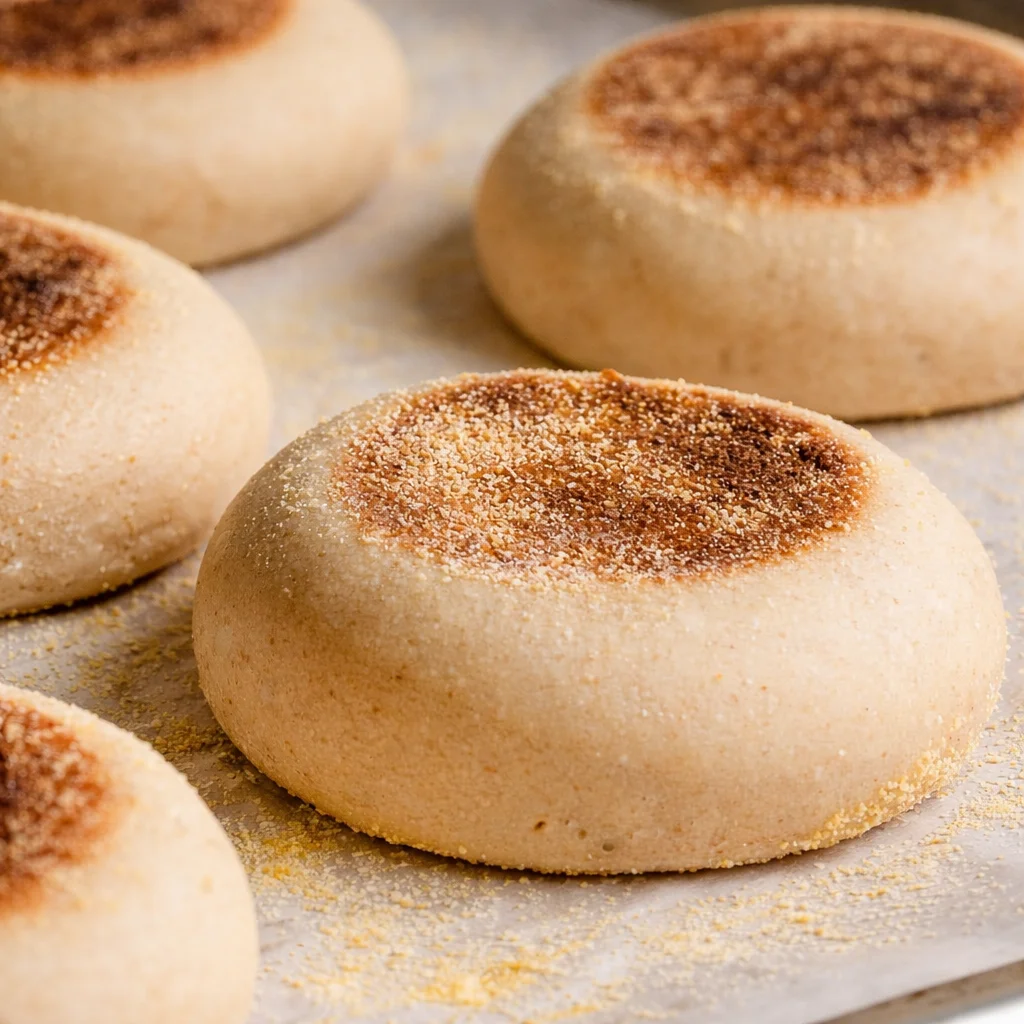
Sourdough Discard English Muffins are my favorite answer to that moment when you open the fridge, see a jar of discard, and feel a tiny bit guilty about tossing it. I used to waste mine all the time, then I realized it can turn into the coziest breakfast with almost no drama.
These muffins are soft inside, toasty on the outside, and they make your kitchen smell like a real bakery. If you have ever wanted homemade English muffins but thought it sounded fussy, I promise it is way simpler than it looks. Also, the payoff is huge because you get those little nooks and crannies that catch melted butter like a dream.
Ingredients for Sourdough English Muffins (Milk, Flour, Starter/Discard, Yeast Options)
I keep this recipe pretty pantry friendly. The main idea is: milk for tenderness, flour for structure, sourdough discard for flavor, and a little yeast if you want a faster schedule. If you have an active starter, you can use that too, but discard works beautifully here.
Here is what I use most days:
- Milk (warm, not hot)
- Flour (bread flour or all purpose)
- Sourdough discard (straight from the fridge is fine)
- Butter (melted or very soft)
- Honey or sugar (just a little)
- Salt
- Yeast (optional, but helpful)
- Cornmeal or semolina (for that classic bottom)
If you are new to using discard, do not overthink it. If it smells pleasantly tangy, you are good. If it smells truly rotten or has pink or orange streaks, toss it and start fresh. Safety first, always.
Ingredient Notes & Best Substitutions (Bread Flour vs AP, Milk Alternatives, Honey/Sugar, Cornmeal/Semolina)
This is the part that saves you a grocery run. I have swapped a lot over the years, usually because I was already in my pajamas and not leaving the house.
- Bread flour vs all purpose: Bread flour gives a bit more chew and structure, which helps those nooks and crannies. All purpose still makes a really good muffin, just a touch softer. If you are chasing that classic bite, grab bread flour, but do not stress if you only have all purpose.
- Milk alternatives: Oat milk and whole milk both work great. Almond milk works too, but the muffins can brown a little faster depending on the brand. If you use non dairy milk, pick an unsweetened one so the flavor stays balanced.
- Honey vs sugar: Honey adds a gentle warm sweetness and helps browning. Sugar is more neutral. Either is fine. If your discard is very tangy, I like honey because it rounds out the flavor.
- Cornmeal vs semolina: Cornmeal is the classic. Semolina is slightly smoother and less gritty. In a pinch, you can use flour, but you will miss that little toasty crunch on the bottom. One more small note: salt matters. Without enough salt, these can taste flat, especially since sourdough flavor is subtle until you toast the muffins.
Equipment You’ll Need (Biscuit Cutter, Skillet/Griddle with Lid, Thermometer, Scale)
You do not need fancy tools, but a few basics make life easier. If you bake even a little, you probably have most of this already.
What helps a lot:
- Biscuit cutter (or a drinking glass with a sharp rim)
- Large skillet or griddle
- Lid (to trap heat so the centers cook through)
- Instant read thermometer (not required, but super reassuring)
- Kitchen scale (optional, but it keeps results consistent)
- Parchment paper (for easy handling)
- Spatula
If you only take one tip from this section, let it be this: use a lid. I cooked my first batch without one and ended up with muffins that looked gorgeous, then surprised me with slightly doughy centers. The lid fixes that.
“I made these on a random Sunday with my leftover discard and they turned out better than the store ones. The lid trick helped a ton and the centers were perfect.”
Starter & Fermentation Basics (Fed Active Starter vs Unfed Discard, Timing, Flavor)
This recipe is flexible, and that is why I love it. You can use fed starter for a more natural rise, or sourdough discard plus a pinch of yeast for reliability. Most of the time, I use discard and yeast because it fits real life better.
Fed active starter: If your starter is bubbly and recently fed, you can rely on it more for lift. The rise will take longer and the flavor tends to be more complex.
Unfed discard: Discard brings flavor, not always strong rising power. That is why adding yeast is popular. You still get that sourdough vibe without waiting all day for the dough to wake up.
Timing and flavor: Longer resting usually equals more tang and a little more chew. If you want mild flavor, go same day. If you want more of that sourdough personality, do an overnight rest in the fridge.
How to Make Sourdough English Muffins (Step-by-Step Dough Mixing & Rest)
This is where it gets fun because the dough comes together fast. I am going to explain it the way I do it at home, with minimal fuss and maximum payoff. This method works beautifully for Sourdough Discard English Muffins because the dough is forgiving.
Basic steps:
1) Warm your milk until it feels like bath water, not hot. Stir in honey or sugar and yeast if using. Let it sit for about 5 minutes if you want to make sure the yeast is awake.
2) Add sourdough discard, melted butter, and salt. Stir it up.
3) Mix in flour until you get a soft dough. It should look slightly shaggy but not soupy.
4) Cover and let it rest 15 minutes. This little rest makes it easier to knead and helps the flour hydrate.
After the rest, you will knead briefly until it looks smoother. Then it is rise time, which you can do same day or overnight depending on your schedule.
Kneading & Dough Texture Guide (Hand vs Stand Mixer, Sticky Dough Fixes)
English muffin dough is soft. That is a good thing. A soft dough gives you a tender interior. But yes, it can feel sticky, and that can make people panic. Do not.
By hand: Use lightly floured hands and a lightly floured counter. Knead for about 5 to 7 minutes. If the dough is sticking like crazy, pause and let it sit for 5 minutes, then come back to it. That tiny break helps more than you would think.
With a stand mixer: Use the dough hook and mix on low until the dough starts clearing the sides. It may still cling a bit to the bottom, and that is fine.
Sticky dough fixes:
Instead of dumping in lots of flour, add it 1 tablespoon at a time. Too much flour makes the muffins dry. If your kitchen is humid or your discard is runnier, you might need a little extra, but go slow.
First Rise / Overnight Ferment (Same-Day vs Overnight Schedule for Best Results)*
This is where you can choose your own adventure. I have done both schedules many times, and honestly they both work. The overnight version just tastes a bit deeper.
Same day: Let the dough rise at room temp until it looks puffy and has grown noticeably, usually 60 to 90 minutes depending on warmth. If your kitchen is chilly, it may take longer.
Overnight: Let it start rising for about 30 to 60 minutes at room temp, then cover and refrigerate overnight. In the morning, let it sit out 30 to 60 minutes so it is easier to roll and cut. This is my favorite path for Sourdough Discard English Muffins when I want a calm morning.
One practical tip: do not chase the clock. Watch the dough. If it looks puffy and airy, you are ready to move on.
Shaping & Cutting Perfect Rounds (Thickness, Cutter Size, Cornmeal Dusting)
Shaping is the part that makes you feel like you really made something, you know? The dough turns into actual muffins right in front of you.
Lightly dust your counter and roll the dough to about 1/2 to 3/4 inch thick. Thicker muffins give you a taller split and more room for eggs and cheese later, so I lean thicker.
Cutter size: A 3 inch cutter is a nice classic size. If you go smaller, watch your cooking time since they will cook faster.
Cornmeal dusting: Sprinkle cornmeal or semolina on a sheet of parchment. Place the rounds on top, then sprinkle a little more on top of the muffins too. It keeps them from sticking and gives that signature texture.
When you cut, press straight down. Do not twist. Twisting can seal the edges and mess with the rise a bit. If you have scraps, gently press them together and cut a few more. Try not to knead the scraps too much or they can get tougher.
Second Rise & Proofing Tips (Room Temp, Warm Kitchen Adjustments, When They’re Ready)
After cutting, the rounds need a short nap. This is what helps them puff up and stay light.
Cover them and let them rise until they look a bit taller and feel slightly airy when you gently touch the side. Usually that is 30 to 45 minutes in a normal kitchen.
If your kitchen is warm: They may be ready in 20 to 30 minutes. Start checking early.
If your kitchen is cool: Give them longer, even up to an hour. You can also set the tray near the stove while it preheats, just not on direct heat.
If you rush this step, they can turn out dense. If you let them go too long, they may slump a little when moved. You want that sweet spot where they are puffy but still hold their shape.
Cooking on the Griddle: Temperature, Time, Lid-On Method, Even Browning
This is the make or break moment, but it is not hard once you know what to look for. You are basically cooking low and slow so the centers cook before the outsides get too dark.
Preheat a skillet or griddle over medium low to low. If you have a surface thermometer, aim for about 300 to 325 F. If you do not, just heat the pan slowly. A drop of water should sizzle gently, not dance like crazy.
Place the muffins on the dry pan. No oil needed. Cover with a lid.
Timing: Cook about 6 to 8 minutes per side. Flip gently, cover again, and cook the other side. If they are browning too fast, lower the heat. If they are pale and taking forever, bump it up slightly.
Even browning tip: Rotate them around the pan when you flip. Most pans have hot spots, and rotating helps a lot.
How to Know They’re Done (Internal Temp, Undercooked Centers, Overbrowning Fixes)
This is the part that used to stress me out, so here is the easy reassurance: you have options. You can go by feel, by look, and by temperature if you want extra confidence.
- Internal temp: I pull mine when they hit about 200 to 205 F in the center.
- Signs they are done: They feel lighter than they look, the sides feel set (not squishy dough), and the tops and bottoms are a nice golden brown.
- If the centers are undercooked: Turn the heat down and keep cooking with the lid on. You can also pop them into a 350 F oven for 5 to 8 minutes to finish gently.
- If they are overbrowning: Lower heat immediately. The pan was too hot. Next batch, let the skillet cool a bit before adding more muffins.
- Once cooked, cool them on a rack for at least 10 minutes before splitting. Hot muffins can feel gummy inside if you cut too soon.
How to Split, Toast & Serve (Fork-Split Method, Breakfast Sandwiches, Eggs Benedict, English Muffin Pizza)
If you want those classic craggy insides, do the fork split. I stick a fork into the side and work my way around, then pull it apart with my hands. A knife will make it smoother, which is fine, but the fork method gives you the best little pockets.
Toasting: Always toast them. Even if they look perfect, toasting takes them from good to wow. The edges crisp up and the inside gets warm and steamy.
My favorite ways to eat them:
- Butter and flaky salt, simple and honestly unbeatable
- Breakfast sandwiches with egg, cheddar, and a little hot sauce
- Eggs Benedict if you feel like showing off a tiny bit
- English muffin pizza with marinara and mozzarella, broiled until bubbly
And yes, Sourdough Discard English Muffins freeze really well. Split them first, freeze in a bag, and toast straight from frozen on busy mornings.
Common Questions
Do I have to use yeast, or can I skip it?
You can skip it if your starter is very active and you are okay with longer rising times. For most people using fridge discard, a little yeast keeps things reliable.
Why didn’t I get lots of nooks and crannies?
Usually the dough was a bit too dry or it got pressed too flat. Keep the dough soft, do not add too much extra flour, and use the fork split instead of slicing with a knife.
Can I make the dough ahead for a weekday morning?
Yes. Do the first rise in the fridge overnight, then cut and proof in the morning. It is a really nice rhythm once you try it once.
My muffins browned but stayed doughy inside. What happened?
Your heat was too high. Lower the heat and use the lid. If needed, finish them in the oven for a few minutes.
How long do they stay fresh?
At room temp, they are best within 2 days. After that, I freeze them. Toasting brings them right back to life.
A cozy breakfast you will actually want to repeat
Once you make a batch, you will see why I keep coming back to these. Sourdough Discard English Muffins use up leftover starter, fit into either a same day plan or an overnight one, and they taste like something you would pay too much for at a cafe. Keep the heat low, use the lid, and do the fork split for the best texture. If you try them, make an extra batch for the freezer because future you will be so grateful.
Print
Sourdough Discard English Muffins
- Total Time: 45 minutes
- Yield: 8 muffins
Description
Soft and toasty English muffins made with sourdough discard, perfect for breakfast or as a base for your favorite toppings.
Ingredients
Main Ingredients
- 1 cup warm milk (Not hot)
- 4 cups bread flour or all-purpose flour (Bread flour gives more chew and structure)
- 1 cup sourdough discard (Straight from the fridge is fine)
- 2 tbsp butter (Melted or very soft)
- 1 tbsp honey or sugar (Just a little for sweetness)
- 1 tbsp salt (Salt matters for flavor)
- 1 tsp yeast (Optional, for faster rising)
Instructions
Dough Mixing
- Warm the milk until it feels like bath water. Stir in honey or sugar and yeast if using, then let it sit for about 5 minutes.
- Add the sourdough discard, melted butter, and salt. Stir until combined.
- Mix in flour until you achieve a soft dough that looks slightly shaggy but not soupy.
- Cover and let the dough rest for 15 minutes.
Kneading and Rising
- Knead the dough for about 5 to 7 minutes until it looks smoother.
- Let it rise at room temperature for 60 to 90 minutes until puffy, or do an overnight rise in the fridge.
Cutting and Shaping
- Lightly dust the counter and roll the dough to about 1/2 to 3/4 inch thick.
- Use a 3-inch biscuit cutter to cut out rounds, dusting with cornmeal or semolina as needed.
- Cover the rounds and let them rise for another 30 to 45 minutes until puffed.
Cooking
- Preheat a skillet or griddle over medium low to low heat.
- Place the muffins on the dry pan and cover with a lid.
- Cook for about 6 to 8 minutes per side, adjusting heat as necessary.
- Check for an internal temperature of about 200 to 205°F.
Serving
- Cool the muffins on a rack for at least 10 minutes before splitting.
- For the best texture, use the fork-split method to split the muffins.
Notes
These muffins freeze well. Split them first, then toast straight from frozen for a quick breakfast option. Use a lid while cooking to ensure even cooking throughout the muffins.
- Prep Time: 30 minutes
- Cook Time: 15 minutes
- Category: Breakfast, brunch
- Cuisine: American











 Appetizers & Sides
 Main Dishes
 Drinks & Wellness
 Desserts & Baking