
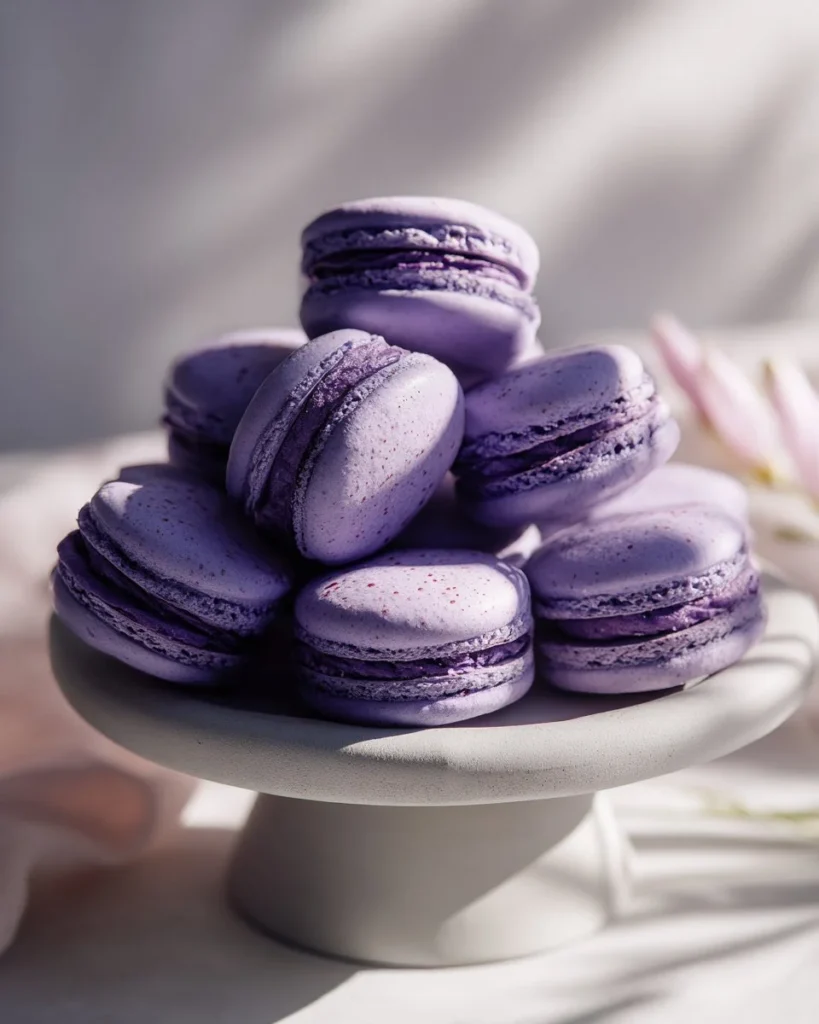
If you want a tender, chewy cookie with a glossy top and a ruffled foot, this French Macaron Recipe gives you that and the payoff is worth the fuss. I make these when I have time to slow down and focus. They take some patience, but they reward you with something special. If you like trying new projects in the kitchen, this is a good one to learn.
I often keep a list of simple meals for busy nights, so while these rest, you can throw something easy in the crockpot and relax. For example, I sometimes pair projects like this with a few easy crockpot recipes that take care of dinner while I bake.
Why this recipe works every time
This recipe follows a clear, measured approach. It balances the almond and powdered sugar so the shells hold their shape. The meringue gives you structure, and the macaronage step controls texture. I like it because the method forces you to check the batter and the surface for a skin. That skin makes the feet form during baking. And yes, that part matters.
You do not need fancy tools. A whisk and a piping bag will do. Still, use a kitchen scale and sift carefully. I learned this the hard way: measure by weight and sift the almond flour. That single habit fixed half my problems.
Start by making the dry mix and the meringue separately. Then fold the dry mix into the meringue gently. Timing here is about feel. You want a batter that flows like lava and still holds a bit of shape. Pipe, rest, and bake. Cool fully and then fill.
When you read the steps below, you will see I keep things steady and direct. Do things in order. The batter is sensitive. If you rush the meringue or overmix at the end, the texture changes. Most days this method keeps the whole process calm.
Ingredients you’ll need to make these
- 150 grams sifted super-fine almond flour (measure after sifting *see notes)
- 180 grams powdered sugar
- 1/4 teaspoon salt
- 120 grams large egg whites (at room temperature (about 4 large eggs))
- 60 grams granulated sugar
- 4 drops liquid-gel food coloring (or more for a stronger color ** see notes)
- 1 teaspoon pure vanilla extract
- Vanilla Buttercream Frosting or your choice of filling
Cooking the recipe: direct, steady instructions
Prepare the Piping Bag
Cut the tip off a large piping bag and fit it with a large plain piping tip. Twist the bag just above the tip and push the twisted section into the tip to prevent the batter from leaking. Place the piping bag into a tall glass and fold the top edges over the rim of the glass to keep the bag open and stable. Set aside.
Prepare the Dry Ingredients
Sift the almond flour into a medium bowl. Measure 150 grams of sifted almond flour and discard any large pieces that remain in the sieve. Sift 180 grams powdered sugar into the same bowl. Gently stir the almond flour and powdered sugar together until evenly combined. Set aside.
Make the Meringue
Wipe a large glass or metal mixing bowl with vinegar or lemon juice to remove any traces of grease. Add ¼ teaspoon salt and 120 grams egg whites to the bowl. Using an electric mixer fitted with a whisk attachment, beat on medium-high speed until small bubbles form on the surface, about 30 seconds to 1 minute.
Add Sugar Gradually
With the mixer still running on medium-high speed, slowly add 60 grams granulated sugar to the egg whites. Add the sugar very gradually, beating for 20–30 seconds between additions. Avoid adding more than about ½ teaspoon of sugar at a time.
Whip to Stiff Peaks
Continue whipping the mixture until the meringue becomes glossy and forms stiff peaks. To test, lift the whisk and turn it upside down. The tip of the meringue should stand straight without curling.
Add Flavor and Color
Add food coloring and 1 teaspoon vanilla extract to the meringue. Mix briefly until the color is evenly incorporated.
Fold in the Dry Ingredients
Add the almond flour mixture to the meringue in three additions, gently folding after each addition until combined.
Perform the Macaronage
Using a spatula, mix the batter by running the spatula along the side of the bowl and folding through the center. Continue mixing until the batter becomes smooth and flows slowly like thick lava.
The batter is ready when:
- It flows off the spatula in ribbons.
- You can draw a figure 8 without the batter breaking.
- The ribbon disappears back into the batter within about 20 seconds.
Be careful not to overmix. Slightly under-mixed batter is better than over-mixed batter.
Fill the Piping Bag
Transfer the macaron batter into the prepared piping bag. Instead of scooping, tilt the bowl and gently pour the batter into the bag to avoid deflating it. Twist the top of the bag to seal it and gently pull the piping tip to release the batter.
Pipe the Macaron Shells
Hold the piping bag straight and pipe rounds onto a baking sheet lined with parchment paper. Leave about 1 inch of space between each shell. Pipe the circles slightly smaller than your desired size because they will spread slightly.
Remove Air Bubbles
Firmly tap the baking sheet on the counter 5–10 times to flatten the shells and release trapped air bubbles. If any bubbles remain, pop them with a toothpick or skewer.
Let the Shells Rest
Allow the piped macarons to sit at room temperature for 30–60 minutes until a dry skin forms. They are ready when you can gently touch the top and the batter does not stick to your finger.
Bake the Macarons
Bake one tray at a time in the center of a 315°F (157°C) oven for 12–15 minutes. The shells are done when they develop their characteristic “feet” and the bottoms do not move when gently pressed.
Cool the Shells
Let the macaron shells cool completely on the baking sheet. Carefully remove them from the parchment paper and pair shells of similar size.
Fill and Assemble
Pipe your chosen filling, such as vanilla buttercream, onto the bottom of one shell. Place another shell on top to form a sandwich.
A full batch of buttercream will give generously filled macarons, while a half batch will produce lightly filled cookies.
How to serve them at your table
These are small, so serve two to three per person with coffee or tea. They work great on a dessert plate or in a simple box for friends. You do not need fancy plating. A small napkin and a mug is enough.
If you plan to give them away, chill them first so the filling sets. Pack them in a single layer with parchment between rows. Most people are happy with a small box and a ribbon.
Practical leftovers and storage guidance
Store finished, filled macarons in an airtight container in the refrigerator. They keep well for up to 5 days. Bring them to room temperature before serving so the filling softens. You can also freeze unfilled shells for up to a month. Thaw fully, then fill.
If shells weep or look wet, that usually means they were stored too warm or filled too early. Chill and rest them for a day next time. Simple fix. I do this sometimes.
Tips that make a difference: experience-based advice
- Use a kitchen scale. Eyeballing teaspoons and cups makes inconsistent shells. A scale keeps things steady.
- Sift the almond flour and powdered sugar together. Don’t rush this. The lumps ruin the smooth top.
- Watch your meringue. Stiff peaks are crucial. If it still moves, whip a little more. If it becomes dry, stop.
- Draw a figure 8 with the batter to check the macaronage. If the 8 breaks or sinks immediately, you need more folding.
- Pipe in the center of each circle if you use a template. This keeps the shells round and even.
- And yes, rest time matters. It helps feet form and prevents cracking.
I like to test one sheet first. It tells me if the oven is right and if the batter flowed correctly.
5 variations that still work
- Cocoa shells: Replace 10 grams of almond flour with 10 grams Dutch-processed cocoa powder. Fold gently.
- Lemon shells: Add 1/4 teaspoon lemon extract to the meringue and swap the vanilla buttercream for lemon curd in the center.
- Chocolate ganache filling: Use a firm ganache so the filling does not soften the shells too fast.
- Raspberry jam: Fill with a thin layer of jam plus a smaller dollop of buttercream to balance moisture.
- Coffee shells: Add a little espresso powder to the meringue and pair with mocha buttercream.
Keep fillings relatively firm. Runny fillings make the shells sag.
Questions you might have
Q: Can I use regular almond flour instead of super-fine?
A: You can, but grind it finer in a food processor and sift. Big bits can make shells lumpy.
Q: Do I have to age the egg whites?
A: No. Room temperature egg whites work fine here. I use them straight away and get consistent results.
Q: What if my shells crack?
A: Cracks usually mean the oven is too hot or the skin did not form. Let them rest longer and check oven temp.
Q: Can I use powdered food coloring?
A: I prefer liquid-gel food coloring for smooth blending and consistent color.
Q: How firm should the filling be?
A: Firm enough to pipe and hold shape. If the filling is too soft, chill before sandwiching.
Q: Will humidity ruin this?
A: High humidity can slow skin formation and lead to flat shells. Try on a dry day or use an air-conditioned room.
Q: Any quick swaps for the filling?
A: Yes. Use a firm jam, ganache, or a thicker buttercream. Avoid thin syrups.
Q: Can I double the recipe?
A: Yes, but whip meringue in batches if needed. Work in manageable bowl sizes. Also, bake sheets one at a time.
Oh, and one more thing. If you want an indulgent night with small tasks, try pairing this project with a slow-cooked main. I sometimes pull out a favorite slow cooker recipe and let it do the heavy lifting while I focus on the macarons. For a simple weeknight idea, I like a set-and-forget approach like these slow-cooked sandwiches or a flavor-packed batch like these meatballs when friends drop by.
A simple wrap-up
Make these when you have a calm afternoon and time to rest the shells. Read the steps first, weigh your ingredients, and take it steady at the macaronage stage. The process teaches you control. The reward is small, elegant cookies that taste like effort and attention.
If you try a few batches, you will learn your oven and your rhythm. Practice gives you confidence. Also, for a small fun challenge, try the trio of flavors above or swap fillings to suit the season.
If you want a visual reference alongside this method, I like the clear step-by-step photos in Macaron Recipe – Preppy Kitchen because they show batter stages well. For a beginner-friendly explanation of the science and terms, this guide is solid: Beginner’s Guide to French Macarons – Sally’s Baking Addiction.
Print
French Macarons
- Total Time: 45 minutes
- Yield: 12 pieces
Description
This French Macaron Recipe yields tender, chewy cookies with a glossy top, perfect for a special treat or dessert occasion.
Ingredients
Dry Ingredients
- 150 grams sifted super-fine almond flour (Measure after sifting)
- 180 grams powdered sugar
- 1/4 teaspoon salt
Meringue Ingredients
- 120 grams large egg whites (at room temperature, about 4 large eggs)
- 60 grams granulated sugar (Add gradually)
- 4 drops liquid-gel food coloring (Or more for a stronger color)
- 1 teaspoon pure vanilla extract
Filling
- 1 batch Vanilla Buttercream Frosting or your choice of filling
Instructions
Preparation
- Cut the tip off a large piping bag and fit it with a large plain tip. Twist the bag just above the tip to prevent leaking, and place it in a tall glass to hold it open.
- Sift almond flour into a medium bowl and measure out 150 grams. Sift 180 grams of powdered sugar into the same bowl and mix gently.
- Wipe down a large glass or metal bowl with vinegar or lemon juice. Add salt and egg whites. Beat with an electric mixer until bubbles form (about 30 seconds to 1 minute).
- Gradually add granulated sugar to the egg whites while mixing. Beat well after each addition, aiming for stiff peaks.
- Add food coloring and vanilla to the meringue, mixing to combine.
- Gently fold the almond flour mixture into the meringue in three additions until combined. Ensure the batter reaches a thick, lava-like consistency.
Piping and Baking
- Transfer the macaron batter to the piping bag. Pipe macaron shells on a baking sheet, leaving 1 inch of space between each cookie.
- Bang the baking sheet on the counter to even out the tops and remove air bubbles.
- Let the macarons rest for 30 to 60 minutes until a skin forms on the surface.
- Bake in a preheated oven at 315°F for 12 to 15 minutes. Test for doneness by pressing down gently.
- Cool completely on the baking sheet, then peel off and match similarly sized shells.
Filling and Serving
- Pipe desired filling on the bottom of one shell, sandwich with another.
- Serve 2 to 3 macarons per person with coffee or tea on a dessert plate.
Notes
Store filled macarons in an airtight container in the refrigerator for up to 5 days. Freeze unfilled shells for up to a month. Bring to room temperature before serving.
- Prep Time: 30 minutes
- Cook Time: 15 minutes
- Category: Dessert, Snack
- Cuisine: French
Related posts:
 The best Healthy snack! Frozen Grapes
 Strawberry Crunch Cheesecake Tacos
 Tennessee Onions (Cheesy Baked Onion Side Dish)
 Strawberry Kiss Cookies: Cute Valentine’s Day Cookies Everyone Loves
 Crack Chicken Sliders on Hawaiian Rolls – Easy Game Day Sandwiches
 Crispy Buffalo Wings Recipe, Easy Homemade Wings with Classic Buffalo Sauce





 Appetizers & Sides
 Main Dishes
 Drinks & Wellness
 Desserts & Baking