
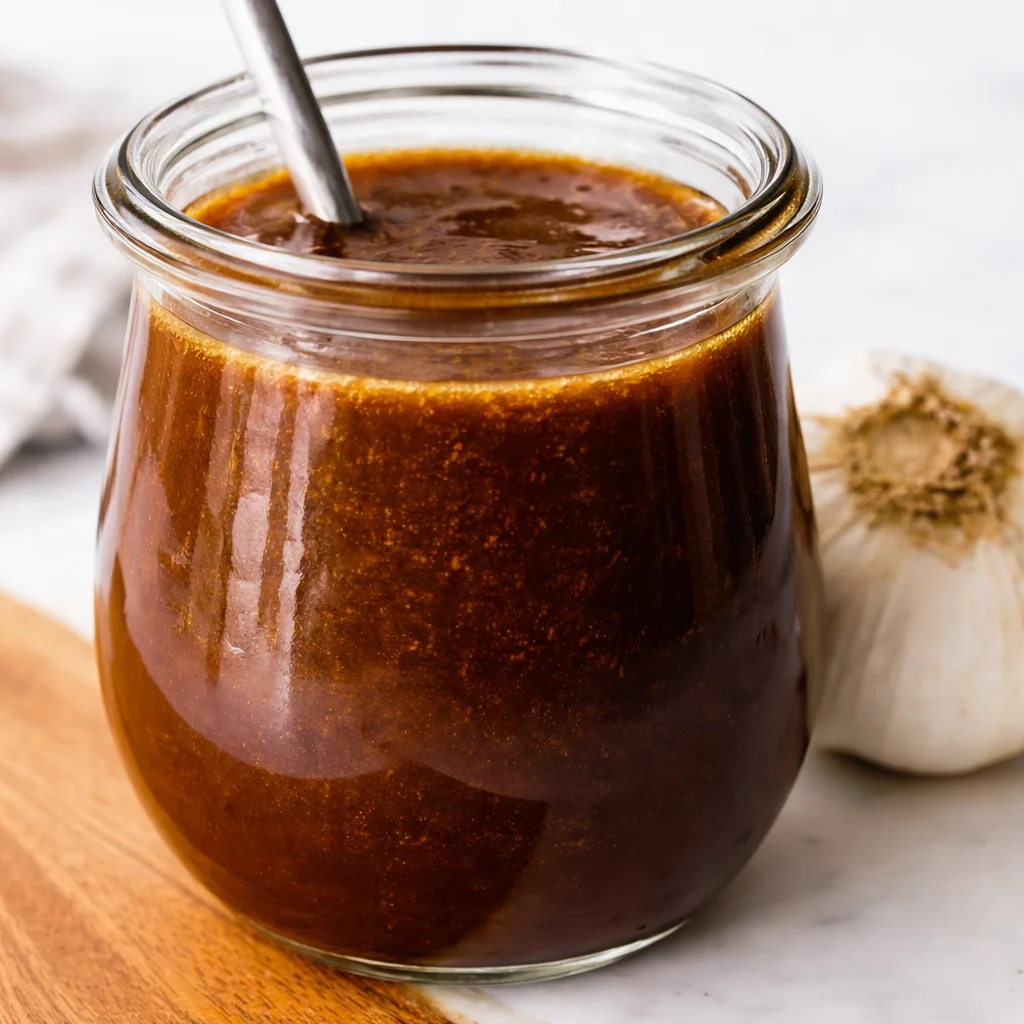
Balsamic Vinaigrette is one of those things I used to buy without thinking, until I realized I was paying for a bottle that tasted kind of flat and a little too sweet. You know the moment when your salad looks gorgeous, but the dressing makes it feel like a sad desk lunch anyway? Yeah, that was me. Once I started making it at home, I didn’t go back, because it takes about the same time as finding the cap and shaking a store bottle. Plus, you can tweak it to match whatever you’re eating, whether that’s a simple green salad or roasted veggies. Let’s make it easy, quick, and actually delicious.
Essential Ingredients for a Healthy Balsamic Salad Dressing
Let’s keep this real: the best dressing is the one you’ll actually make on a busy day. For me, that means a short ingredient list with stuff I already have. This is an Easy Balsamic Vinaigrette, so we’re not going fancy for the sake of being fancy. We’re going flavorful and balanced.
Here’s what I reach for every time:
- Balsamic vinegar for that tangy, slightly sweet backbone
- Extra virgin olive oil to smooth everything out and carry flavor
- Dijon mustard to help it blend and give it a little bite
- Honey or maple syrup just a touch, optional but helpful
- Garlic fresh minced or grated, or a pinch of garlic powder when I’m tired
- Salt and black pepper because dressing without seasoning is just sadness
If you want a really veggie friendly pairing, I love this vibe with roasted Brussels sprouts too. I’ve made a similar flavor profile when I’m cooking maple balsamic roasted Brussels sprouts, and the sweet and tangy thing just works.
Choosing the Best Balsamic Vinegar and Extra Virgin Olive Oil
This is where your Easy Balsamic Vinaigrette can go from good to wow with basically zero extra effort. Since the ingredient list is short, the quality matters. Not in a snobby way, just in a practical way.
For balsamic vinegar, I look for one that smells rich and a little sweet when you open it. If it smells sharp like cleaning vinegar, it’s going to taste sharp. You don’t need the most expensive bottle, but skip the watery bargain one if you can.
For extra virgin olive oil, pick one you’d actually dip bread into. If it tastes bitter or stale on its own, it’ll show up in your dressing. I like an oil that tastes smooth and a little grassy.
Quick tip: if you’re using the dressing on warm roasted vegetables, a slightly sweeter balsamic is amazing. It reminds me of the flavors in maple balsamic roasted Brussels sprouts and it makes even basic weeknight veggies feel special.
How to Make Balsamic Vinaigrette in 5 Minutes (Step-by-Step)
This is the part where you realize you never needed a store bottle in the first place. I make this Easy Balsamic Vinaigrette while my greens are drying or while the toaster is doing its thing. It’s that fast.
Basic ratio I follow: about 1 part balsamic vinegar to 2 parts olive oil. From there, I adjust based on what I’m eating.
Step by step:
1) Add balsamic vinegar to a small bowl or jar.
2) Add Dijon mustard, honey (if using), garlic, salt, and pepper.
3) Whisk in olive oil slowly, or add it all and shake hard in a jar.
4) Taste it. Then taste it again after you’ve calmed down for two seconds. Adjust salt, sweetness, or vinegar.
5) Use right away, or store for later.
Sometimes I’ll make it and drizzle it over a warm bowl situation, like leftover roasted veggies and chicken. If you happen to roast Brussels sprouts, you’ve got to try serving them alongside something like maple balsamic roasted Brussels sprouts for a really satisfying plate.
The Secret to Perfect Emulsification: Whisking vs. Shaking
Ok, “emulsification” sounds like something you’d hear on a cooking show, but it’s just the dressing coming together so it doesn’t look oily and separated. It will separate eventually because oil and vinegar are like that, but we can help it stay blended longer.
Whisking: This gives you the smoothest result, especially if you drizzle the oil in slowly. Great when you want it to look creamy and uniform.
Shaking in a jar: This is my weeknight method. Throw everything in, tighten the lid, and shake like you mean it. It’s a tiny arm workout and it works.
The secret ingredient here is actually Dijon mustard. It helps the dressing hold together longer and gives a little zip that makes salads taste less boring.
Essential Kitchen Tools for Making Homemade Salad Dressings
You don’t need much. I’ve made this in a coffee mug with a fork, and honestly, it was still good. But if you’re stocking your kitchen, these help.
My go to tools:
1) A small whisk or fork
2) A mason jar with a lid for shaking and storing
3) Measuring spoons (or just a good eye, once you’ve done it a few times)
4) A microplane for garlic if you like it super smooth
That’s it. No blender required, no special dressing bottle required, and no reason not to make Easy Balsamic Vinaigrette whenever you need it.
Expert Tips for a Perfectly Balanced Vinaigrette Every Time
This is the part I wish someone had told me earlier, because it saves you from making a dressing that’s too sour or weirdly bland.
My simple balancing tricks:
If it’s too tangy: Add a tiny bit more honey or a splash more olive oil.
If it tastes flat: Add a pinch more salt. Salt wakes everything up.
If it’s too oily: Add a small splash of vinegar and whisk again.
If the garlic is too strong: Let it sit 10 minutes, then taste again. Garlic calms down a bit over time.
Also, always taste the dressing with a piece of lettuce, not just off a spoon. On a spoon it can taste intense, but on greens it’s usually perfect.
Recipe Variations: Creamy Balsamic, Honey, and Sugar-Free Options
I love the classic version, but I also like having options depending on the mood and what’s in the fridge. This is where Easy Balsamic Vinaigrette becomes your little kitchen shortcut.
Creamy balsamic: Add a spoonful of Greek yogurt or mayonnaise. It turns silky and feels more like a restaurant salad.
Honey balsamic: Use honey as your sweetener and add a pinch of dried Italian seasoning. This one is great on chicken salads.
Sugar free: Skip the honey entirely. If your balsamic is decent quality, it already has a natural sweetness. Add an extra pinch of salt and maybe a little more Dijon to keep it balanced.
And if you like that sweet and savory roasted veggie flavor, you’ll probably enjoy these flavors with maple balsamic roasted Brussels sprouts on the side.
Best Ways to Use Balsamic Dressing Beyond Green Salads
Honestly, I make Easy Balsamic Vinaigrette as much for non salad things as I do for salads. It’s basically a multi purpose flavor booster.
Try it:
Over roasted vegetables, especially Brussels sprouts, carrots, or sweet potatoes
As a quick marinade for chicken or steak (just don’t overdo the time, 30 minutes is plenty)
Drizzled on sliced tomatoes and fresh mozzarella
On a grain bowl with chickpeas and cucumbers
Mixed into tuna salad or chicken salad for a tangy twist
I also love using it with warm roasted Brussels sprouts, especially if you’re already making maple balsamic roasted Brussels sprouts. Same flavor family, zero extra thinking.
Meal Prep Guide: How to Store and Refresh Your Vinaigrette
If you like to prep lunches, this dressing is your friend. I make a small jar and keep it in the fridge so I’m not tempted by random packets.
Storage tips:
Keep it in a sealed jar in the fridge for up to 7 days.
If it separates, shake it again. Totally normal.
If the olive oil thickens in the fridge, let it sit at room temp for 10 to 15 minutes, then shake.
Sometimes I’ll refresh it with a tiny splash of vinegar and a pinch of salt after a few days. It perks right back up.
Nutritional Benefits of Clean-Label Homemade Dressings
I’m not here to label foods good or bad, but I do love knowing what’s in my dressing. When you make it at home, you skip a lot of the extras that show up in store bought bottles.
Why homemade can feel better:
You control the sweetness and sodium.
You can use a good olive oil with healthy fats.
No mystery stabilizers or flavors you can’t pronounce.
It’s easier to keep it aligned with how you like to eat.
And because it’s so quick, you’re more likely to actually use it. A fresh salad with Easy Balsamic Vinaigrette is one of those small habits that makes meals feel more put together.
Troubleshooting Common Issues: Why Did My Dressing Separate or Solidify?
If your dressing looks separated, you didn’t fail. That’s just oil and vinegar doing what they do.
Common fixes:
It separated: Shake or whisk again. Add a little more Dijon if you want it to stay blended longer.
It solidified in the fridge: Olive oil can firm up when cold. Let it warm a bit, then shake.
It tastes too sharp: Add a touch of honey or more oil.
It tastes too sweet: Add a splash of vinegar and a pinch of salt.
If you’re using it on roasted veggies, sometimes you’ll want it slightly less tangy. Warm foods can make vinegar taste stronger, so don’t be afraid to add a bit more oil for balance.
How to Scale the Recipe for Large Crowds or Entertaining
If you’re hosting, homemade dressing makes you look way more organized than you probably feel. And scaling this is simple.
For a crowd, I stick with the same basic ratio and taste as I go. For example, if you start with 1 cup balsamic vinegar, use about 2 cups olive oil, then add Dijon, garlic, salt, pepper, and sweetener to match the larger batch.
My party tips:
Make it in a jar or pitcher you can shake or whisk again right before serving.
Serve it on the side so salads don’t get soggy.
If you’re doing a veggie heavy spread, this dressing is amazing with roasted items, and it’s especially good alongside maple balsamic roasted Brussels sprouts.
Common Questions
How long does homemade balsamic vinaigrette last?
Usually about a week in the fridge. If it smells off or tastes weird, toss it and make a fresh batch. It’s quick, so no stress.
Do I have to use Dijon mustard?
No, but it helps a lot with blending and adds flavor. If you don’t have it, try a tiny spoon of mayo or just skip it and shake harder.
Why does my dressing taste too acidic?
Use a little more olive oil, add a pinch of salt, and consider adding a small drizzle of honey. Also taste it on lettuce, not just on a spoon.
Can I make Easy Balsamic Vinaigrette without sweetener?
Yes. A decent balsamic vinegar has natural sweetness. If it tastes too sharp without sweetener, add more oil or a little extra mustard.
What’s the best jar to use for shaking?
A mason jar is perfect. Any jar with a tight lid works, just leave a little space so it has room to move when you shake it.
My favorite way to keep this recipe in rotation
If you take one thing from this, let it be this: Easy Balsamic Vinaigrette is the kind of small habit that makes everyday meals taste more like you tried, even when you didn’t. Once you find the vinegar and olive oil combo you love, the rest is just adjusting salt, sweetness, and tang to match your mood. If you want to compare approaches, I’ve enjoyed reading The BEST Balsamic Vinaigrette – Barefeet In The Kitchen and pulling little ideas from it. Now go grab a jar, shake it up, and make your next salad or roasted veggie bowl way more exciting.
Print
Easy Balsamic Vinaigrette
- Total Time: 5 minutes
- Yield: 4 servings
Description
A quick and tasty balsamic vinaigrette that elevates your salads and roasted vegetables with a perfect balance of flavors.
Ingredients
Dressing Ingredients
- 3 tablespoons Balsamic vinegar (Use a quality balsamic vinegar for best flavor.)
- 6 tablespoons Extra virgin olive oil (Choose a high-quality olive oil.)
- 1 teaspoon Dijon mustard (Helps emulsify and adds flavor.)
- 1 teaspoon Honey or maple syrup (Optional, adjust based on taste.)
- 1 clove Garlic, minced or grated (Can substitute with garlic powder.)
- to taste Salt (Season to taste.)
- to taste Black pepper (Season to taste.)
Instructions
Preparation
- Add balsamic vinegar to a small bowl or jar.
- Add Dijon mustard, honey (if using), garlic, salt, and pepper.
- Whisk in olive oil slowly, or add it all and shake hard in a jar.
- Taste it and adjust salt, sweetness, or vinegar as needed.
- Use right away, or store for later.
Notes
Store in a sealed jar in the fridge for up to 7 days. Shake or whisk again before use if it separates.
- Prep Time: 5 minutes
- Category: Condiment, Dressing
- Cuisine: American








 Appetizers & Sides
 Main Dishes
 Drinks & Wellness
 Desserts & Baking