
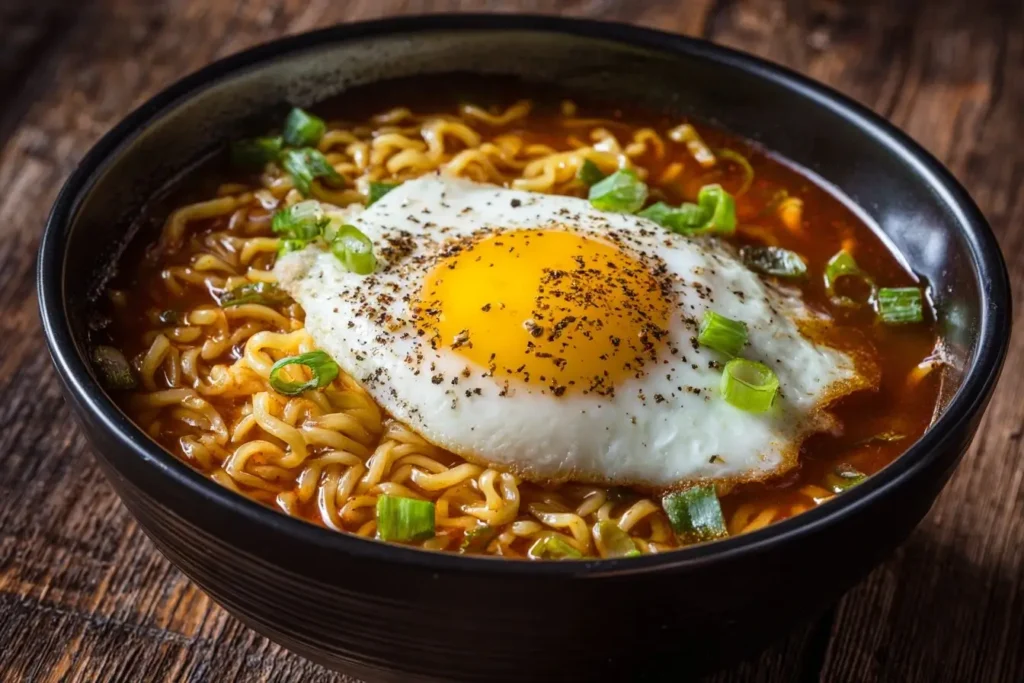
Korean Spicy Ramen with Beef is my go-to weeknight bowl when I want something fast, cozy, and seriously satisfying. Maybe you just got home, it is late, and you need dinner that hits the spot without a lot of fuss. Or maybe you are craving something bold and slurpy with a little heat and a lot of comfort. I have been there. This is the bowl I make when I want restaurant flavor at home with simple, accessible steps. Stick with me, and you will have a pot of rich, spicy broth and tender beef in under 30 minutes.
Essential Ingredients for the Best Spicy Beef Ramen
Let us keep this simple and delicious. Below are the essentials for building deep flavor without spending all night cooking. You do not need fancy tools or specialty shops. Most of these are pantry staples if you cook Asian-inspired meals even once in a while.
- Beef: Thinly sliced chuck, skirt steak, or ribeye. About 8 to 10 ounces for two bowls.
- Ramen noodles: Fresh or instant. Use the seasoning packet only if you skip making broth from scratch.
- Gochugaru: Korean red pepper flakes. Warm, smoky, and balanced heat.
- Gochujang: Fermented chili paste for sweetness and depth.
- Aromatics: Garlic, ginger, scallions. These do the heavy lifting for flavor.
- Broth: Beef or chicken stock. Low sodium so you can control salt.
- Soy sauce and sesame oil: Saltiness and nutty aroma.
- Rice vinegar or mirin: A splash of acidity to brighten the bowl.
- Eggs: Soft-boiled for that silky ramen vibe.
- Veggies: Bok choy, mushrooms, or spinach. Quick-cooking greens are your friend here.
Keep a small jar of gochujang in the fridge. It turns a decent broth into a head-turner with just a spoonful. If you are new to gochugaru, start with less and adjust later. Easy.
Choosing the Right Cut: Beef Chuck, Skirt Steak, or Ribeye?
You can make this bowl with any of these cuts, and each brings a slightly different feel:
Beef chuck: Budget-friendly and flavorful. Slice it very thin across the grain, and it will stay tender in the broth.
Skirt steak: Naturally beefy, cooks fast, and stays juicy. Also slice it across the grain for tenderness.
Ribeye: Luxurious and buttery. If you want a special night ramen, go ribeye and keep the slices paper-thin.
If you like sweet-savory beef, you might also enjoy this simple takeout-style dinner at home with my slow cooker Mongolian beef for another easy beef favorite.
The Secret to the Broth: Gochugaru and Aromatics
This is where the magic happens. Sizzle a little oil, then add grated ginger and minced garlic until they smell amazing. Stir in gochujang and a teaspoon or two of gochugaru to bloom the flavors. Add stock, soy sauce, and a tiny splash of rice vinegar. Let that simmer into a bold, red broth.
For extra body, you can add a piece of dried kelp or a few dried anchovies if you have them, then remove after simmering. Not required, just a nice boost. If you are a broth lover like me, check out this cozy crockpot beef and vegetable soup for another cold night staple.
Step-by-Step Instructions: How to Make Spicy Korean Beef Ramen
Prep the beef
Freeze the steak for 15 minutes so it is easier to slice super thin. Toss it with a pinch of salt, a touch of soy sauce, and a teaspoon of sesame oil. Set aside.
Build the broth
Warm a tablespoon of neutral oil in a pot. Add 3 cloves minced garlic and a thumb of grated ginger. Cook until fragrant. Stir in 1 tablespoon gochujang and 1 to 2 teaspoons gochugaru. Add 4 cups broth, 1 tablespoon soy sauce, and 1 teaspoon rice vinegar. Simmer for 8 to 10 minutes.
Cook the beef and noodles
Slip the beef into the simmering broth and cook just until it turns tender, about 1 to 2 minutes. In a separate pot, boil ramen noodles according to package directions so they do not cloud your broth. Drain and divide into bowls.
Ladle the spicy broth and beef over the noodles. Top with a soft-boiled egg, scallions, and sesame seeds. That is it. Dinner is ready.
Expert Tips for Developing Deep Umami Flavor in 30 Minutes
Layer your flavors. Brown aromatics first, then bloom the chili paste and flakes. Use low-sodium broth to prevent salt overload. A tiny splash of fish sauce adds savory depth without making it taste fishy. If you have time, simmer the broth for 15 minutes before adding beef. The extra few minutes make a noticeable difference.
And keep the beef slices thin. Thick slices can turn chewy. Thin ribbons will drink up flavor and stay tender.
How to Perfectly Prepare and Soft-Boil Eggs for Ramen
Bring a small pot of water to a gentle boil. Lower in cold eggs carefully. Set a timer for 6 minutes and 30 seconds for a jammy center. Transfer to an ice bath immediately, then peel under running water. Slice just before serving so the yolk stays glossy.
If you like a marinated vibe, quickly dunk peeled eggs in a mix of soy sauce, water, and a touch of sugar for 30 minutes while you cook the rest. Easy upgrade.
Customizing Your Spice Level: From Mild to Extra Spicy
Start mild with 1 teaspoon gochugaru and half a tablespoon gochujang. Taste. Like it hotter? Add more gochugaru little by little. Want smoky heat? A pinch of chipotle powder plays well here. Want sweeter balance? Stir in a tiny drizzle of honey to round out the spice. You control the burn, not the other way around.
Best Vegetables and Toppings to Add to Your Noodle Bowl
My usual lineup is baby bok choy, shiitake or cremini mushrooms, scallions, and a handful of spinach tossed in at the end. Corn adds sweetness. Kimchi adds crunch and tang. A drizzle of chili oil brings gloss and a final pop of spice. If you have leftover roasted veggies, chop and toss them in. Ramen is flexible and forgiving.
Easy Ingredient Substitutions for Pantry-Friendly Ramen
No gochugaru? Use a mix of regular red pepper flakes and smoked paprika. No gochujang? Try chili garlic sauce with a little soy and honey. No fresh ginger? Ground ginger works in a pinch. No ramen noodles? Use udon, rice noodles, or even spaghetti. The goal is a bold, slurpable bowl you actually want to make again tomorrow.
Healthy Variations: Low-Carb, Gluten-Free, and Lean Protein Options
For low carb, swap noodles for zucchini noodles or shirataki. Gluten-free folks can use tamari instead of soy sauce and rice noodles instead of classic ramen. Want leaner protein? Use thinly sliced sirloin, ground turkey, or even tofu cubes. If you are into easy bowls that still satisfy, you might also like this quick Korean ground beef bowl for busy nights.
Serving Suggestions: What to Pair with Korean Beef Noodles
- Crunchy side salad: Cabbage slaw with sesame dressing keeps things fresh.
- Pickles or kimchi: The acid cuts through the rich broth.
- Roasted veggies: Broccoli or carrots add color and texture.
- Spicy companion: If you love heat, these hot honey beef bowls are another favorite to try later.
- Light soup starter: On chilly days I warm up with a small cup before ramen, similar to how I use this as a base idea in cozy beef and vegetable soups.
Make-Ahead, Storage, and Reheating Instructions for Leftovers
If you plan to save leftovers, store noodles and broth separately so the noodles do not soak up all the liquid. Keep both in airtight containers in the fridge for up to 3 days. Reheat the broth gently on the stove until hot, then add the noodles to warm through. Eggs are best made fresh, but you can keep soft-boiled eggs refrigerated for 2 days. Slice them right before serving.
Troubleshooting Common Ramen Cooking Mistakes
Broth tastes flat: Add a splash of soy sauce, a pinch of salt, or a tiny bit of sugar to balance. Sometimes a squeeze of lime or rice vinegar wakes it up.
Beef is tough: It was cut too thick or cooked too long. Slice thinner and cook in the broth last, just until it is no longer pink.
Noodles turned mushy: Cook separately and add to the bowl just before serving. Follow the package timing closely.
Too spicy: Stir in a splash of milk or add a little more broth. A soft-boiled egg also helps tame the heat.
Not spicy enough: Add more gochugaru or a spoon of chili crisp right in the bowl.
Common Questions
Can I use instant ramen packets? Yes. Use the noodles and skip the seasoning if you are making the broth from scratch. Or use half the packet to boost salt if you prefer.
What if I cannot find gochujang? Mix chili garlic sauce with a bit of soy sauce and honey. It is not exact, but it gets you close.
How do I keep this from getting too salty? Start with low-sodium broth and add soy sauce gradually. Taste as you go.
Can I make it ahead? Make the broth and keep cooked noodles separate. Reheat the broth, then add noodles and fresh toppings.
What beef works best? Thinly sliced chuck or skirt steak for everyday cooking, ribeye if you want something special.
A Cozy Bowl You Will Want On Repeat
This bowl of Korean Spicy Ramen with Beef is the kind of simple comfort that feels fancy without being fussy. Thin beef, bold broth, and chewy noodles come together fast, and you can tweak the heat to suit your mood. If you want more cozy beef ideas for later, these slow-cooked soups and even quick skillet dinners like hot honey beef bowls are in steady rotation at my house. For another take on similar flavors, I also love these Spicy Korean Beef Noodles from Creme De La Crumb. Alright, your turn. Grab a pot, make this tonight, and let me know how your bowl turns out.
Print
Korean Spicy Ramen with Beef
- Total Time: 25 minutes
- Yield: 2 servings 1x
Description
A cozy and satisfying bowl of Korean Spicy Ramen with tender beef, rich broth, and bold flavors that comes together in under 30 minutes.
Ingredients
Beef and Noodles
- 8–10 oz thinly sliced chuck, skirt steak, or ribeye (Use your preferred cut)
- 2 servings ramen noodles (Fresh or instant, skip seasoning packet if making broth)
Aromatics and Sauces
- 2 cloves garlic (minced)
- 1 thumb ginger (grated)
- 1 tbsp gochujang (fermented chili paste)
- 1–2 tsp gochugaru (Korean red pepper flakes)
- 1 tbsp soy sauce (low sodium preferred)
- 1 tsp rice vinegar (or mirin)
- 1 tbsp sesame oil (for flavor)
Broth
- 4 cups beef or chicken stock (low sodium)
Toppings
- 2 pcs soft-boiled eggs (for serving)
- 1 cup bok choy, mushrooms, or spinach (quick-cooking greens)
- to taste scallions (for garnish)
- to taste sesame seeds (for garnish)
Instructions
Preparation
- Freeze the steak for 15 minutes to make slicing easier.
- Toss sliced beef with a pinch of salt, soy sauce, and sesame oil. Set aside.
Building the Broth
- Warm neutral oil in a pot.
- Add minced garlic and grated ginger, cooking until fragrant.
- Stir in gochujang and gochugaru, cooking briefly to bloom flavors.
- Add broth, soy sauce, and rice vinegar, then simmer for 8 to 10 minutes.
Cooking the Beef and Noodles
- Place the beef into the simmering broth, cooking until tender, about 1 to 2 minutes.
- In a separate pot, boil ramen noodles according to package directions, then drain and divide into bowls.
Assembly
- Ladle the spicy broth and beef over the noodles.
- Top with soft-boiled eggs, scallions, and sesame seeds.
Notes
Store leftover noodles and broth separately to prevent the noodles from becoming mushy. The broth can be refrigerated for up to 3 days.
- Prep Time: 15 minutes
- Cook Time: 10 minutes
- Category: dinner, Main Course
- Cuisine: asian, Korean
Nutrition
- Calories: 650
- Sugar: 5
- Sodium: 800
- Fat: 20
- Saturated Fat: 5
- Carbohydrates: 70
- Fiber: 4
- Protein: 35

Related posts:
 Sweet Potato Bowl Recipes 2025: 10 Viral Ideas to Try at Home
 Crockpot Sausage and Green Beans: Dump-and-Go Recipe
 Why This Crockpot Chicken Pot Pie Is the Easiest Comfort Food
 Cajun Potato Soup for Holidays and Cold Weather
 Delicious Shrimp and Corn Chowder That Will Warm Your Heart
 Crunchy Crispy Air Fryer Chicken & Mozzarella Wraps | Easy Air Fryer Recipe





 Appetizers & Sides
 Main Dishes
 Drinks & Wellness
 Desserts & Baking