
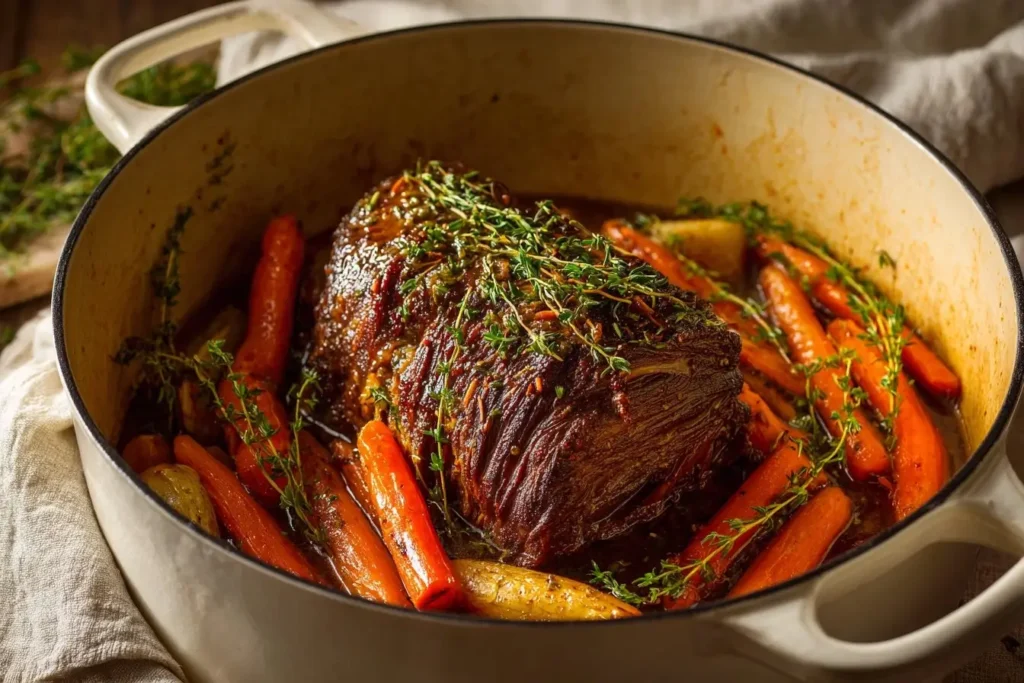
Some nights call for slow, cozy comfort. The kind of dinner that simmers quietly on the stove, fills the kitchen with rich, savory aromas, and rewards a little patience with fork-tender beef and silky gravy. That’s exactly what this stovetop pot roast delivers.
This is my go-to pot roast playbook when I want deep flavor without complicated steps. It’s forgiving, flexible, and built around simple techniques that actually work, like proper searing, gentle braising, and letting time do the heavy lifting. Grab a heavy pot, a well-marbled chuck roast, and a handful of pantry staples, and I’ll walk you through how to make a classic pot roast that turns out rich, comforting, and deeply satisfying every single time.
Essential Ingredients for a Rich and Savory Pot Roast
When I make pot roast, I keep the lineup straightforward and smart. The trick is choosing ingredients that work hard for you. We want a silky gravy, tender beef, and veggies that hold their shape without turning mushy. Here’s my short list of must-haves, plus a few optional upgrades if you like a deeper, cozier finish.
- Chuck roast around 3 pounds, well-marbled for tenderness.
- Salt and pepper for a confident, even seasoning.
- Garlic fresh cloves smashed or minced for that deep savory note.
- Onion yellow or white, sliced thick so it melts into the gravy.
- Carrots cut into big chunks to keep them from overcooking.
- Potatoes Yukon Gold or baby red hold up nicely.
- Tomato paste a spoonful adds body and sweetness.
- Beef broth low-sodium so you can control the salt.
- Worcestershire a splash for umami depth.
- Herbs fresh thyme and a bay leaf for classic aroma.
- Butter a knob at the end for a glossy finish.
- Optional a little balsamic or soy sauce to balance and deepen flavor.
If you love big, comforting flavors, this meal pairs nicely with something green on the side. Try my easy garlic broccoli stir fry for a bright, crunchy contrast.
Choosing the Best Cut of Meat: Why Chuck Roast is King
Chuck roast is my top pick because it has that beautiful marbling that slowly melts as it cooks. It’s tough at first, but it transforms with time and moisture into fork-tender bites. Other cuts can work, but they tend to be leaner and won’t give you the same silky texture or rich gravy. If you see a chuck roast with visible streaks of fat and a solid, even shape, that’s your winner.
Also, thickness matters. A roast that’s too thin can dry out before it becomes tender. Aim for a thicker cut that’s about 2 to 3 inches tall, which helps it braise evenly.
If you’re in the mood for a quicker protein another night, my lemon garlic butter chicken thighs are simple, cozy, and super satisfying.
Preparing Your Beef: Seasoning and Searing for Maximum Flavor
Pat your roast dry and season generously with salt and pepper. Don’t be shy. Moisture on the surface stops browning. Aim for a sturdy golden crust on all sides. This builds flavor and gives your gravy a beautiful base.
Preheat a heavy pot on medium-high with a little oil. When it shimmers, add the roast and let it sear without moving it for a few minutes. Flip and repeat on every side. You want confident browning, not burning. The fond, those browned bits stuck to the pot, are liquid gold.
If you’ve made my One-Pan Coconut Curry Salmon with Garlic Butter, you already know this rhythm. Sear first, then let sauce and aromatics do the rest. Same energy, different dinner.
The Importance of Deglazing: Building a Deep, Umami-Rich Gravy
After searing, toss in your onions and a pinch of salt. Let them soften and pick up the fond. Add garlic and tomato paste, stirring for a minute until it smells sweet and toasty. Now deglaze. Use beef broth, a splash of Worcestershire, or even a bit of water if that’s what you have. Scrape those browned bits up with a wooden spoon. This step turns a good pot roast into a great one. It’s basically the flavor backbone of your gravy.
If you want a brighter note, a teaspoon of balsamic does wonders. Soy sauce adds depth. Either way, go slow, taste often, and build gradually. You’re the boss of this pot.
Essential Aromatics and Herbs for Authentic Flavor
Keep it classic and you’ll never regret it. Onion, garlic, thyme, and bay leaf are my core four. Rosemary is lovely, just use a light hand so it doesn’t dominate. For a cozy twist, add a pinch of smoked paprika or even a tiny bit of ground coriander. Fresh herbs at the end perk up the whole pot and make it feel restaurant-level.
And yes, a small knob of butter swirled in at the finish brings everything together. It softens edges and makes the gravy glossy and rich. Little touches, big payoff.
How to Cook Pot Roast on the Stove: Step-by-Step Braising Instructions
Once your roast is seared and your pot is deglazed, nestle the beef back into the pot. Pour in enough broth to come about halfway up the sides of the roast. Toss in your thyme sprigs and bay leaf. Bring it just to a gentle simmer, then reduce the heat. You want a calm, steady bubble, not a hard boil.
Cover and braise low and slow. Check every 30 minutes to make sure the liquid is still at a steady simmer. If it reduces too much, add a splash of broth or water. After about 90 minutes, flip the roast to keep things even. This is also a good time to taste the braising liquid and adjust salt if needed.
When the roast is nearly tender and almost pulls apart with a fork, add the carrots and potatoes. Keep cooking until both are tender and the beef yields easily. Timing will vary depending on the size of your roast and your pot, but plan around 2.5 to 3.5 hours total. Patience pays off.
Timing Your Vegetables: Keeping Carrots and Potatoes Perfectly Tender
Vegetables should be added late in the game. If they simmer forever, they’ll collapse and cloud your gravy. Large chunks do better than small ones. I like to add carrots first since they’re sturdier, then potatoes 15 to 20 minutes later depending on size. Keep an eye on them and poke with a fork. Tender, not mushy, is the goal.
Pro tip: If your roast needs more time and your veggies are already perfect, scoop the veggies out and keep them warm. Let the beef finish on its own, then add the vegetables back in right before serving.
Pro Tips for Making the Best Pot Roast Gravy from Scratch
Once everything is tender, pull the roast and veggies out. Skim excess fat if needed, then simmer the liquid to concentrate flavor. A cornstarch slurry will give you a quick, shiny finish, while a butter flour paste gives a deeper, silkier texture. Either approach works, just go slowly and whisk constantly. Taste, then season with salt and pepper until the gravy sings.
I like to whisk in a small knob of butter at the end. It adds body and that restaurant gloss we all love. If the gravy tastes flat, a splash of Worcestershire or a teaspoon of balsamic brightens it up.
Common Mistakes to Avoid for Succulent, Never-Dry Braised Beef
Here are the big ones. Don’t skip the sear. Don’t rush the simmer. Don’t drown the roast. Too much liquid dilutes flavor. And please resist the urge to keep lifting the lid for long stretches. Every time you do, you lose heat and slow down the magic.
Also, let the roast rest before slicing. Ten to fifteen minutes is enough. The juices settle, and you’ll get cleaner slices or easier shredding.
Recipe Variations: Slow Cooker, Instant Pot, and Red Wine Substitutes
Slow cooker fans, you’re in luck. Sear the roast first on the stove, then transfer everything to your slow cooker and cook on low for 7 to 8 hours. If you want an easy beef night that leans buttery and savory, my slow cooker garlic butter beef bites are a great weeknight fallback.
Instant Pot variation: Sear on sauté, deglaze, then pressure cook for about 60 to 70 minutes with a natural release. Add vegetables after pressure cooking and simmer them on sauté until tender.
No wine at home? No problem. Beef broth plus a spoonful of tomato paste and a splash of balsamic gives you that rich, rounded flavor without opening a bottle.
And if you want a quick seafood night to balance out your week, add my crispy salmon rice bowl to your rotation. It scratches that cozy, saucy itch quickly.
What to Serve with Pot Roast: Best Side Dishes and Pairings
Pot roast is generous and rich, so I like simple sides that complement without overpowering. A few ideas you can mix and match:
- Buttered noodles or mashed potatoes to soak up the gravy.
- Light greens like a lemony salad or sautéed spinach.
- Crusty bread to wipe the plate clean.
- Roasted green beans or Brussels sprouts for crunch.
- Something bright pickled onions or a squeeze of lemon on your greens.
On nights when I want something creamy and comforting but lighter than beef, this coconut curry soup works beautifully with a small side salad.
Storing, Reheating, and Creative Ways to Use Leftover Pot Roast
Store leftovers in an airtight container with the gravy, not separate. The liquid keeps the meat juicy. It lasts up to 4 days in the fridge and freezes well for about 3 months. Reheat gently on the stove with a splash of broth or water to loosen the gravy.
Leftovers are a goldmine. Shred the beef and pile it on buttered toast with a spoon of gravy. Wrap it into a cheesy quesadilla. Toss with egg noodles for a quick skillet dinner. Or fold it into a baked potato with a dollop of sour cream and chives. If you’re in a seafood mood another night, try this bright, cozy option too: baked cod in coconut lemon. It’s light, flavorful, and great when you want a break from beef.
If you liked the rhythm of searing, saucing, and finishing with butter in my One-Pan Coconut Curry Salmon with Garlic Butter, you’ll feel right at home using the same approach with pot roast. It’s the same idea: build flavor in layers, keep things simple, and let time do the heavy lifting.
Common Questions
How do I know when my pot roast is done?
It should pull apart with a fork with very little resistance. If it still fights you, keep simmering and check every 20 minutes.
Can I use baby carrots and baby potatoes?
Yes, just add them later and check early. Small pieces cook faster, so watch for tenderness.
Should I trim the fat off the roast?
Trim any thick external pieces, but keep some marbling. That’s what melts into juicy, tender bites.
My gravy tastes flat. What can I add?
Try a pinch of salt, a splash of Worcestershire, or a teaspoon of balsamic. Finish with a knob of butter for roundness.
Can I make this ahead?
Absolutely. Pot roast often tastes better the next day. Reheat gently with a splash of broth to keep it silky.
Ready to Braise Like a Boss
That’s the whole roadmap to a steady, soul-warming pot roast on the stove. Keep it simple, trust the low simmer, and let those layers of flavor do the work. If you love the feel of a quick one-pan dinner, my One-Pan Coconut Curry Salmon with Garlic Butter gives you the same cozy payoff on a busy night. And if you want a seafood spin from another angle, this take from Half Baked Harvest on Coconut Curry Salmon with Garlic Butter is a helpful reference for timing and flavors. Now go grab that pot and make tonight delicious.
Print
Pot Roast
- Total Time: 4 hours
- Yield: 6 servings 1x
Description
A rich and comforting stovetop pot roast made with tender chuck roast, fresh vegetables, and a silky gravy.
Ingredients
Main Ingredients
- 3 pounds Chuck roast, well-marbled (Look for a piece with visible marbling for tenderness.)
- to taste Salt (For seasoning.)
- to taste Pepper (For seasoning.)
- 4 cloves Garlic, minced (Fresh cloves for deep savory flavor.)
- 1 large Onion, sliced (Yellow or white onion.)
- 2 cups Carrots, cut into chunks (Add later in the cooking process.)
- 2 cups Potatoes, cut into chunks (Yukon Gold or baby red.)
- 1 tablespoon Tomato paste (For body and sweetness.)
- 2 cups Beef broth, low-sodium (Control the saltiness.)
- 1 tablespoon Worcestershire sauce (For umami depth.)
- 2 sprigs Fresh thyme (Classic herb for flavor.)
- 1 leaf Bay leaf (For aromatic flavor.)
- 1 tablespoon Butter (For a glossy finish.)
Instructions
Preparation
- Pat the roast dry and season generously with salt and pepper.
- Preheat a heavy pot on medium-high with a little oil.
- Sear the roast on all sides until a golden crust forms.
Building the Gravy
- Add onions and a pinch of salt to the pot and cook until softened.
- Stir in the garlic and tomato paste, cooking until fragrant.
- Deglaze the pot with beef broth and Worcestershire sauce, scraping up browned bits.
Braising the Roast
- Nestle the roast back in the pot, adding enough broth to come halfway up its sides.
- Add thyme sprigs and bay leaf, bringing to a gentle simmer before covering.
- Braised on low heat for 2.5 to 3.5 hours, flipping every 30 minutes, until the roast is nearly tender.
- Add carrots and potatoes in the last hour of cooking.
Finishing Touch
- Remove the roast and vegetables, skim excess fat from the gravy.
- Simmer the liquid to concentrate flavors and thicken if desired.
- Serve the pot roast with a ladle of gravy over it.
Notes
Let the roast rest before slicing for cleaner cuts. Store leftovers in gravy for moisture.
- Prep Time: 30 minutes
- Cook Time: 3 hours 30 minutes
- Category: dinner, Main Course
- Cuisine: American
Nutrition
- Calories: 450
- Sugar: 5
- Sodium: 800
- Fat: 15
- Saturated Fat: 6
- Carbohydrates: 30
- Fiber: 4
- Protein: 50

Related posts:
 Quick Spicy Buffalo Chicken Wraps
 Creamy and Cheesy Spinach Pasta | Healthy Palak Pasta Recipe
 Moqueca Brazilian Fish Stew Recipe (Easy, Authentic & Coconut Milk Seafood Stew)
 Crispy Chicken Caesar Sandwich Recipe (Easy Homemade Version)
 Ranch Garlic Parmesan Chicken Skewers Recipe (Easy Grilled BBQ Chicken Kabobs)
 Authentic Char Siu Chicken Recipe





 Appetizers & Sides
 Main Dishes
 Drinks & Wellness
 Desserts & Baking