
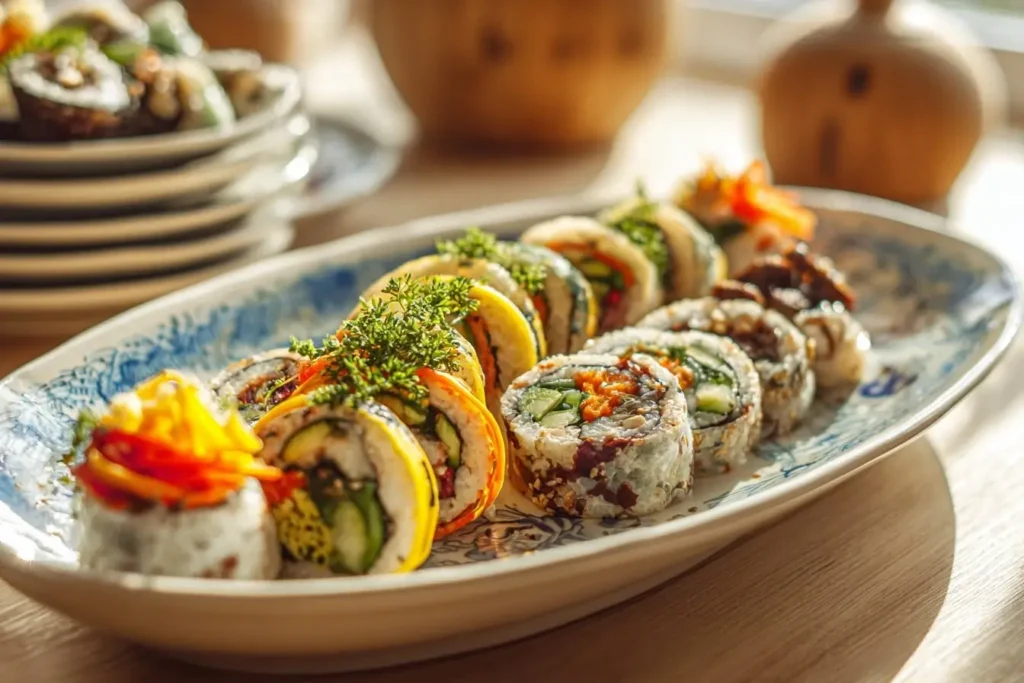
KIMBAP (KOREAN SEAWEED RICE ROLLS) got me through a busy season when all I wanted was something tasty, portable, and fun to make. If you want a better lunch than another soggy sandwich, this is your sign. Kimbap is colorful, full of texture, and surprisingly easy once you learn a few tricks. I love it for picnics, road trips, or those fridge-cleanout nights when you just want to roll whatever you have into something satisfying. Today I’m walking you through my foolproof approach so you can roll like a pro, even if you’re new to it.
Essential Kimbap Ingredients: Authentic Korean Staples & Substitutes
Let’s start with the basics, because a good roll begins with the right ingredients. A few traditional items give you that classic flavor, but you can easily swap things depending on what you can find.
- Short-grain white rice: The sticky base that holds everything together.
- Gim: Korean roasted seaweed sheets with a slightly savory aroma.
- Danmuji: Bright yellow pickled radish for crunch and tang.
- Seasoned burdock root: Earthy, slightly sweet, and chewy.
- Protein: Bulgogi beef, tuna with mayo, Spam, fish cake, or eggs.
- Veggies: Carrots, spinach, cucumber, and sometimes perilla leaves.
- Seasonings: Sesame oil, sesame seeds, a pinch of salt, and a bit of sugar.
Substitutions that still work: use Japanese nori if you can’t find gim, swap short-grain with sushi rice, or use quick-pickle cucumbers if danmuji is not available. And if you love rice bowls already, you’ll definitely vibe with this roll format too. For another easy rice idea, check out this crisp and fresh crispy salmon rice bowl for busy weeknights.
Best Rice for Kimbap: Short-Grain White Rice vs. Sushi Rice
The best rice for KIMBAP (KOREAN SEAWEED RICE ROLLS) is short-grain white rice. It cooks up plump and slightly sticky which is perfect for rolling. Sushi rice also works, but season it differently than sushi if you’re making kimbap, since kimbap rice is not vinegar-forward.
Rinse rice until the water runs almost clear, then cook with a little less water than usual so it doesn’t turn mushy. If you’re meal-prepping, you might also like these hearty chicken rice bowls as a make-ahead option for the week.
Korean Gim (Seaweed Sheets) vs. Japanese Nori
Gim is often lighter, more toasted, and slightly seasoned with salt and oil. Japanese nori can taste more neutral and be a little sturdier. Either one can work, but I find gim gives a more authentic aroma and that signature glossy finish when brushed with sesame oil.
The Core Fillings: Danmuji (Pickled Radish) and Seasoned Burdock Root
Danmuji brings the snap and brightness that so many people love, and it balances richer fillings like beef or Spam. Seasoned burdock adds chew and a sweet-savory note. Together, they make each bite feel complete.
Protein Variations: From Traditional Bulgogi Beef to Modern Spam and Tuna
Bulgogi beef is classic and tastes like a treat. Tuna mixed with mayo and a pinch of sugar is creamy and comforting. Spam is salty and crispy when pan-fried. You can also use fish cake strips or grilled chicken. I switch it up depending on my mood, and I’ve even used BBQ-style chicken after making a batch of honey BBQ chicken rice the night before.
How to Marinate and Sauté Bulgogi-Style Beef
Slice beef thin against the grain. Marinate 20 to 30 minutes in soy sauce, sugar, grated pear or apple, garlic, a splash of sesame oil, and a little black pepper. Sauté on medium-high until just cooked and glossy. Let it cool before rolling so excess moisture doesn’t sog up your rice.
Preparing the Perfect Savory Egg Omelette Strips
Beat eggs with a pinch of salt and a touch of sugar. Cook as a thin sheet in a lightly oiled pan, then roll it up and slice into neat strips. The slight sweetness tastes fantastic with the salty seaweed and tangy pickled radish.
Seafood Options: Imitation Crab, Fish Cakes, and Canned Tuna
Imitation crab is budget-friendly and pairs well with mayonnaise or a dab of sriracha. Fish cakes add a mild, bouncy texture. Tuna with mayo, sugar, and pepper is classic and super satisfying. Drain tuna well to keep the roll tight and clean.
Vegetable Prep: Achieving the Perfect Crunch and Color
Keep veggies crisp and bright. Lightly sauté carrots so they keep their snap. Cut ingredients into long, even strips. When you slice the roll, the cross-section looks beautiful and each bite feels balanced.
Blanching and Seasoning Spinach (Sigeumchi Namul)
Blanch spinach for 30 seconds in salted water, then shock in ice water. Squeeze gently to remove excess moisture and season with sesame oil, salt, and a sprinkle of sesame seeds. Simple, nutty, and the perfect green for kimbap.
Julienning and Sautéing Carrots for Maximum Flavor
Cut carrots into thin matchsticks so they cook evenly. Sauté in a little oil with a pinch of salt until just tender and sweet. Let them cool completely before rolling.
Fresh Additions: Cucumber, Perilla Leaves, and Avocado
Cucumber adds freshness and crunch. Perilla leaves bring a unique herbal taste that makes your roll pop. Avocado gives creamy richness if you want a California roll vibe while staying in kimbap territory.
How to Season Kimbap Rice: The Secret to Authentic Flavor
While sushi rice leans on vinegar, kimbap rice is seasoned with sesame oil, salt, and a little sugar. Mix gently while the rice is warm so it absorbs the seasonings. The goal is savory, lightly sweet, and fragrant, not vinegary.
Step-by-Step Instructions: How to Assemble and Roll Kimbap Like a Pro
Ready to roll your first KIMBAP (KOREAN SEAWEED RICE ROLLS)? Set yourself up so everything moves smoothly. The key is thin layers and even distribution.
Step 1: Cook and season the rice
Fluff it while warm, then mix in sesame oil, salt, and a pinch of sugar. Keep covered so it stays soft while you prep fillings.
Step 2: Prep and cool fillings
Cook beef, eggs, and carrots; blanch spinach; pat cucumber dry. Let everything cool to room temp so the steam does not tear your seaweed.
Step 3: Layer
Place a sheet of gim shiny side down on the bamboo mat. Spread a thin layer of rice, leaving about one inch at the top bare. Line up fillings horizontally in the center.
Step 4: Roll
Lift the mat edge closest to you and roll tightly over the fillings, tucking as you go. Press to form a firm cylinder, then continue rolling to seal.
Step 5: Finish
Brush the roll with a little sesame oil for shine and flavor. Slice with a sharp, lightly oiled knife using gentle sawing motions.
Setting Up Your Kimbap Rolling Station
Have your bamboo mat, a small bowl of water for your fingers, a dish of sesame oil, and a sharp knife. Keep fillings in tidy piles so you can move fast. I like to place rice on the left, fillings in the middle, and a cutting board to the right to keep rhythm.
The Technique: Using a Bamboo Mat for Tight, Even Rolls
Use the mat like a helper hand. As you roll, pull the mat back slightly to keep it out of the roll while still applying firm pressure. If the roll feels loose, unwrap and roll again with steadier pressure.
Expert Tips for Perfect Kimbap Slices Every Time
Lightly oil your blade with sesame oil before slicing. Wipe the blade every couple of cuts. Slice into one-bite pieces so they hold together on the plate and in lunchboxes.
Popular Kimbap Variations to Try at Home
Try bulgogi and cheese for cozy vibes, tuna and cucumber for classic deli energy, or veggie-driven rolls with avocado and perilla. If you like to mix things up, make a roll with a spicy mayo drizzle inside.
Spicy Kimchi Kimbap and Vegan-Friendly Tofu Options
Pan-fry kimchi with a touch of sugar and gochujang for spicy-sweet flavor. For a vegan option, use baked tofu brushed with soy sauce and sesame oil. Pack in crisp cucumber and carrots for contrast.
Trend Alert: How to Make Folded Kimbap (Kimbap Tortilla Hack)
Cut a slit halfway up the seaweed sheet, then place rice and fillings in each quadrant. Fold each quadrant over itself to make a compact square. Grill it in a dry pan for 30 seconds per side for a toasty finish.
Mini Kimbap (Mayak Gimbap) with Addictive Mustard Dipping Sauce
Make skinny rolls with just rice, carrot, and cucumber. Brush with sesame oil and sprinkle with sesame seeds. Serve with a punchy sauce of soy sauce, sugar, vinegar, mustard, and a little chopped chili. These little bites disappear fast at parties.
Serving Suggestions: Traditional Pairings and Korean Street Food Sides
- Soup: A simple seaweed soup or miso-style broth makes kimbap feel complete.
- Banchan: Kimchi, pickled radish, or seasoned bean sprouts add balance.
- Dipping sauces: Light soy-sesame dip or spicy gochujang mayo.
- Drinks: Cold barley tea or sparkling water with lemon.
If you love portable rice meals generally, the flavors in this fun taco rice bowl might also hit the spot when you want something different.
How to Store Kimbap and Keep Rice from Hardening
For short-term storage, wrap rolls tightly in plastic and keep at room temp for a few hours. For longer storage, refrigerate in an airtight container with a damp paper towel underneath to help prevent the rice from drying out. KIMBAP (KOREAN SEAWEED RICE ROLLS) taste best the same day, but these tricks buy you time.
Can You Reheat Kimbap? The Best Leftover Hacks (Kimbap-Jeon)
Yes. Beat an egg, dip each slice, and pan-fry on both sides until lightly golden. It creates a cozy snack with a crisp outside and warm center. You can also warm slices in a skillet with a lid on low heat to soften the rice.
Kimbap vs. Sushi: Key Differences in Taste and Preparation
Sushi rice is seasoned with vinegar, while KIMBAP (KOREAN SEAWEED RICE ROLLS) rice leans on sesame oil and salt. Sushi often highlights raw fish; kimbap uses cooked ingredients and pickled veg. The vibe is different too: kimbap feels like a complete, balanced meal in a roll.
Common Kimbap Making Mistakes and How to Avoid Them
If your roll falls apart, you probably used too much rice or didn’t press firmly enough. If the seaweed tears, your rice might be too wet or your fillings too hot. If flavors feel flat, add a bit more sesame oil in the rice and a punchy ingredient like pickled radish or kimchi inside. And if slicing is messy, oil your knife and let the roll rest a minute before cutting. For another cozy rice-based dinner that never fails, try this creamy and bold creamy cajun chicken rice bowl when you want a warm alternative to rolling.
Common Questions
Q: Can I make kimbap without a bamboo mat?
A: Yes. Use a clean kitchen towel wrapped in plastic wrap. It won’t be as firm, but it works in a pinch.
Q: What if I can’t find danmuji?
A: Quick-pickle thinly sliced cucumber or carrot with rice vinegar, sugar, and salt. It won’t be the same flavor, but it gives a nice tang and crunch.
Q: How do I keep the rice from sticking to my hands?
A: Dip your fingertips in water or lightly oil them with sesame oil while spreading the rice.
Q: Can I make it spicy without kimchi?
A: Mix gochujang with a touch of sugar and sesame oil, then spread a thin layer over the rice before adding fillings.
Q: What’s the best knife for slicing?
A: A sharp chef’s knife or serrated knife works. Oil the blade and wipe between cuts for clean slices.
Time to Roll Your New Favorite Lunch
You’re all set to make KIMBAP (KOREAN SEAWEED RICE ROLLS) at home, and I promise it gets easier and more fun each time. Start simple with rice, egg, and cucumber, then build up to bulgogi or tuna once you’ve got the rhythm. If you want a deeper dive with step-by-step visuals, this helpful guide from Korean Bapsang is a great reference: Kimbap Recipe. And if you end up hooked on rice-forward meals like I did, you’ll also love keeping a quick dinner like dump and bake chicken tzatziki with rice in your back pocket for lazy nights. Grab your mat, cue some music, and roll a batch you’ll be proud to share.
Kimbap (Korean Seaweed Rice Rolls)
- Total Time: 50 minutes
- Yield: 4 servings 1x
Description
Kimbap is a delicious, portable Korean dish made with sticky rice, seaweed, and various fillings, perfect for picnics and lunch.
Ingredients
Base Ingredients
- 2 cups Short-grain white rice (Rinsed until water runs clear)
- 4 sheets Gim (Korean roasted seaweed sheets) (Shiny side down)
- 1 cup Danmuji (pickled radish) (Adds crunch and tang)
- 1 cup Seasoned burdock root (Earthy and slightly sweet)
Protein Options
- 1 cup Bulgogi beef (Marinated and sautéed)
- 1 can Tuna with mayo (Creamy filling option)
- 1/2 cup Spam (Pan-fried until crispy)
- 4 pieces Eggs (Cooked into thin strips)
Vegetables
- 1 cup Spinach (Blanched and seasoned)
- 1 cup Carrots (Julienned and sautéed)
- 1 cup Cucumber (Cut into thin strips)
Seasonings
- 2 tbsp Sesame oil (For rice and finishing)
- 1 tbsp Sesame seeds (For garnish)
- 1 tsp Salt (To flavor rice and vegetables)
- 1 tsp Sugar (To balance flavors)
Instructions
Preparation
- Rinse the short-grain white rice until the water runs almost clear.
- Cook the rice with slightly less water than normal for a sticky texture.
- Blanch the spinach and season it with sesame oil, salt, and sesame seeds.
- Prepare bulgogi by marinating the thinly sliced beef and sautéing it until just cooked.
- Create thin omelette strips from the beaten eggs.
- Julienne and sauté the carrots, then allow them to cool.
- Cut cucumber into thin strips.
Assembly
- Lay a sheet of gim shiny side down on a bamboo mat.
- Spread a thin layer of rice on the gim, leaving a one-inch gap at the top.
- Layer the fillings (protein, vegetables, danmuji) horizontally in the center of the rice.
- Roll tightly using the bamboo mat, tucking as you go until sealed.
- Brush the roll with sesame oil and slice with a sharp knife.
Notes
Kimbap tastes best when freshly made, but can be stored wrapped in plastic for a few hours or refrigerated with a damp paper towel for longer storage.
- Prep Time: 30 minutes
- Cook Time: 20 minutes
- Category: dinner, Lunch, Snack
- Cuisine: Korean
Nutrition
- Calories: 350
- Sugar: 5
- Sodium: 500
- Fat: 10
- Saturated Fat: 2
- Carbohydrates: 56
- Fiber: 2
- Protein: 14

Related posts:
 Sweet Potato Bowl Recipes 2025: 10 Viral Ideas to Try at Home
 Crockpot Sausage and Green Beans: Dump-and-Go Recipe
 Why This Crockpot Chicken Pot Pie Is the Easiest Comfort Food
 Cajun Potato Soup for Holidays and Cold Weather
 Delicious Shrimp and Corn Chowder That Will Warm Your Heart
 Crunchy Crispy Air Fryer Chicken & Mozzarella Wraps | Easy Air Fryer Recipe





 Appetizers & Sides
 Main Dishes
 Drinks & Wellness
 Desserts & Baking